Production readiness decides whether an order, once released, runs straight through to the end. Many plants know the opposite picture well. Orders go out on the planned day, then wait halfway for a missing component, for a die still in repair, for a drawing that turns out to be the old revision. Operators stand by or are moved to another job. The plan shows many orders "in progress", yet few of them are finished.
The signs are easy to recognise for anyone who walks the floor:
- Half-finished parts pile up between operations, in aisles and corners, with paper tags that nobody reads any more.
- The same machine is set up for one order, then reset for another, then set up again for the first one.
- Orders are late although the floor looks busy all the time.
This first article of the series looks at the moment just before an order is released, following on from the pillar article on shop floor management.
Production readiness: releasing an order is a decision, not a formality
Release is the last point at which the business can still change course cheaply. Before release, a missing component costs one phone call. After release, it costs a stopped machine, an idle team and a pile of work in process.
Production readiness therefore means one simple rule: an order goes to the floor only when everything it needs to run to the end is in place. Project managers call this the "full kit" principle, which comes from the theory of constraints. The idea is the same on the shop floor: start fewer things, but finish what was started.
This connects directly with the coordination gap described in the pillar article. When nobody owns the release decision, each department assumes another has checked: planning thinks the warehouse has the materials, the warehouse thinks maintenance has fixed the die, the supervisor thinks engineering has issued the new drawing. The production readiness check that everyone assumes is the check that nobody does.
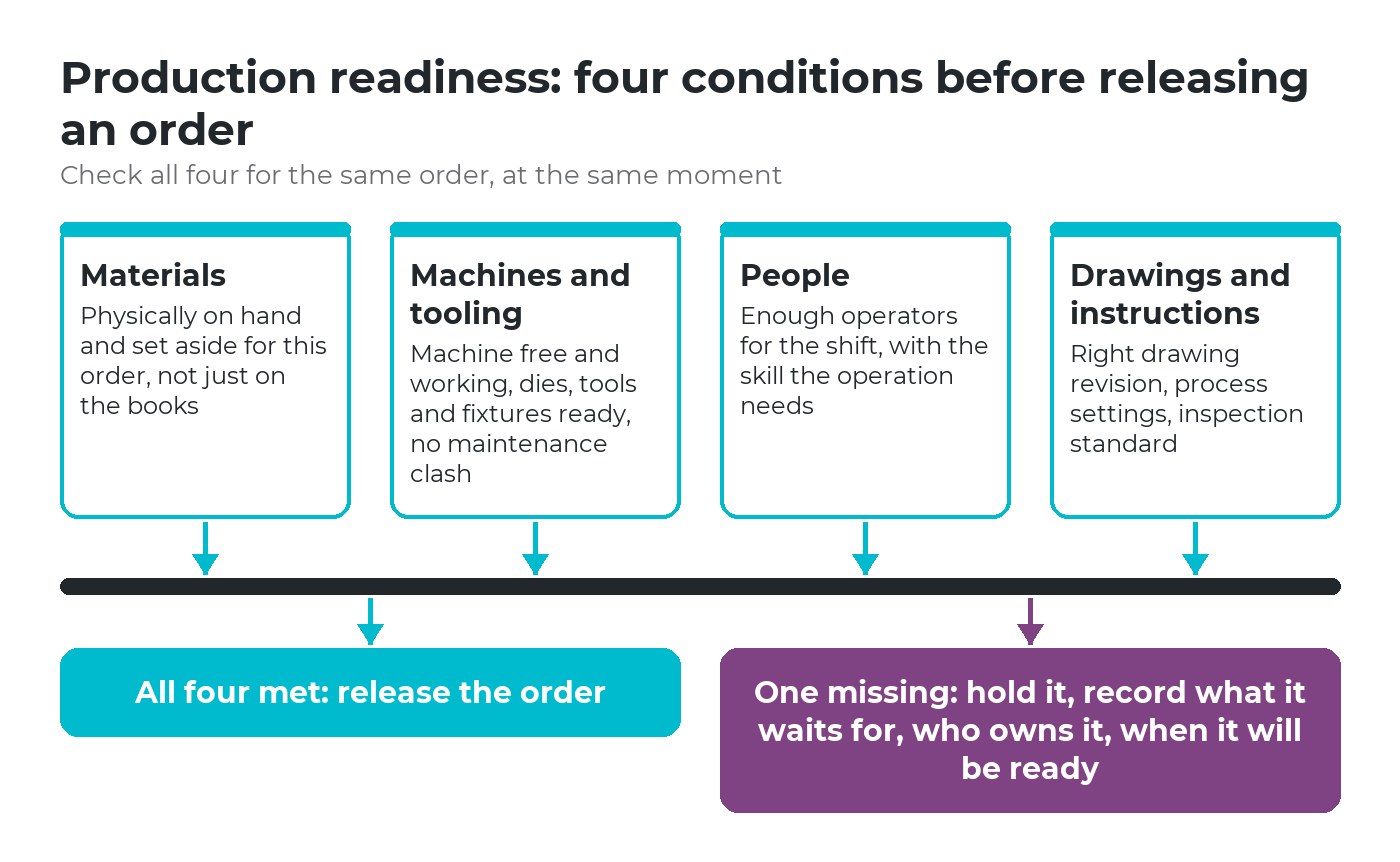
Four conditions checked for the same order at the same moment, and two outcomes: release, or hold with a clear reason.
Four production readiness conditions to check
Materials: on the shelf, not only in the books
The usual trap is checking stock on paper. The system says there are 500 units (illustrative example), but 200 of them are already promised to another order, 100 are waiting for inspection, and the rest sit in the wrong location. Real material readiness means the quantity for this order is physically available and set aside for it, so that the next order cannot take it.
The check covers every line of the bill of materials (BoM), not only the main material. A missing label, screw or packaging carton stops an order just as surely as missing steel. That is why a correct bill of materials is the starting point of any readiness check, and why stock accuracy is part of materials management in manufacturing.
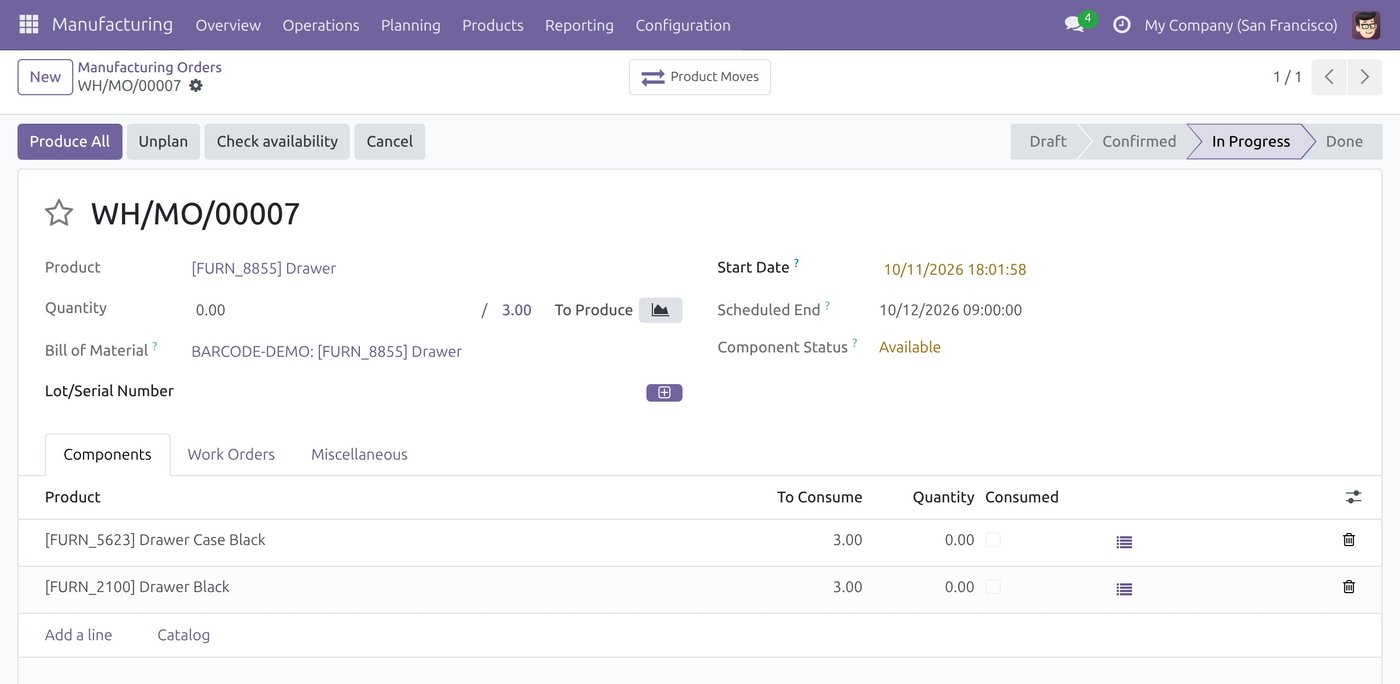
Example: on the manufacturing order, the component status says whether components are available, when they are expected, or late compared with the start date.
Machines and tooling: free, working and set up
A machine is ready only when three things are true at once: it is not booked for another order at that time, it is in working condition, and the dies, tools, fixtures and gauges for this particular product are available.
Planned maintenance belongs in the same check. An order should not be released onto a machine that is due for servicing in the middle of the run. This is one reason why a maintenance plan and the production plan have to be read together.
People: enough hands, and the right ones
A plan counts heads; an operation needs skills. A shift may have enough operators in total, yet only one person who can set up a particular machine or weld to a particular standard. If that person is on leave, the order is not ready, whatever the headcount says.
Drawings and instructions: the right revision at the station
A product made perfectly to the old drawing is still a defect. Readiness here means the operator has the current drawing, the process settings and the inspection standard for this order, at the station, before the first piece is made. Many plants add one more step: the first piece is checked and approved before the rest of the batch runs.
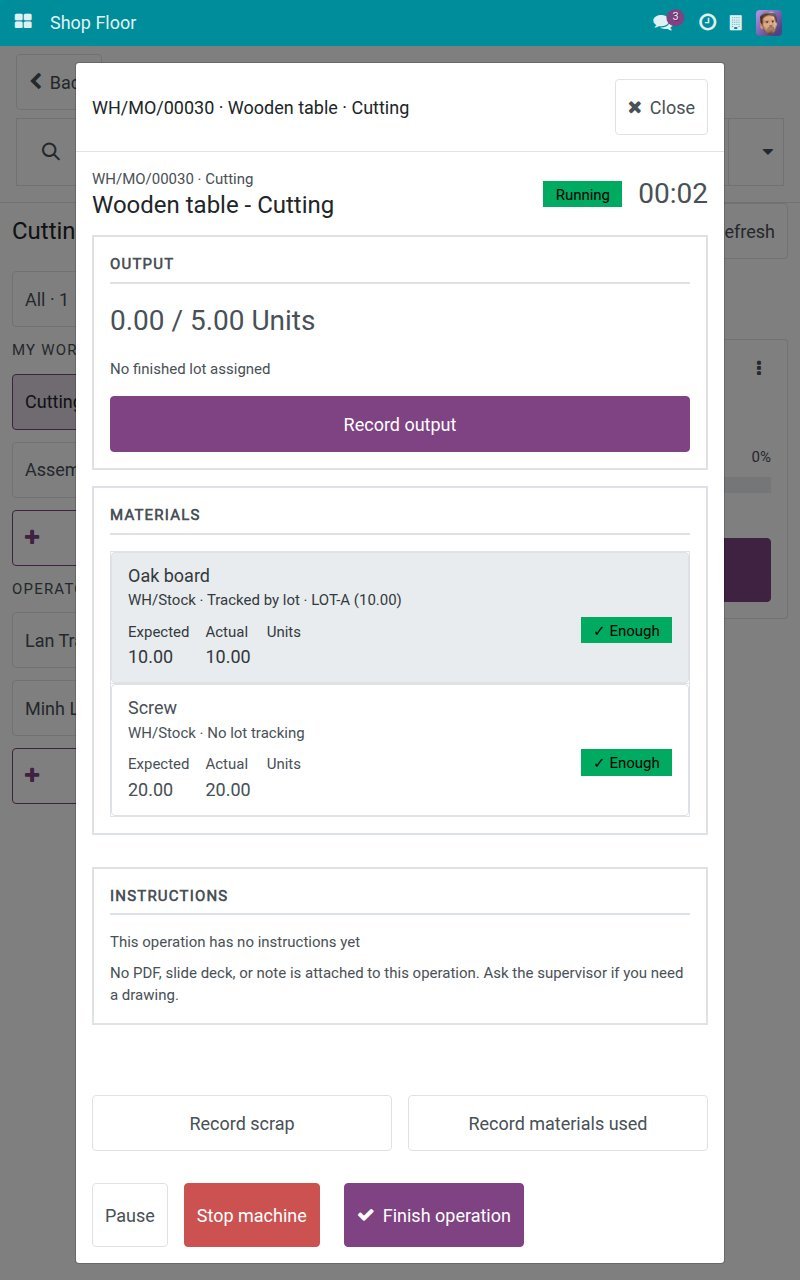
Example: the operation card at the station lists the materials of the operation and an instructions section; when no drawing is attached, the screen says so plainly.
Check twice: when planning, and at release
Production readiness is checked twice, because conditions change. The first check happens when the plan is made, a few days ahead: will everything be in place by the start date? The second check happens right before release: is everything actually here now?
Releasing without full readiness: the cost of stopping halfway
Orders are rarely released early out of carelessness. The pressure is understandable: an idle machine looks like waste, the customer is waiting, and starting feels better than waiting. Some plants even measure supervisors by machine utilisation, which rewards releasing anything that can start. The cause is in the rules and the information people are given, not in the people.
But an order that stops halfway carries costs that do not appear on the day it stops:
- Work in process waits. Half-finished goods tie up cash and floor space, need extra handling, and get mixed up, damaged or outdated the longer they wait. Every unit of work in process also lengthens lead time.
- Setups are done twice. The machine is changed over to another order, then changed back when the missing item arrives. Two setups, no extra output.
- Other orders are pushed back. The schedule is rebuilt in a hurry, and orders that were ready now wait behind one that was not.
- Progress misleads. The order shows as started, so reports look busy, while nothing can be shipped. Management sees activity, not output.
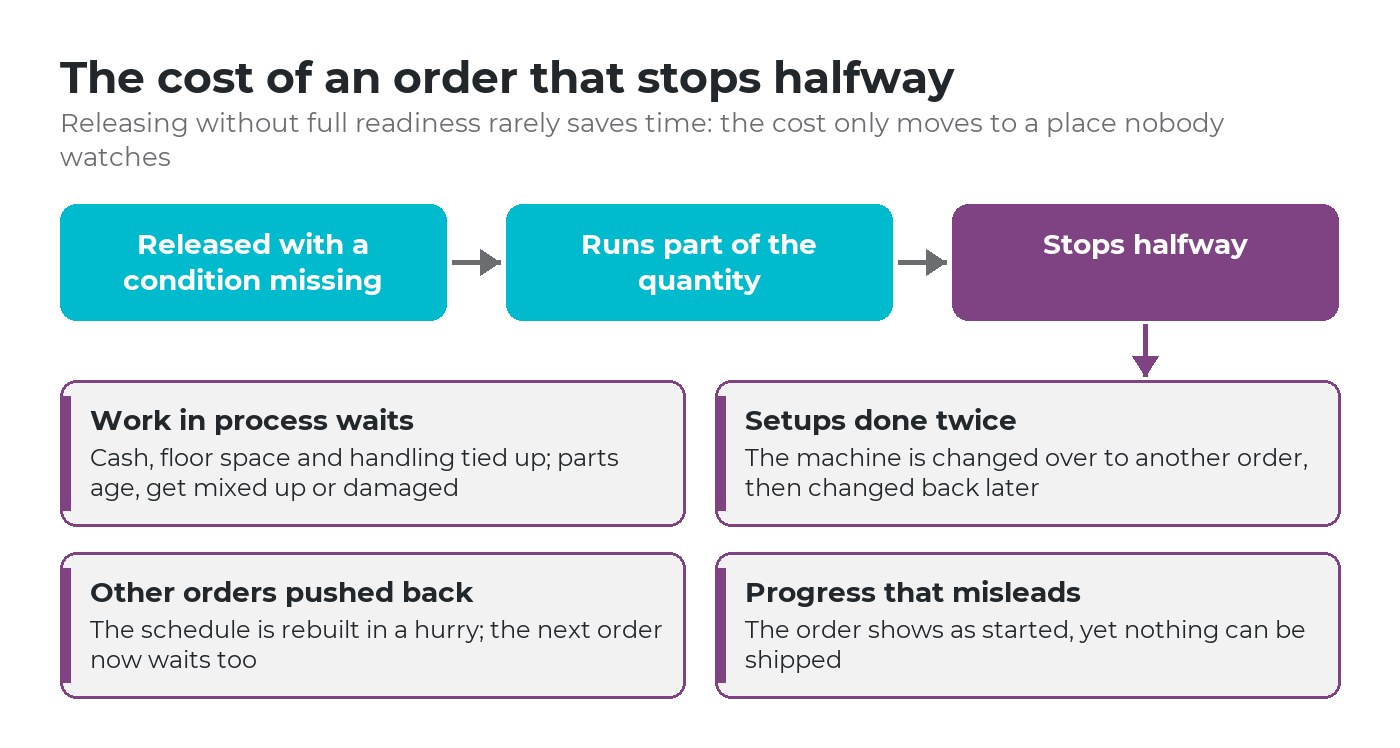
Releasing without full readiness does not save time; it moves the cost to places that are harder to see.
Two of these costs belong to the classic seven wastes in production: waiting and inventory. Both also stretch the production cycle, so the business ends up delivering later precisely because it started earlier.
Setting priorities when production readiness is short for every order
Shortage is normal. The question is who gets what is available. Without agreed rules, the decision goes to whoever pushes hardest, and it changes every day. A workable order of priority has four rules, applied in sequence:
- Complete kits first. If a component is short, give it to fewer orders that can then finish, rather than splitting it so that every order starts and none ends.
- Committed due dates and the cost of lateness. Rank by the delivery date promised and what lateness costs (penalties, a key customer, a container booking), not by which order was created first.
- Orders that pass the bottleneck. An hour lost at the bottleneck is an hour lost for the whole plant, so the bottleneck should always have a fully ready order in front of it.
- Group orders with the same setup. Once the first three rules are met, running similar orders together saves changeovers.
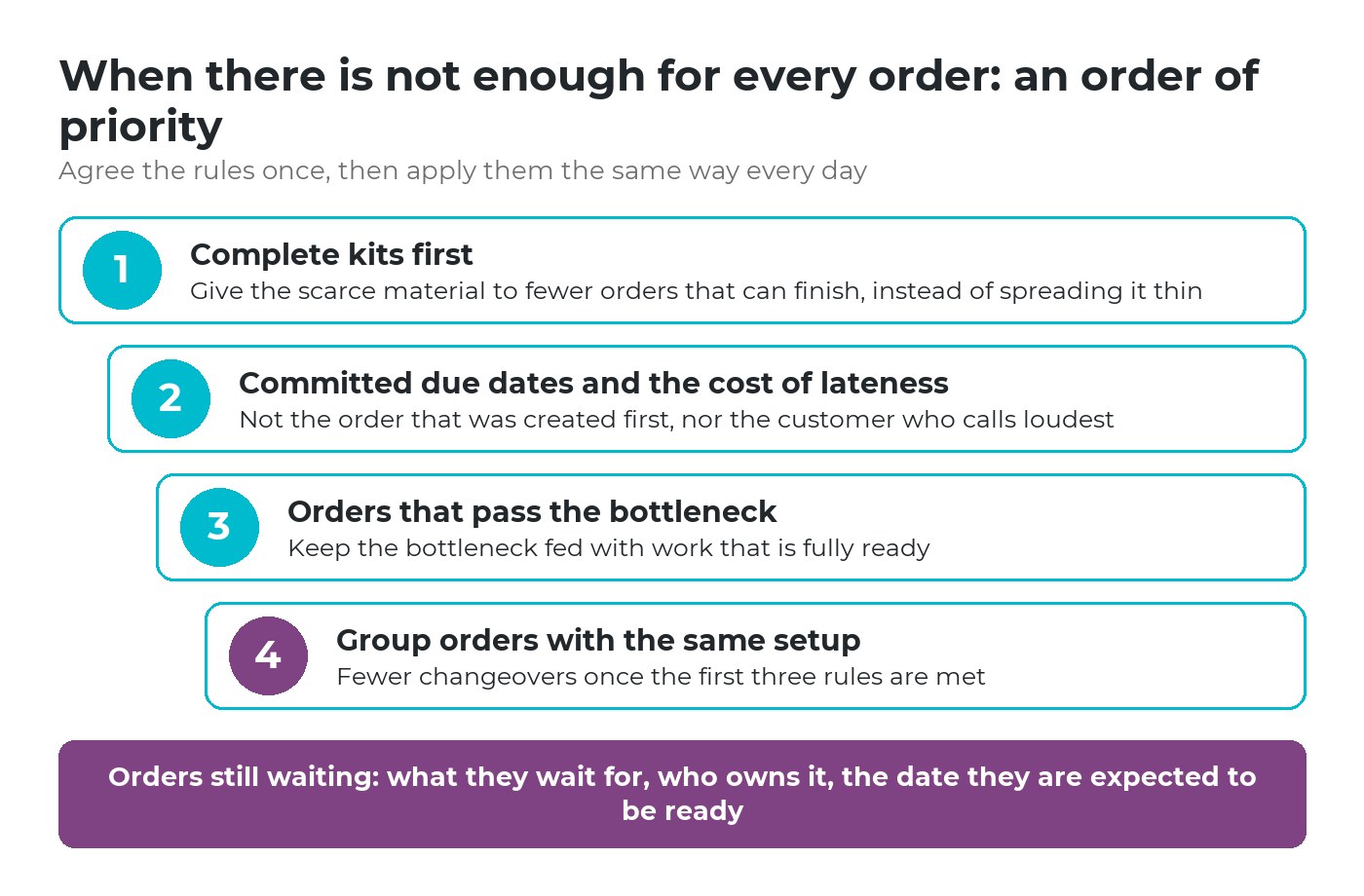
Four rules applied in sequence, and one discipline for every order still waiting.
Orders held back are not forgotten. Each one carries three facts: what it is waiting for, who is responsible for clearing it, and the expected date. A held order with no owner is just a late order that nobody has admitted yet.
The rules work best inside a short, fixed rhythm: one person, usually the planner or the production supervisor, reviews readiness at the same time every day and releases the next orders. This is the daily form of production scheduling, and it keeps the floor working from a list of ready jobs instead of a list of hopes.
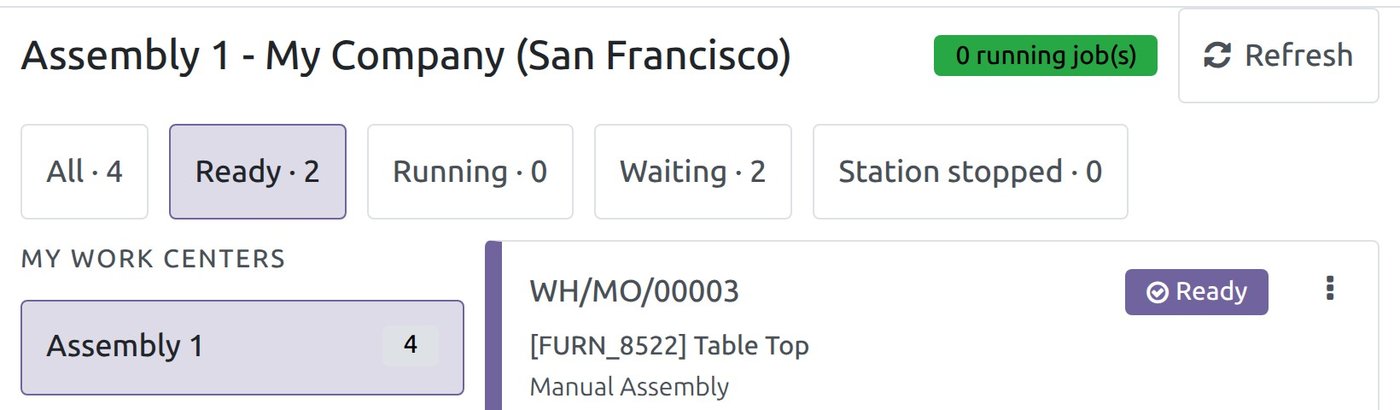
Example: the job board of a work center separates operations that are Ready from those still Waiting.
Technology for production readiness, in three levels
The pillar article proposed three levels of technology for the floor. Applied to readiness, they look like this:
Level 1 - One shared readiness view
Material status calculated from real stock and reservations, the machine state, the operators at the station and the instructions attached to the operation, visible on the order itself.
Level 2 - Signals that update themselves
Scanning at goods receipt and issue keeps stock true; machine state and gauges feed the system without anyone typing.
Level 3 - Look ahead
Forecast when each order will be ready, and suggest which orders to release first under the agreed rules.
Level 1 already solves most of the problem, because the main failure is not missing data but data scattered across the warehouse, maintenance, engineering and the floor. Once all four production readiness conditions are visible on the same order, the release decision takes minutes.
The sign to move to level 2 is when the view exists but people stop trusting it: the system says the material is there, the shelf says otherwise. The sign to move to level 3 is when the daily release review takes too long to weigh by hand. Without clean data from the first two levels, any forecast is a guess.
Six questions to assess production readiness on your floor
Who decides
Is there one named person who decides that an order may be released, or does the date alone decide?
Materials
When you say material is available, is it on the shelf and set aside for this order, or only in the books?
Machines and tooling
Does anyone check dies, tools and planned maintenance before release, or only whether the machine runs?
People and instructions
Do you know who is qualified for each operation, and does the station always have the current drawing?
Stopped orders
How many orders stopped halfway last month, and for which missing condition?
Priority rules
When there is not enough for every order, is the choice made by agreed rules or by whoever calls loudest?
If the answers to the first and fifth questions are unclear, start there: name the person who releases orders, and count the orders that stop halfway. That count is the baseline for every improvement after it.
How Viindoo supports the release decision
At Viindoo, we see the readiness check as part of the same platform that holds the plan, the bill of materials and the stock, so that nobody has to collect answers from four departments. The software shows the conditions; the release decision stays with people.
| Condition | What Viindoo shows |
|---|---|
| Materials | Component status on the manufacturing order (available, expected date, late, not available) and a stock check that reserves components for the order |
| Machines | Work orders on a Gantt chart by work center; an operation cannot start on a stopped station |
| People and the floor | The Shop Floor job board separates Ready from Waiting operations and says whether a job waits for components or for the previous operation |
| Instructions and first checks | Drawings and instructions (PDF, slides or a note) open from the operation card; required quality checks must be recorded before the operation starts |
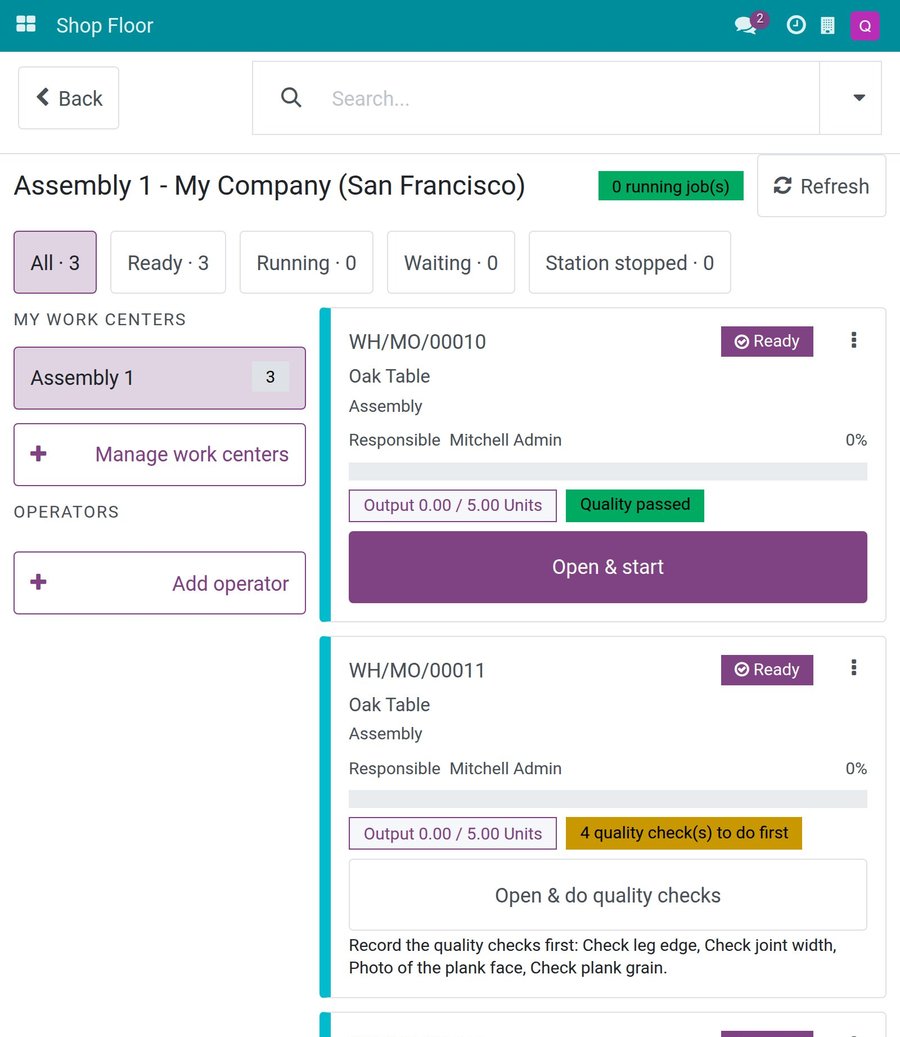
Example: a ready card shows that quality checks must be done first and names them.
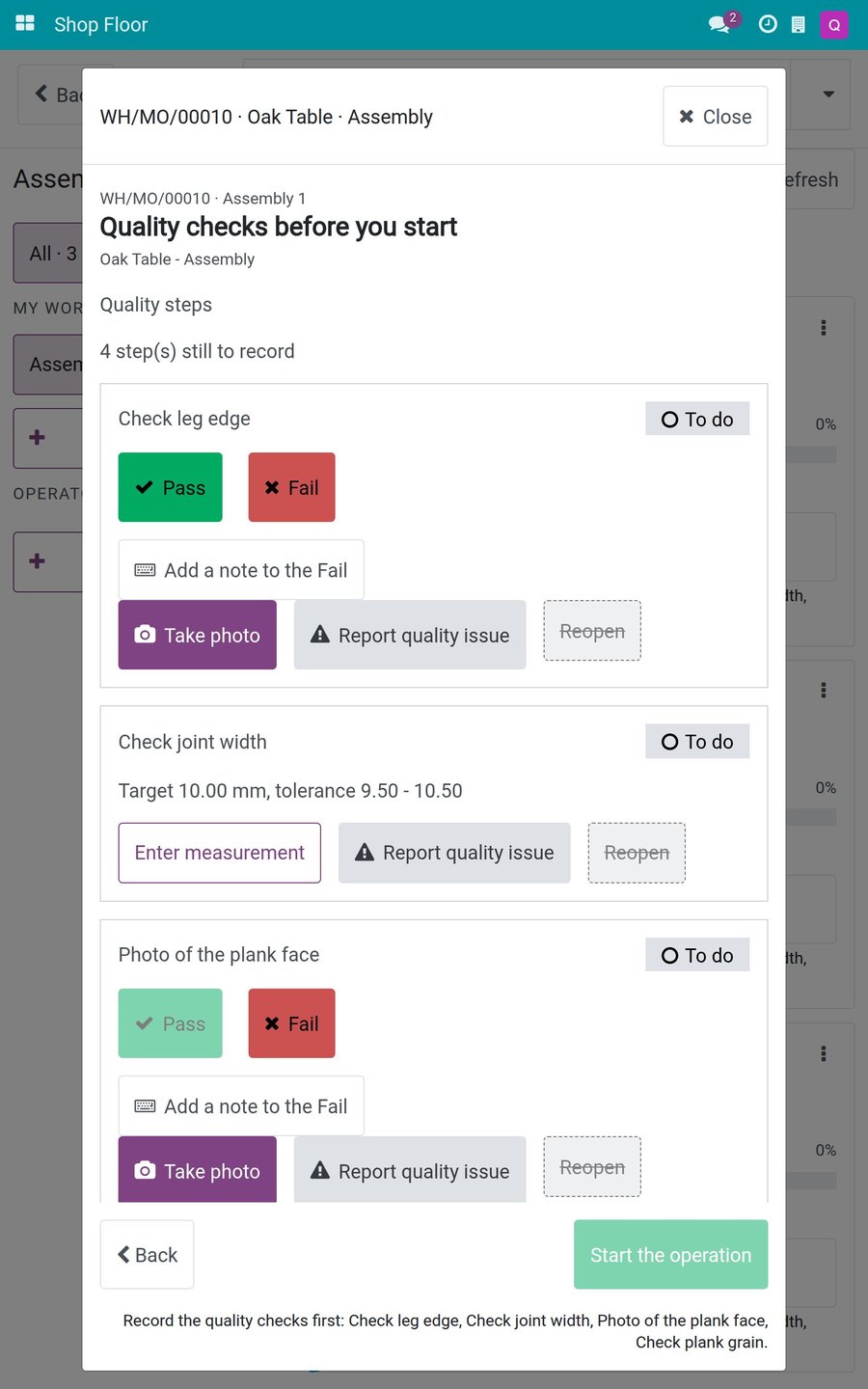
Example: the operator records the quality checks before starting; the start button stays disabled until they are done.
Some needs are better handled by agreed internal rules today, such as a skills matrix by operation or shift allocation. A plant can start on one line, then extend once fewer orders stop halfway.
Frequently asked questions
Sometimes, briefly, and it is usually cheaper than a stopped order. The exception is the bottleneck, which should always have a ready order waiting; that is why it has its own priority rule.
Make it a conscious decision: release the operations that do not need the component, record what is missing and who is chasing it, and tell the customer the real date. What should be avoided is releasing the whole order and discovering the gap halfway.
One named person per area. Other departments report the status of their condition; they do not release orders themselves.
Want to know how ready your floor really is when orders are released? Book a shop floor assessment with Viindoo: we look at a few recent orders with you, where they waited and why, before talking about software.
Next in the series: production progress: measuring it right, seeing where it is late, and handling rush orders.