Material flow in manufacturing is the path materials take from the store, through each operation, into work in progress and finally into finished goods. On many floors the signs of a broken flow are familiar: a team stands idle because one component has not arrived, half-finished parts pile up in the aisles, and at month end the stock count does not match the books.
Each sign looks like a separate problem for a separate department: the store, the floor, accounting. In fact they are three stretches of one flow. When materials do not move by order and nobody records where they are, the same gap shows up three times. The pillar article on shop floor management called this the information gap; this article looks at it through materials.
Three principles of material flow in manufacturing
In material flow in manufacturing, lean thinking counts excess inventory and waiting among the seven wastes in production. Both are easy to miss, because a full warehouse looks safe and a waiting operator looks like a planning issue rather than a material issue.
Materials move by order
Every issue, every transfer between operations and every receipt into stock belongs to a manufacturing order. Without the order, nobody can say whether a quantity is right or wrong.
Surplus stock and waiting are waste
Stock beyond what the next operation needs ties up cash and space and hides problems. Waiting for materials turns machine hours and labour into cost with no output.
Always know where the goods are
Raw material, part or finished product: at any moment someone can say where it is, for which order, and how long it has been there.
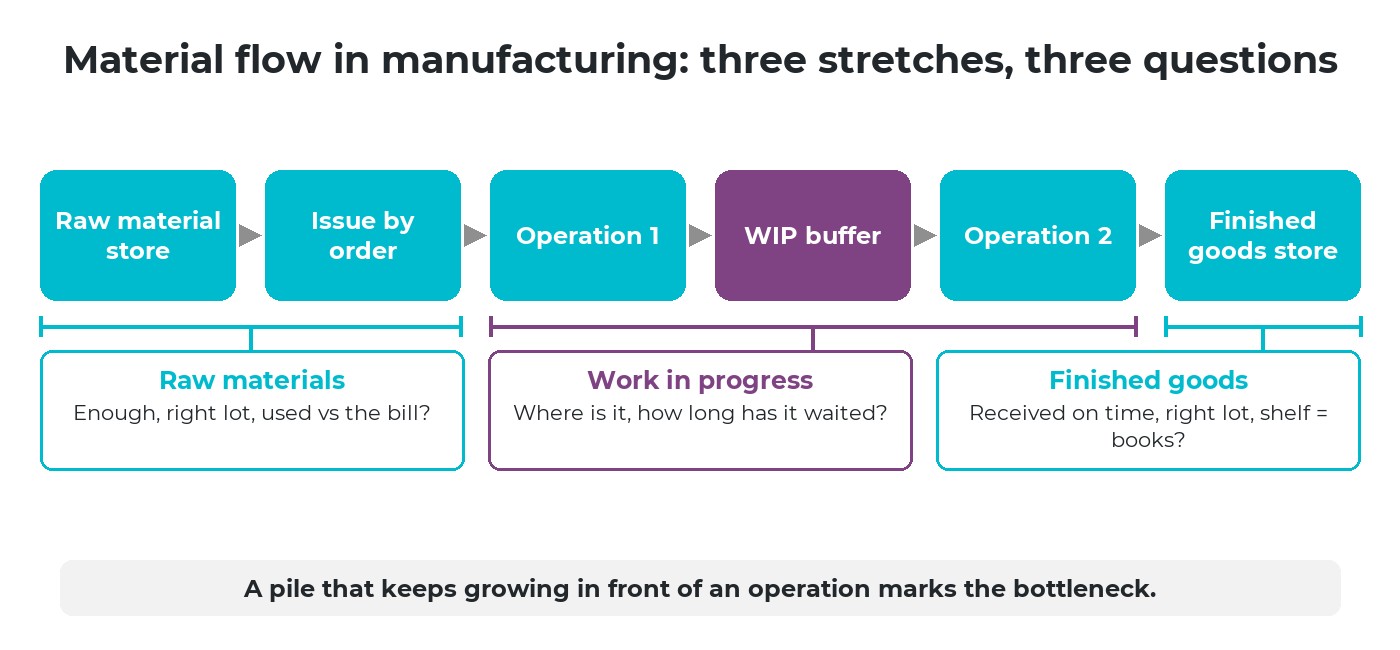
Material flow in manufacturing in three stretches, each with its own management question.
Raw materials: issue by order, measure loss against the bill
Issue by order, not by request
When the store issues materials because a team leader asks for them, the store knows how much left the shelf but not what it was for. When materials are issued against a manufacturing order, the order already says how much each component should take. Any extra issue becomes a visible question: why does this order need more than its bill?
Waiting for materials stops the operation
A missing component rarely shows on the plan. It shows on the floor, when the operator is ready and the material is not. The lost time is real but often recorded as a vague delay, so the cause never reaches the people who could fix it: purchasing, the store or planning.
The fix is mostly about order of work. Check material availability before releasing an order, not after the first operation has started. Record "waiting for materials" as its own reason for a stop, so it can be counted at month end. When operators skip these records, the cause is usually that recording takes too long or nobody uses the data, not a lack of discipline.
Loss against the bill: approximate first, accurate later
Every process loses some material: offcuts, trimming, setup pieces, evaporation. A bill of materials (BoM) that ignores loss is wrong from day one, and one that adds a generous safety margin hides every real loss. The useful approach is a standard quantity plus a loss rate, so the expected loss is stated openly.
Many plants delay this because they do not have an accurate standard yet. That gets the order backwards. An approximate loss rate, compared with actual use order after order, becomes accurate within a few months. Waiting for a perfect standard means never measuring, a point also made in how detailed production data needs to be.
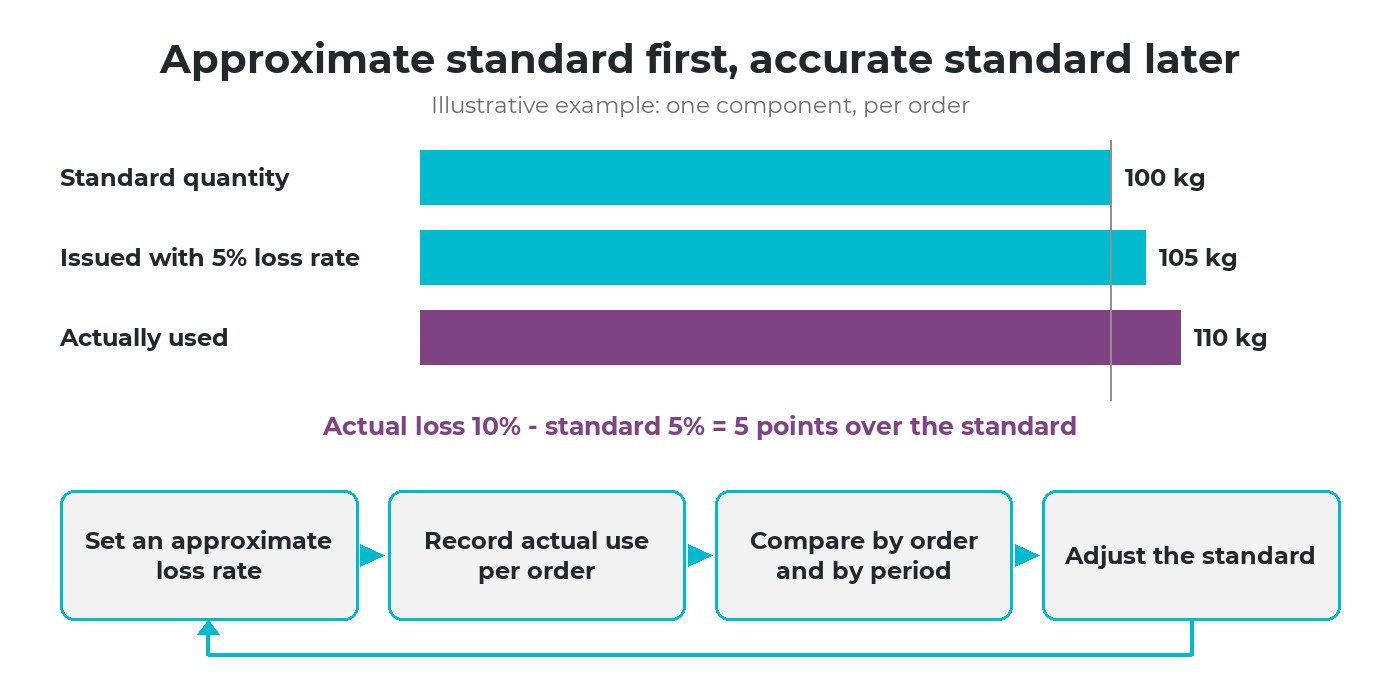
Illustrative example: a loss rate stated in the bill, compared with actual use, then adjusted.
The comparison only works if actual use is recorded per order, by the people who use the material, when they use it. Recording it at the end of the week from memory gives numbers that always look close to the standard. More methods are covered in material loss management.
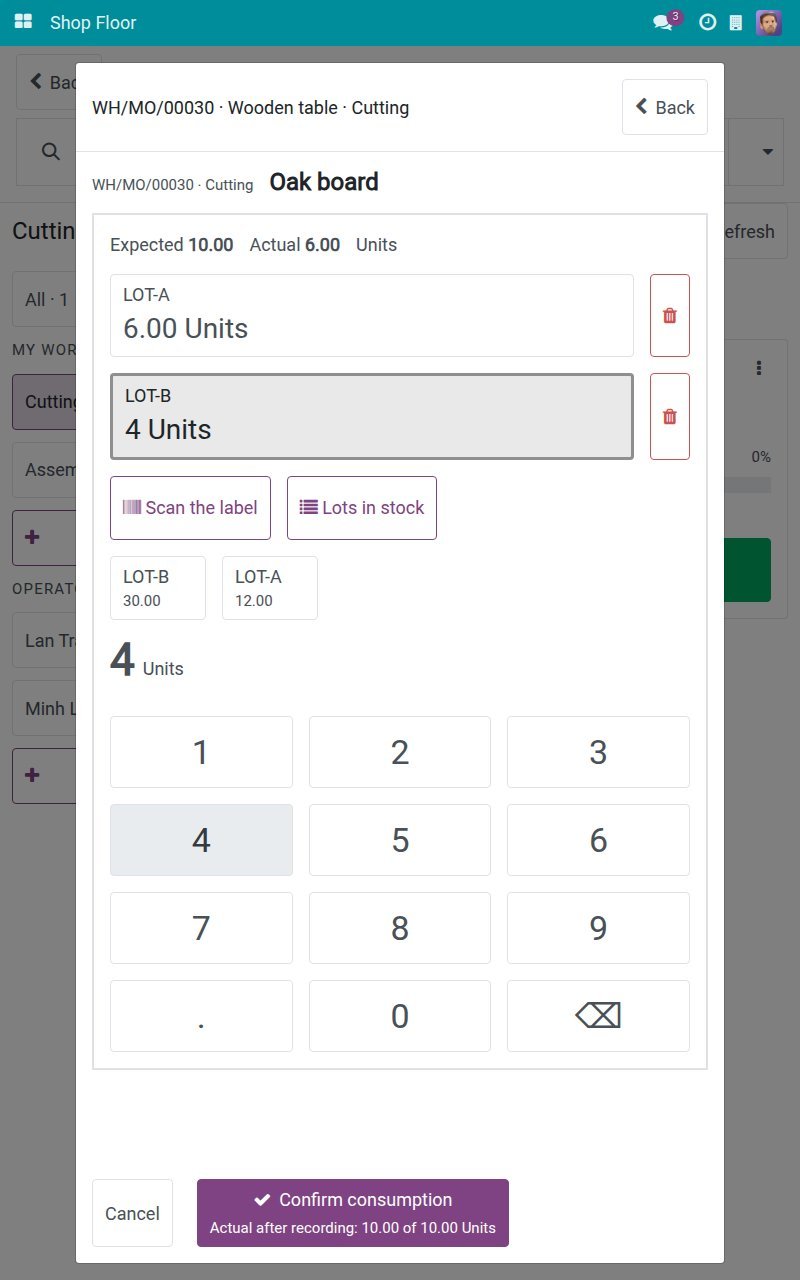
Example: the operator records the quantity used from each lot, by scanning the label or picking a lot in stock, against the expected quantity of the order.
Work in progress: where material flow in manufacturing gets stuck
A growing pile marks the bottleneck
Work in progress is not a problem by itself; some buffer between operations keeps the line running. The signal is a pile that keeps growing in front of one operation. That operation cannot keep up, and every unit waiting in front of it stretches the time from order to delivery.
The link is simple arithmetic, known as Little's law: the time an item spends on the floor equals work in progress divided by daily output. With 600 parts in progress and 200 finished per day, each part spends about three days on the floor (illustrative example). Cut the pile in half and the production cycle shortens with it.
This is why lean plants treat work in progress as information, not just as stock. Where it piles up shows where material flow in manufacturing slows first, and where to look: the machine, the changeover, the staffing, or the quality checks that send parts back.
Nobody knows where the semi-finished parts are
Semi-finished parts often live in a grey zone. They have left the raw material store but are not yet finished goods, so no one counts them. When a rush order arrives, the supervisor walks the floor to look for parts that the records say should exist.
Two habits close this gap. First, give important semi-finished parts their own bill of materials and their own manufacturing order, linked to the order of the final product, so each level has a status. Second, label them by order or lot and record each move between operations, so the answer to "where is it?" comes from the record, not from a walk.
Work in progress at period end changes unit cost and the books
At period end, part of the production cost belongs to orders that are still on the floor. Accountants call this work in process. If it is not counted, the whole period's cost lands on the goods finished this period, and unit cost jumps up this month and falls the next.
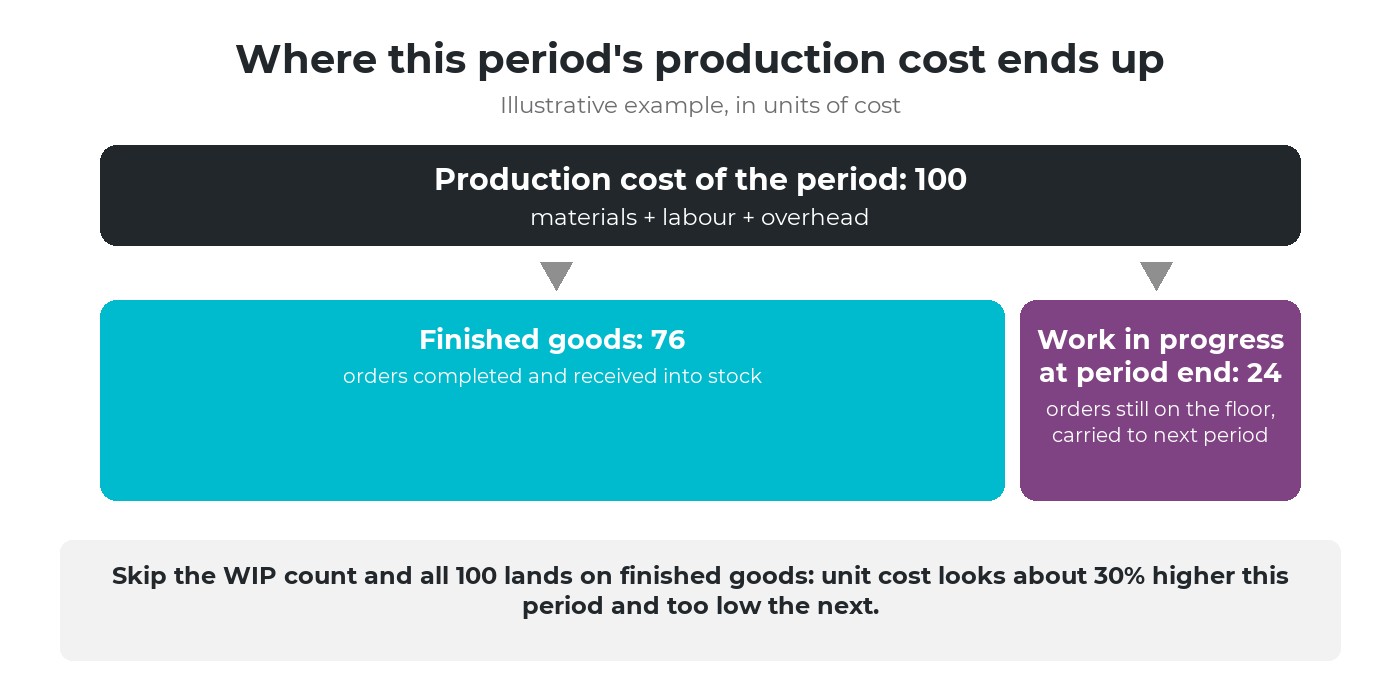
Illustrative example: how the cost of a period splits between finished goods and work in progress.
Valuing work in progress well depends on the same floor records: which materials have been issued and used for each open order, and which operations are done. Without them, accounting estimates by percentage, and the estimate becomes the place where every unexplained difference hides.
Finished goods: on time, right lot, matching numbers
Material flow in manufacturing ends at the finished goods store. Goods that sit on the floor without being received are invisible to sales and delivery. Sales thinks there is no stock and promises a later date; the floor thinks the job is done. Receiving output as soon as it is finished, by the order that made it, removes this gap.
Receiving by lot matters as much as receiving on time. A lot number on the finished product, linked to the lots of the materials used, is what lets the plant trace a complaint back to its source, the subject of the previous article in this series.
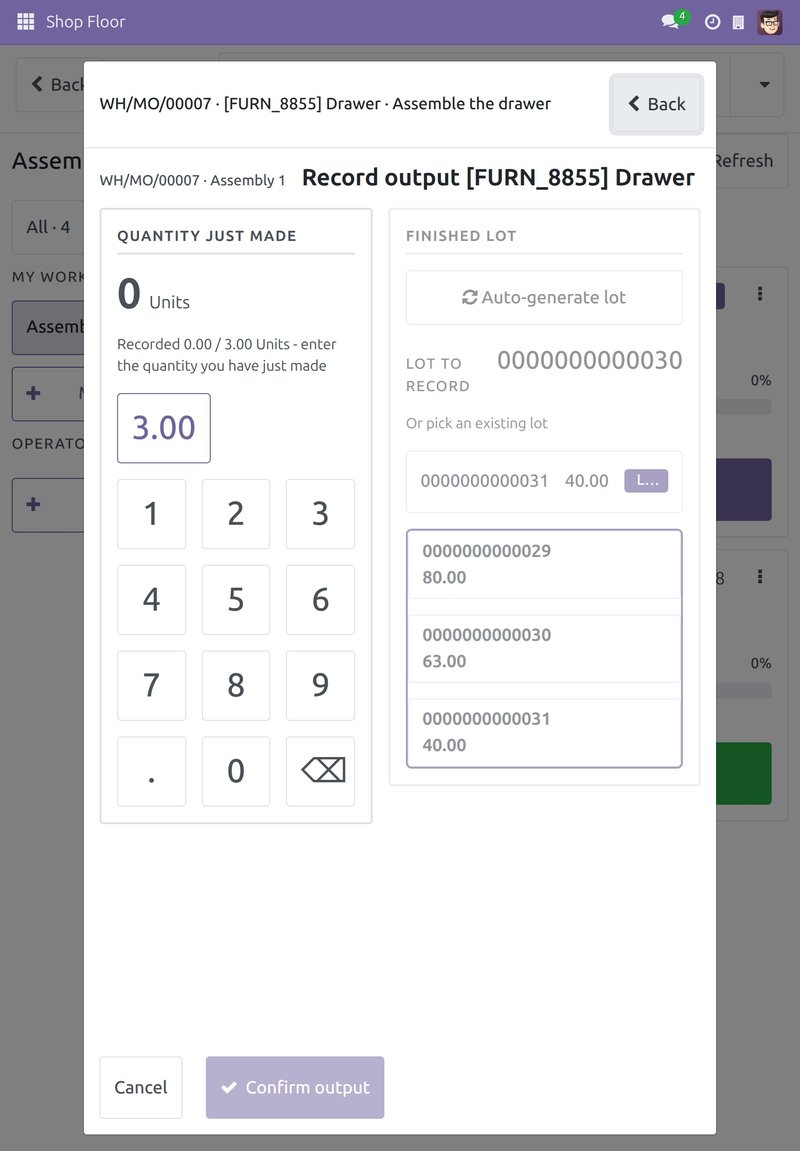
Example: finished output is recorded with its lot, generated on the spot or picked from existing lots, as soon as it is made.
When the books and the shelf disagree
A gap between the books and the shelf is a symptom. The usual causes are records made later than the movement, output received at the planned quantity instead of the real one, goods moved without a document, and scrap or rework that nobody recorded. Each cause sits upstream, in how the flow is recorded, not in the warehouse.
Regular cycle counts by location, a few shelves at a time, catch differences while they are still small and their cause is still fresh. A count once a year finds a large number that nobody can explain any more. The finished goods inventory process article covers the warehouse side in more detail.
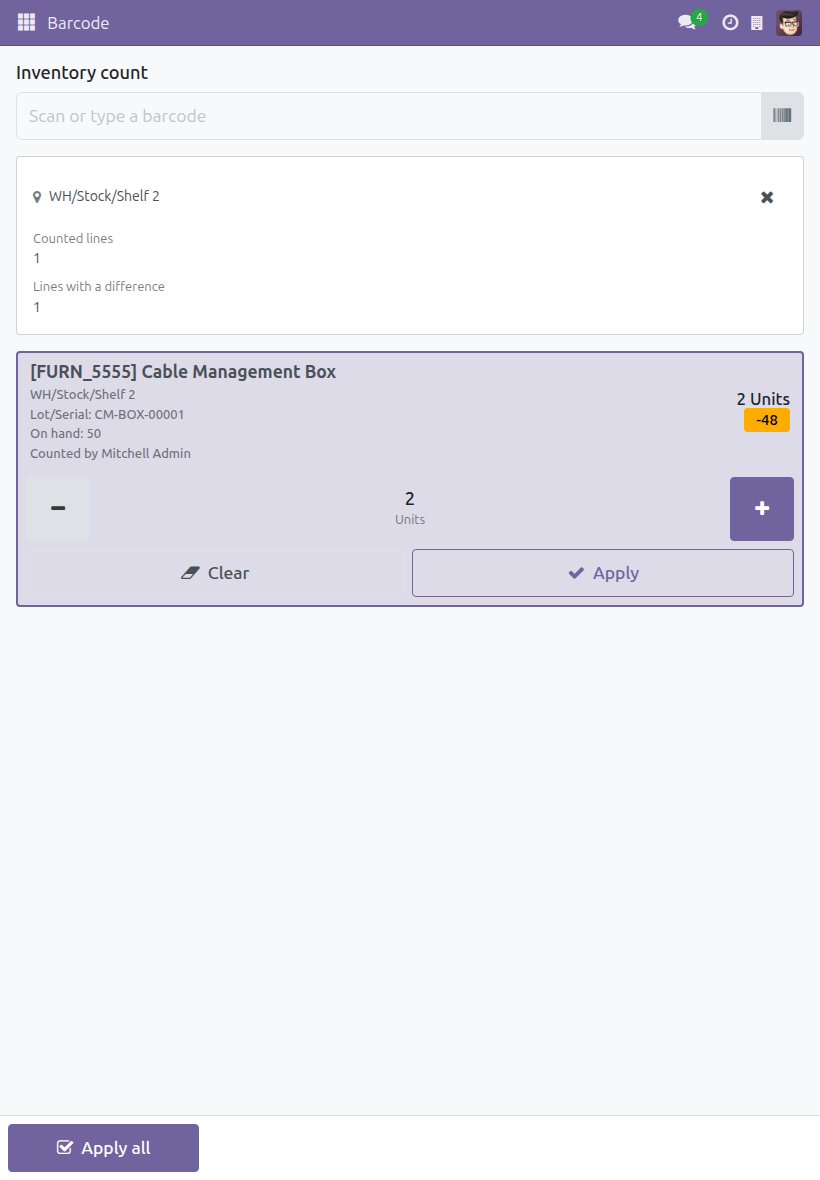
Example: a location is counted by scanning, and the line that differs from the books is shown before the count is applied.
Technology for material flow in manufacturing, in three levels
The three levels of the pillar article apply to material flow in manufacturing too. Their order matters more than any single tool.
Level 1 - Record people's work
Issues, actual use, scrap, moves between operations and receipts are recorded by order, at the station, with a scanner for lots. This alone answers where the goods are.
Level 2 - Connect scales and scanners
Weights and counts are read from the device instead of being typed, for materials measured by weight or length, where manual figures drift most.
Level 3 - Analyse loss and flow
Loss by material, product and period, piles of work in progress over time, and the effect on unit cost, once several months of clean records exist.
Signs it is time to move up a level: differences between the books and the shelf are already small and explained; loss rates have been compared with actual use for a few months; and manual weighing is the main source of the remaining errors.
Before automating anything, make every material movement belong to an order. The rest of the material flow builds on that.
Six questions to assess your material flow
Issue
Are materials issued against a manufacturing order, or because someone asks for them?
Waiting
How many hours did operations wait for materials last month, and does anyone know?
Loss
Does the bill state a loss rate, and is it compared with actual use order by order?
Work in progress
In front of which operation does work in progress pile up, and for how many days?
Period end
Is work in progress at period end valued from floor records, or estimated by percentage?
Books and shelf
How large is the gap at the last count, and could anyone explain where it came from?
The stretch with the most unanswered questions is where to start.
How Viindoo supports material flow
At Viindoo, materials, manufacturing, inventory and accounting share one platform, so in material flow in manufacturing, a record made at the station is the same record the store and accounting use. The table below shows what is available today and what a plant still handles through its own procedure.
| Stretch | In Viindoo |
|---|---|
| Raw materials | Available: bills of materials with a loss rate; actual use recorded by lot at the station, including components outside the bill and scrap; a consumption difference report comparing standard and actual loss once orders are done; on a bill set to block, an order whose consumption differs can only be closed by a production manager, and the floor sends the differences for approval |
| Work in progress | Available: manufacturing orders on several levels for semi-finished parts; work orders waiting for components shown as waiting; a period-end work in progress entry for open orders, debiting account 154 on Vietnamese charts of accounts and reversed on a chosen date |
| Finished goods | Available: output recorded with its lot at the station, by scanning or picking; lot traceability forward and backward; stock counts by location with a scanner |
| Not yet available | Material requests raised from an operation, kanban replenishment and automatic loss alerts; plants handle these through their procedure and the periodic difference report |
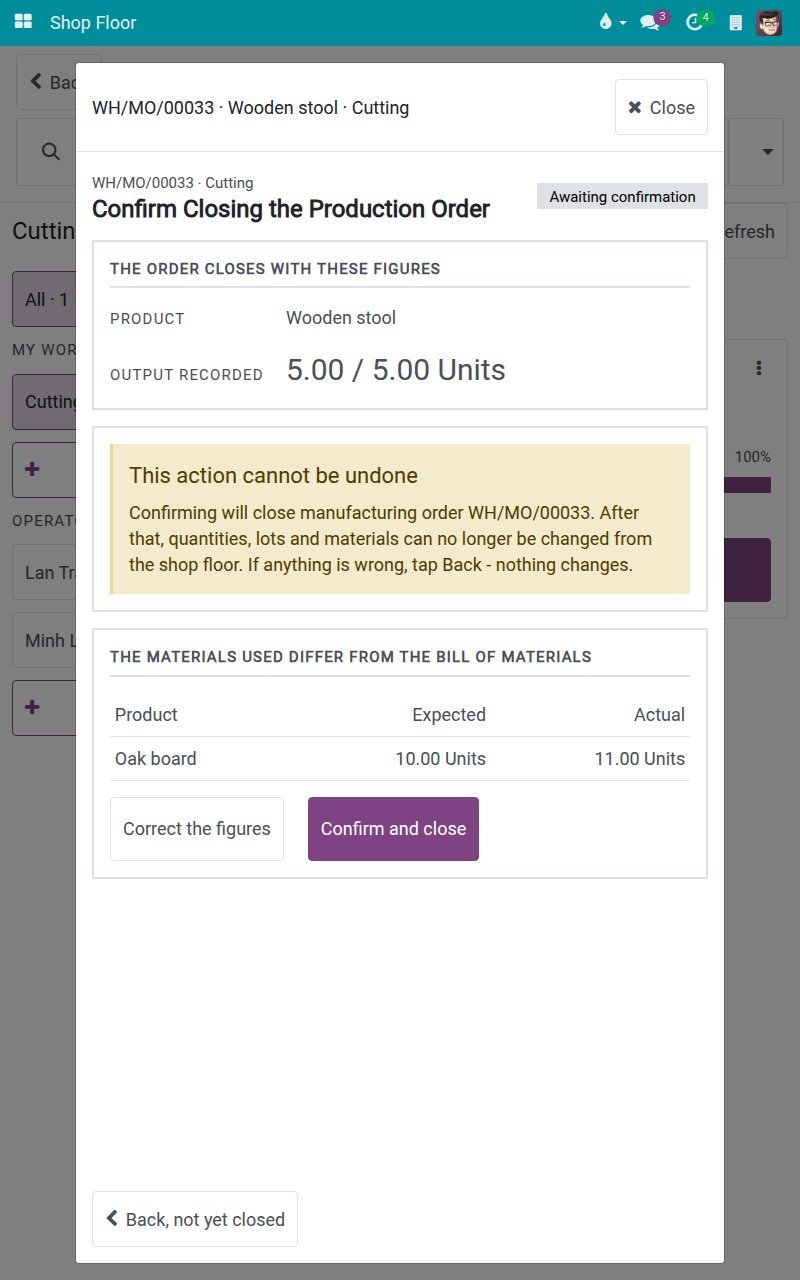
Example: before an order closes, the screen lists the materials used differently from the bill, expected against actual, so the difference is confirmed or corrected.
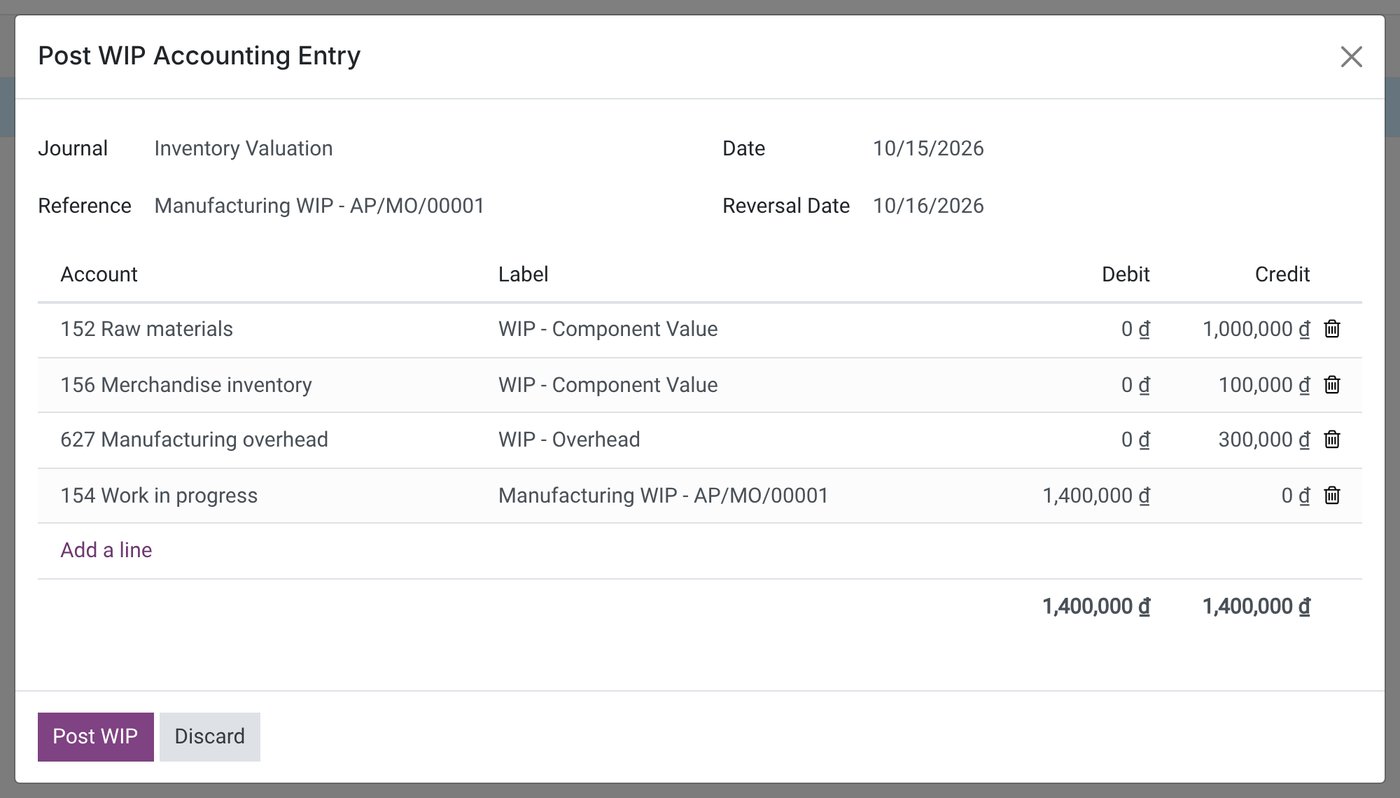
Example: the period-end work in progress entry debits account 154 and credits each component to the stock account of its category.
Frequently asked questions
No. Start with an approximate loss rate and compare it with actual use on every order. The differences show which standards to correct first.
Only for parts that are stored, shared between products or tracked by lot. Small intermediate steps are better followed as operations of one order, to avoid extra records nobody reads.
Want to see where materials wait in your plant? Book a shop floor assessment with Viindoo: we follow one order with you, from the material issue to the finished goods receipt, before talking about software.
Next in the series: production reports and the management rhythm, who looks at what, when, and to decide what.