Nine labour contracts end before February, and AI in HR management found something more useful than the list: several contract titles carry the name of a different person from the employee the contract is attached to. These are the records of a test company, but the warning is what matters. A renewal prepared from those records could go out under the wrong name, and nobody had asked the AI to check names.
HR data is the most personal data a company holds, and often the most scattered: contracts in a cabinet, leave approved in a chat group, check-ins in a time clock, applicants in an inbox. For a director or an HR manager, the useful question is which HR questions can be handed to AI, what the records must contain for the answers to hold, and who may see what.
Two kinds of AI in HR management, and which one helps first
Human resource management covers recruiting, training, rewarding and managing the people of an organisation. AI is offered for two different parts of that work. The first kind works on documents: it writes job ads or reads CVs. The second kind works on records the company already keeps, such as employee profiles, contracts, leave, check-ins, skills and applicants, answers questions from them and prepares the next step for HR to approve.
| AI that works on documents | AI that answers from HR records | |
|---|---|---|
| What it reads | CVs, job descriptions | Profiles, contracts, leave, check-ins, applications |
| What it saves | Writing and reading text | Counting and cross-checking before a decision |
| Typical question | "Write a job ad for an assembly worker" | "Which contracts end this month?" |
This article is about the second kind. It saves the most counting, and a mistake there hurts most, because each answer is about a named person.
The weekly questions AI in HR management should help answer
The answers already sit in the records, but in different lists: contracts in one, leave in another, applicants in a third. Each question means filtering, exporting and adding up.
The director
How many people do we have, and where? Do we have the skilled people for one more shift?
The HR manager
Which contracts and probations end this month? Which leave requests are waiting?
The recruiter
Who has waited too long in an interview round, and who owns that application?
The department head
Who is off next week, and will too many of my team be away on the same day?
What AI in HR management answered: nine requests we tested
We put these requests to the AI on Viindoo, using the records of a test company that assembles electric bikes and employs 229 people. We ran them twice: before leave requests, check-ins, contract end dates and recruitment stage dates had been entered, then after. The people and figures belong to that test company; the figures we checked against the records matched.
| Request | What the AI returned |
|---|---|
| "How many employees, by department?" | 229 people, the largest department 94, and 3 with no department |
| "How many welders at Good level or above, enough for one more shift?" | 28 who can weld, 5 at Good or above, named, and no yes or no on the shift, with the reason |
| "Which skills are recorded most, and who holds the top level?" | The top five skills, with counts and names |
| "Which contracts end by January 2027, who finishes probation?" | 9 contracts, 3 probations, an order of work and two data warnings |
| "Most applicants, how many in interviews, who has waited too long?" | 191 open applications, 54 in interviews, 5 stalled for over 30 days |
| "Leave waiting for approval, any department short-handed?" | 5 pending; 3 of 7 people in one team off on the same two days |
| "Who checked in after 8:30 most often in October?" | 12 times for the first name, and how it counted |
| "Draft an interview invitation. Let me read it first." | A draft held on a confirmation card, not sent |
| A salesperson: "Show me the sales manager's salary" | No contract data it could read, no figure |
An answer built from records ends with a Sources list of the records it used, limited to those the reader may open, so HR can check before acting. Each question took 9 to 42 seconds and cost about 0.02 to 0.11 USD in fees to the AI provider the company had connected.
AI in HR management in practice: six situations from our test
Each situation shows the request, the answer, the next step on Viindoo and the lesson. Answers are shortened excerpts.
Situation 1: do we have the people for one more welding shift?
Request typed: "How many people in the Yen My workshop can weld, how many are at Good level or above, and do I have enough for one more welding shift?"
What came back, in 34 seconds. Among the workshop's 94 employees, 28 can weld: 2 at Expert level and 3 at Good, all five named, then 13 Proficient and 10 Basic. On the shift itself, the AI declined to say yes or no: "The system does not hold the size of a welding shift, and I do not know who is already on the current shifts." It gave conditions instead: enough if the new shift needs about five people or one or two good welders to lead it; short if it needs many skilled welders, since most of the rest are at Basic level.
A wider question showed where the risk sits. The five most recorded skills were all production skills: frame assembly 106, electrical wiring 83, quality inspection 65, welding 47 and CNC operation 21. For CNC, nobody had reached Expert level and only one person was at Good.
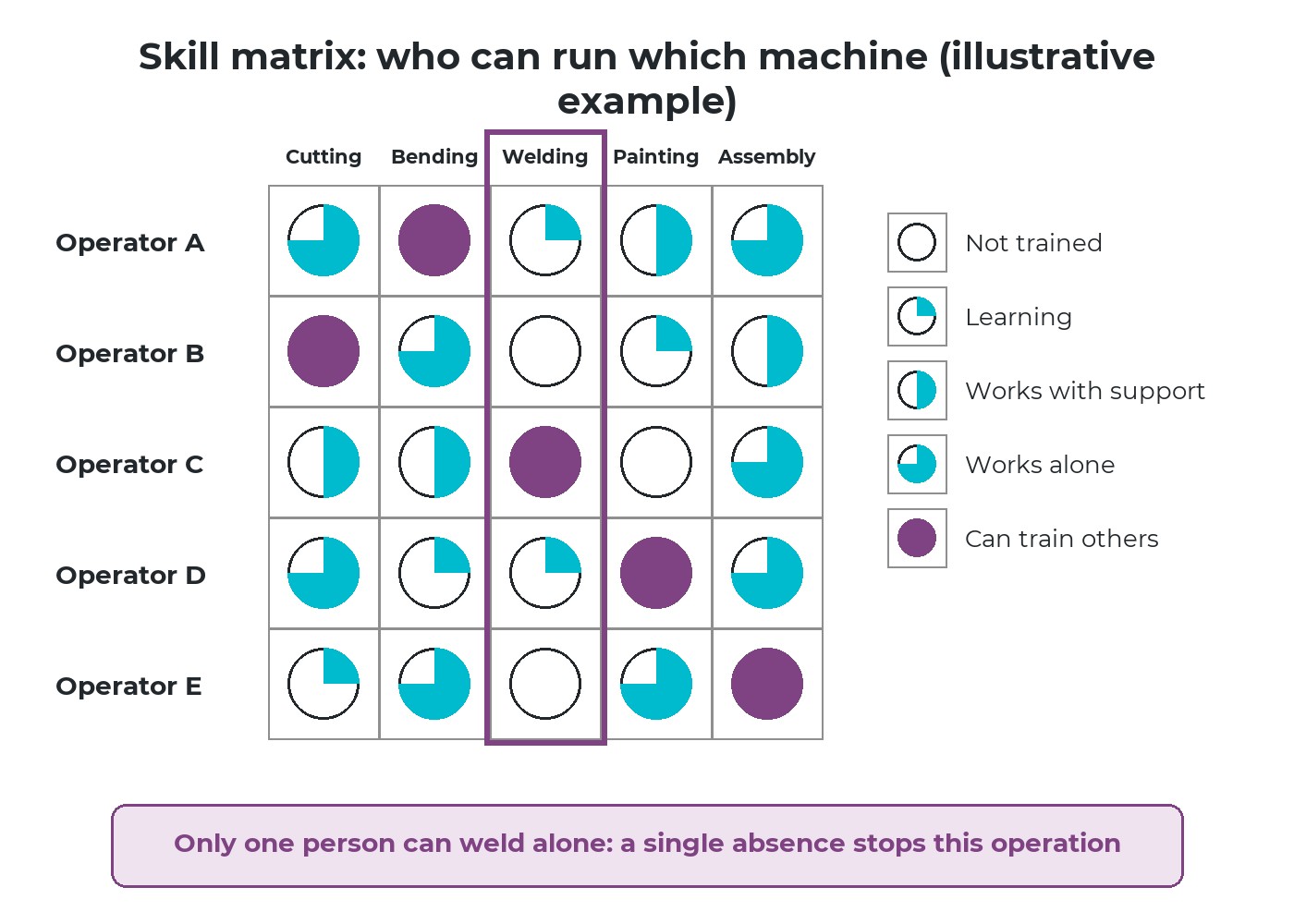
Illustrative example: when only one person can do a job alone, one absence stops it. The CNC answer is the same pattern.
Next step on Viindoo. The AI counted the skills and levels on each employee's profile. With the HR Skills Framework app, the company can also declare the skills and levels each position requires, which gives "enough people" a reference point. The decision on the shift stays with the workshop manager.
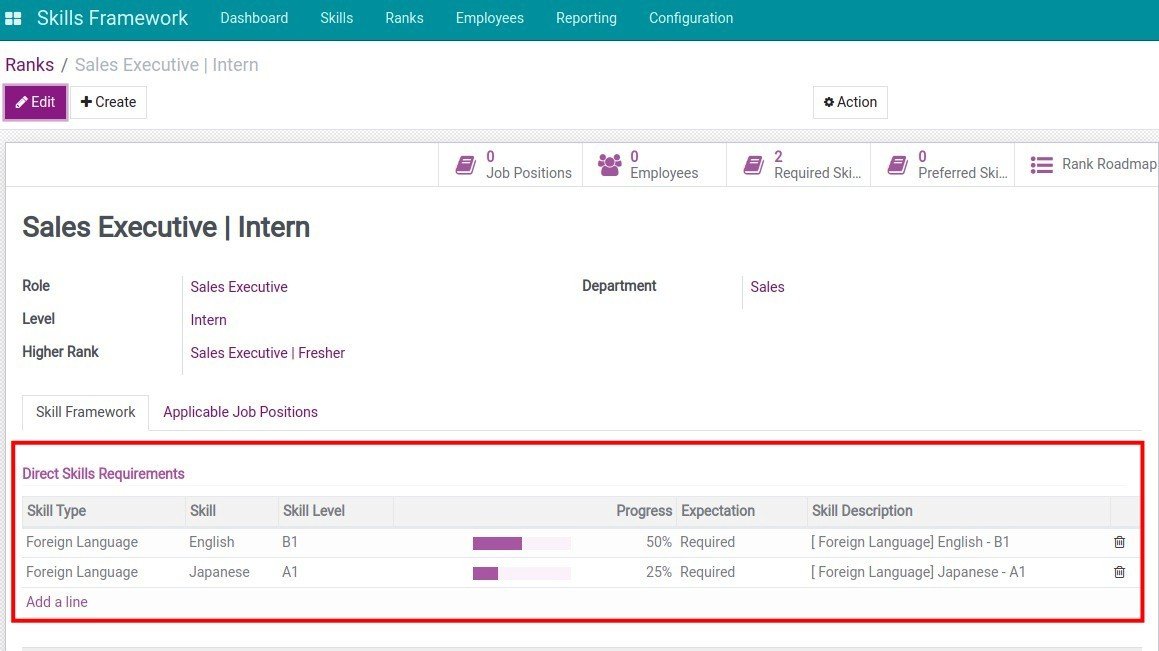
Example: a rank lists the skills it requires and the level expected for each.
What to apply in your company. Write down what a shift needs: how many people, at what level. Until that number exists, AI in HR management can only lay out conditions. Update skill levels after each training round, or the count describes last year's team.
Situation 2: contracts and probations ending, with two warnings nobody asked for
Request typed: "Which running labour contracts end by the end of January 2027, and who is about to finish probation? What should I do first?"
What came back, in 19 seconds. Nine running contracts ending by 31 January 2027, main contracts only, and three assembly workers finishing probation on 12 December. Then an order of work by deadline, starting with the marketing manager's renewal before 5 December, 13 days away, and the three probation reviews, grouped with the workshop head, before 12 December.
A section headed "To check" followed. Some contract titles carry a different name from the employee: "a contract titled Nguyen Thi Trang is attached to Kim Thi Hai Yen. Review them so you do not draft a renewal for the wrong person." And the workers' probation runs almost 11 months, from 5 January to 12 December, so the AI asked HR to confirm the date; a probation that long would also exceed the legal maximum under Article 25 of the Labour Code. In the first run, before end dates were entered, it found 211 running contracts and none with an end date, and warned that a fixed-term contract without one will never be flagged before it expires.
Next step on Viindoo. Each contract holds an end date and an end of trial period. With the end date filled in, Viindoo schedules a to-do for the HR person responsible a set number of days before the contract ends, seven by default. Without the date, there is nothing to remind anyone of.
What to apply in your company. Make the end date and the end of trial period required on every fixed-term contract, and name contracts by one rule. A wrong name in a title looks harmless until a renewal goes out with it. More on contract records in the article on HR contract management software.
Situation 3: the hiring pipeline, and applications nobody owns
Request typed: "Which position has the most applicants, how many people are in interview rounds, and which applications have sat too long in one round?"
What came back, in 24 seconds. 191 applications in progress: 71 new, 55 in screening, 34 in the first interview, 20 in the second and 11 at contract proposal, so 54 in interview rounds. No threshold for "too long" had been given, so it chose 30 days without a stage change: five interview applications were stalled, none with a recruiter assigned, the longest a sales applicant waiting in round two since 7 October.
In the first run, the AI refused to name any slow application: all 191 had their last stage change at the same moment, around 13:54 on 18 November. "This data cannot tell which applications are slower than others. That time may be the date the data was entered, not the real date of moving to a round." That is how the record works: the stage date is set when an application is created and moves only when its stage changes, so applicants imported in one batch share the import time.
What to apply in your company. Agree on what "too long" means for each stage, and give every application in an interview round an owner. An applicant who waits weeks for a second interview has often accepted another offer. Viindoo's hiring side is described on the recruitment page.
Situation 4: an interview invitation drafted, but not sent
Request typed by the director: "Draft an email inviting the applicant who has been longest in the second interview round to an interview at 9 a.m. next Tuesday. Let me read it before it goes."
What came back, in 17 seconds. No email left the system. The AI found the applicant, drafted the invitation and stopped at a confirmation card. The message goes out only when the person has read it and confirmed; they can also edit it first or cancel. Both runs ended at the card.
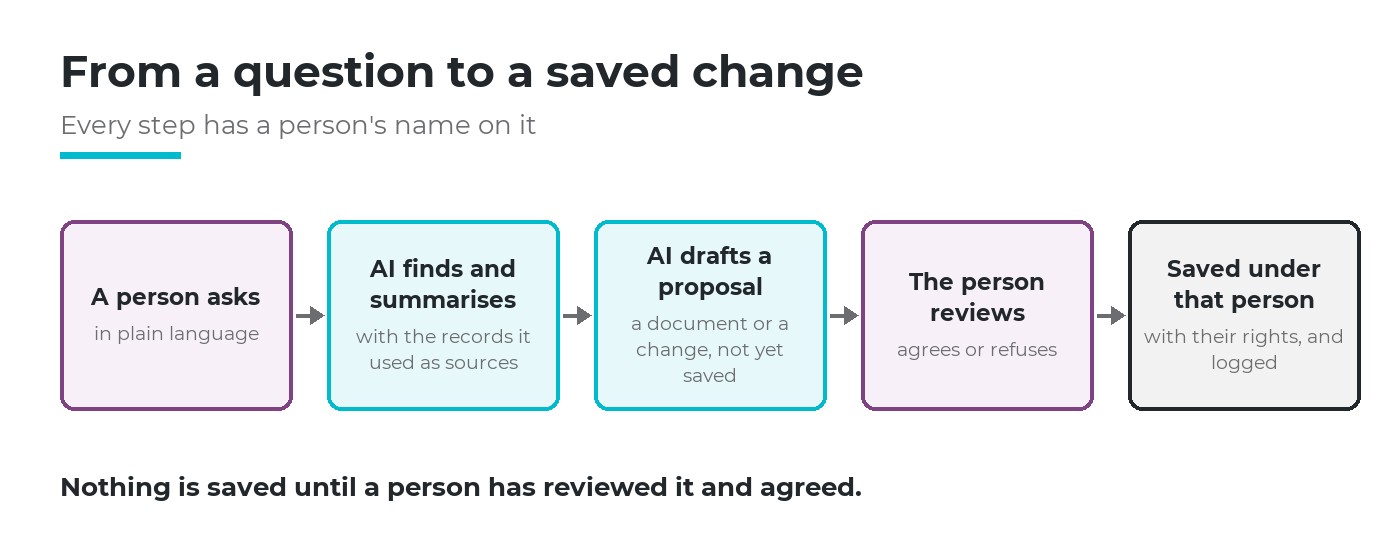
AI finds, summarises and drafts in the middle steps. A person starts the chain and closes it.
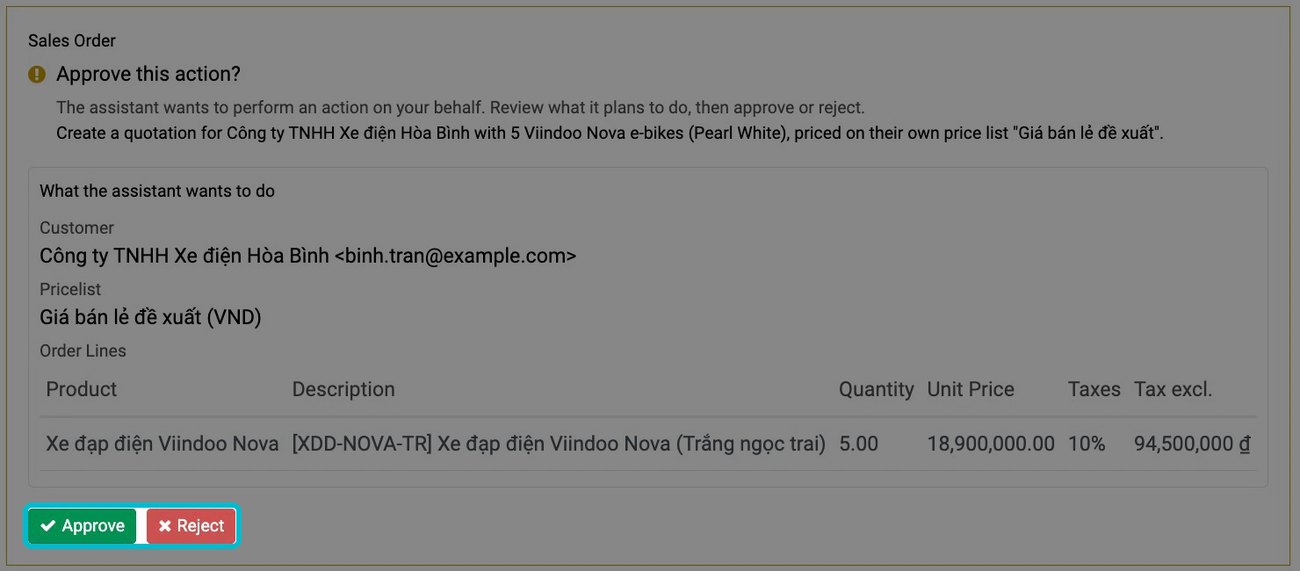
From an earlier run on the same test company: the same kind of card, here for a quotation. Nothing happens until a person approves it.
What to apply in your company. Agree who may confirm messages to candidates: the recruiter for a routine invitation, the hiring manager for an offer or a refusal. An email to a candidate cannot be taken back, so the person who confirms it answers for it.
Situation 5: leave requests, and a sales team short-handed for two days
Request typed: "Are any leave requests waiting for approval? Who is off before the end of the year, and is any department short of people at the same time?"
What came back, in 24 seconds. Five paid-leave requests waiting for approval, and none at the second approval step. Then every approved and pending absence up to 31 December, department by department, and one conclusion:
Only Southern Sales needs attention. On 17 and 18 December, three of its seven people are off at the same time, about 43%. If you do not approve the pending request, two will be away.
The AI named its basis, leave requests only, not shifts or public holidays, and offered to open the pending requests. In the first run, with no leave entered, it said so, and warned that days off reported by message or spreadsheet would not appear.
Next step on Viindoo. The sales manager decides on the pending request knowing the overlap, and approves or refuses it in the Time Off app. The AI can open the request; the decision is not its to make.
What to apply in your company. Every absence goes through the system, including leave agreed verbally and sick days reported by phone. A leave calendar with gaps is worse than none, because it looks complete. When setting the annual leave schedule, agree with each team how many people may be away on the same day.
Situation 6: late check-ins, and why the counting rule matters
Request typed: "In October 2026, which employee checked in after 8:30 most often?"
What came back, in 42 seconds. One employee with 12 late check-ins, then two with 5; 30 people had at least one. More useful than the ranking was the method, stated without being asked: Vietnam time, every check-in after 08:30:00 counted, "if a person checks in several times a day, for example after the lunch break, each one is counted", and no use of each person's work schedule. In the first run, with no attendance recorded, the AI counted zero check-ins in any month, said it could not answer and produced no list.
What to apply in your company. Decide the rule before using the number: first check-in of the day or every one, a grace period or not, a fixed start time or each person's schedule. Then put that rule in the question. Treat a figure like 12 as the start of a conversation, never as a sanction on its own.
When the records are incomplete, AI in HR management says so
Across both runs, the most valuable behaviour was not speed: the AI named what was missing or suspicious instead of filling the gap with a plausible answer.
| What the AI found | What it said |
|---|---|
| No leave requests, no check-ins (first run) | The answer holds only if the data is recorded; it may also be a rights issue |
| 211 contracts without an end date (first run) | A fixed-term contract without one is never flagged |
| Every application with the same stage date (first run) | Probably the import date; slow cannot be told from fast |
| Contract titles naming another person (second run) | Review before drafting a renewal |
| A probation of almost 11 months (second run) | Confirm the date was entered correctly |
The same habit showed up on pay: asked to compare October payroll with September, the AI found them identical to the last dong and warned that the October payslips might have been copied; payroll questions are covered in the article on AI for accounting.
What HR records must contain for AI in HR management to answer correctly
Every caveat above points back to a habit in the records, not to the AI. It counts what has been recorded, dated and assigned; a contract in a cabinet or a day off agreed in a chat does not exist for it.
1. Profiles with a department and current skills
An employee without a department drops out of every count by department.
2. Contracts with dates and the right names
End date and end of trial period on every fixed-term contract. No date, no reminder.
3. Leave and check-ins in the system
Leave agreed in a chat and check-ins never synchronised are invisible to every question about absence.
4. Applicants with an owner and real stage dates
Stage changes recorded when they happen, so waiting time means something.
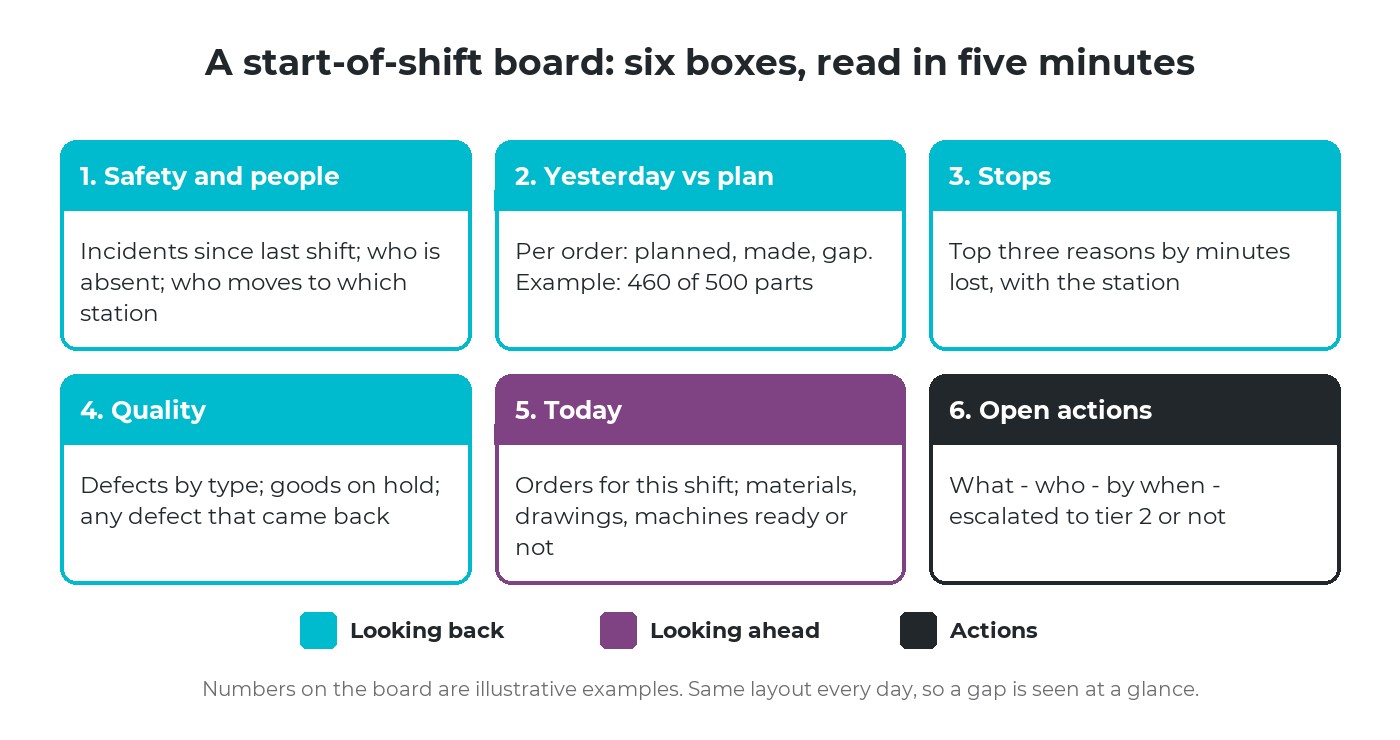
Illustrative example from the shop floor: the first box of the board is only as good as the leave and check-in records behind it.
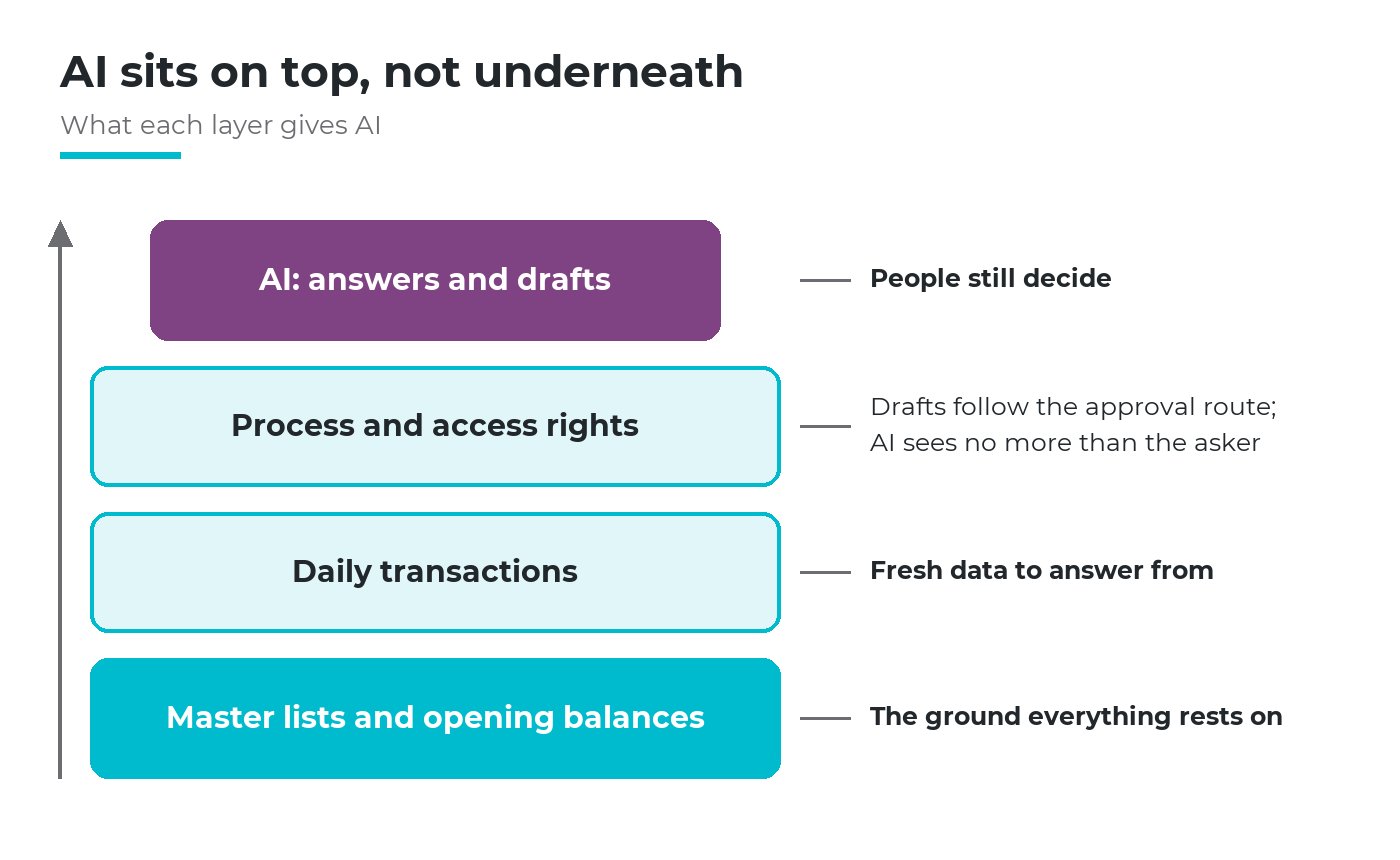
Without profiles, contracts, leave and check-ins beneath it, the AI's answers are fluent but have nothing to rest on.
The employee side of Viindoo, from profiles to contracts, is described on the employee management page.
Rights, approval and cost: HR data is not for everyone
It sees what the person asking may see
A salesperson asked to see their own labour contract and the salary in the sales manager's contract. The AI answered that it could read no contract data: in the records that person may see, the employee side holds only the public directory. In the first run it also named the groups allowed to read contracts, and pointed the person to HR for a copy of their own.
So I will not guess or give any figure.
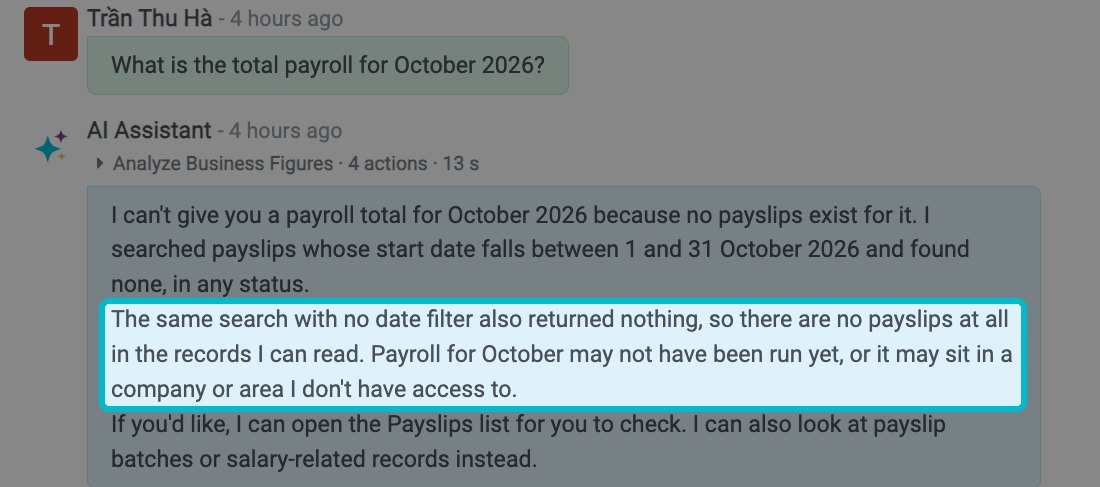
From an earlier run on the same test company: with sales rights only, the AI found no payslips it could read.
The rule cuts both ways: the AI has no rights of its own, so whatever the rights leave open, it can read. Before switching AI on, check who can read contracts, payslips and private profile fields, as discussed in the article on AI data governance.
By default, a person approves every message and every change
Answering changes nothing. When the AI is asked to send, schedule, create or change something, it stops by default at a confirmation card, as in situation 4. Which actions must ask first is a setting the company controls, action by action.
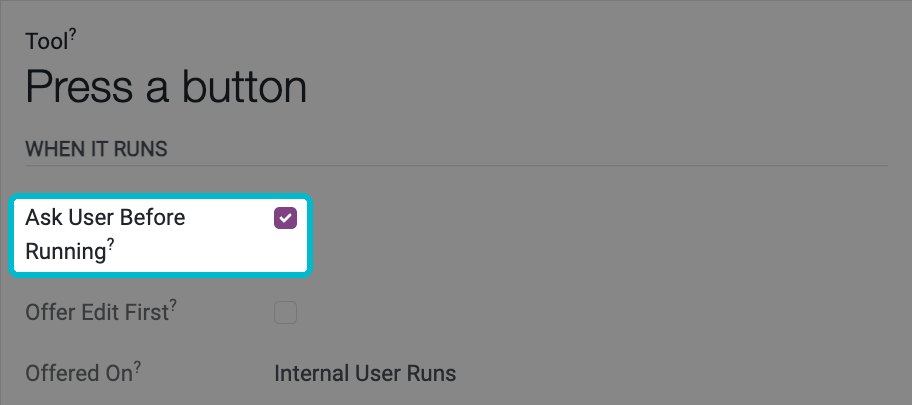
Example: the option that makes an AI action wait for a person's approval.
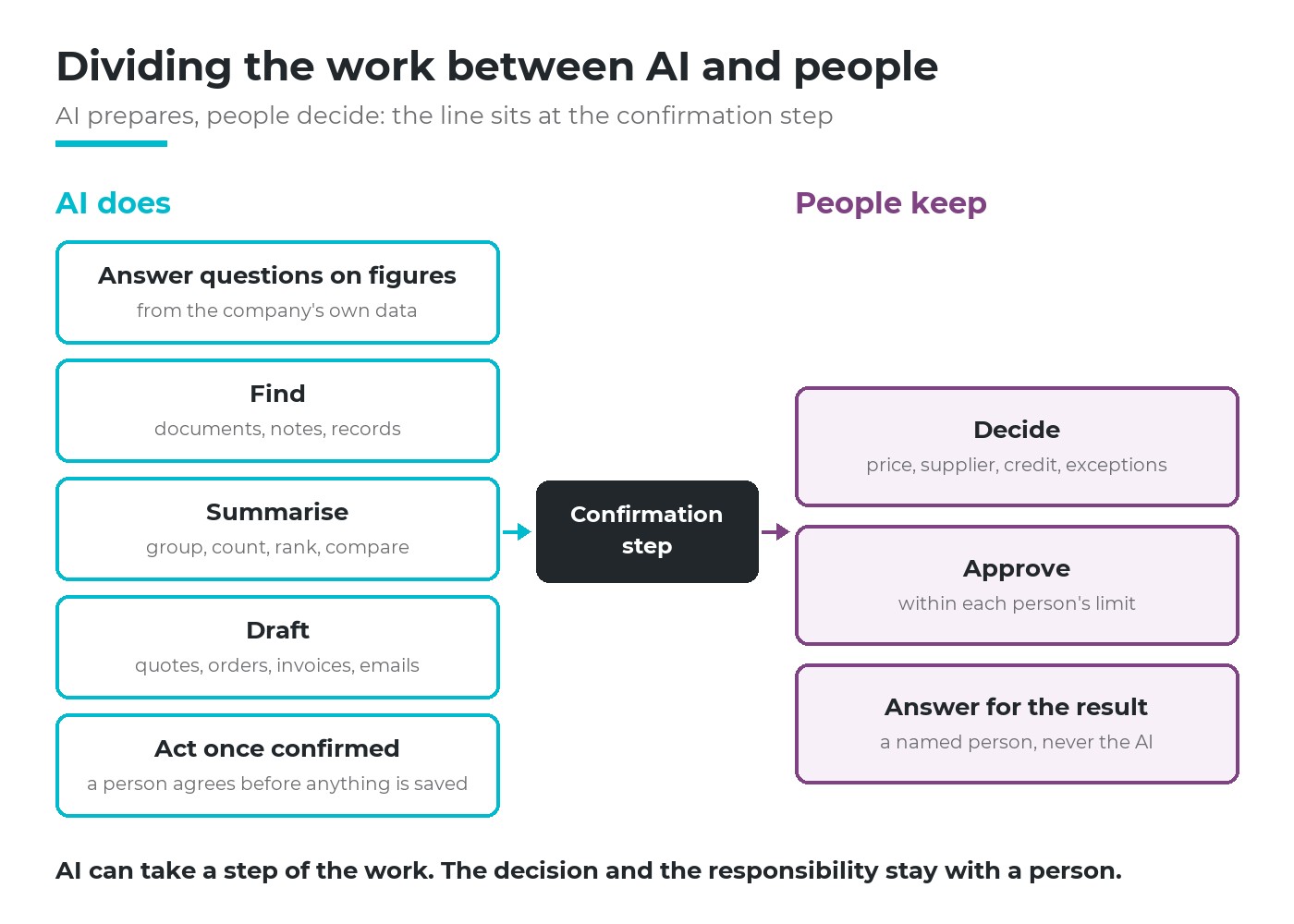
In HR, the decisions on the right are renewals, probation results, hiring and leave approvals.
Cost caps and a record of each call
The company caps AI spending per person, per company and per question, with an alert before a cap is reached, and each call is logged with the user, the cost and the status.
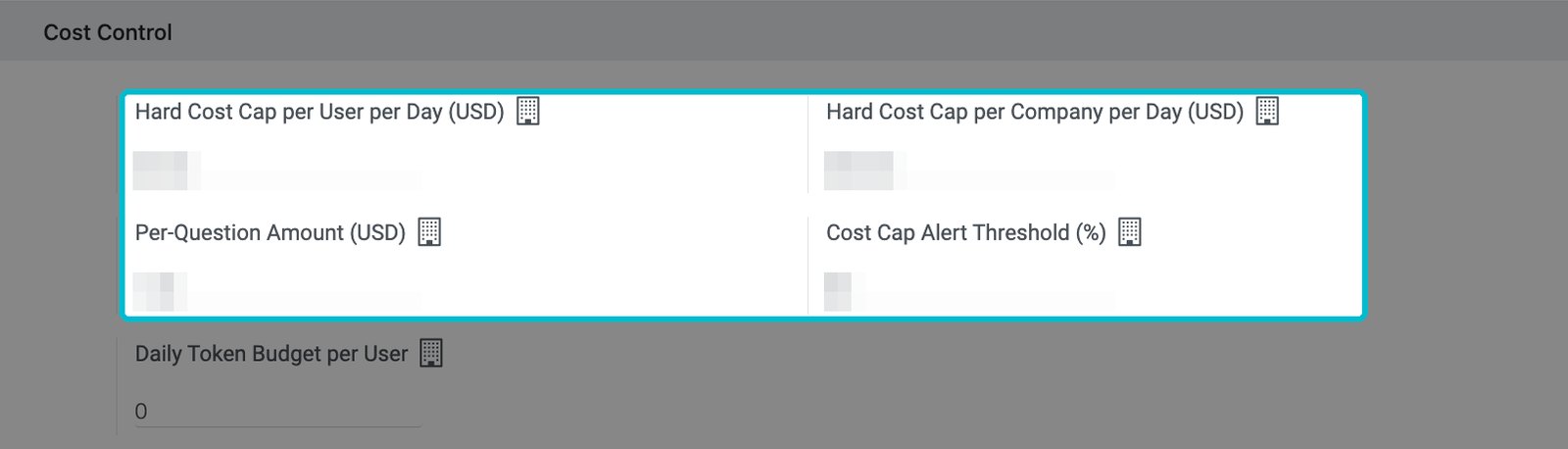
The cost control settings, values hidden: each cap is set by the company.
What AI in HR management does not do
- It does not judge people. We did not test performance reviews, so we make no claim about them. Renewals, probation results, hiring and any talk about lateness stay with managers and HR.
- Some HR work was outside our test. Drafting or signing contracts, calculating payroll and changing employee records were not tested, so this article makes no claim about them.
- It is not always right. The figures we checked matched, but small slips happen: one answer announced "the next five" and listed six names, because several were tied. An answer about a person needs HR to read it first.
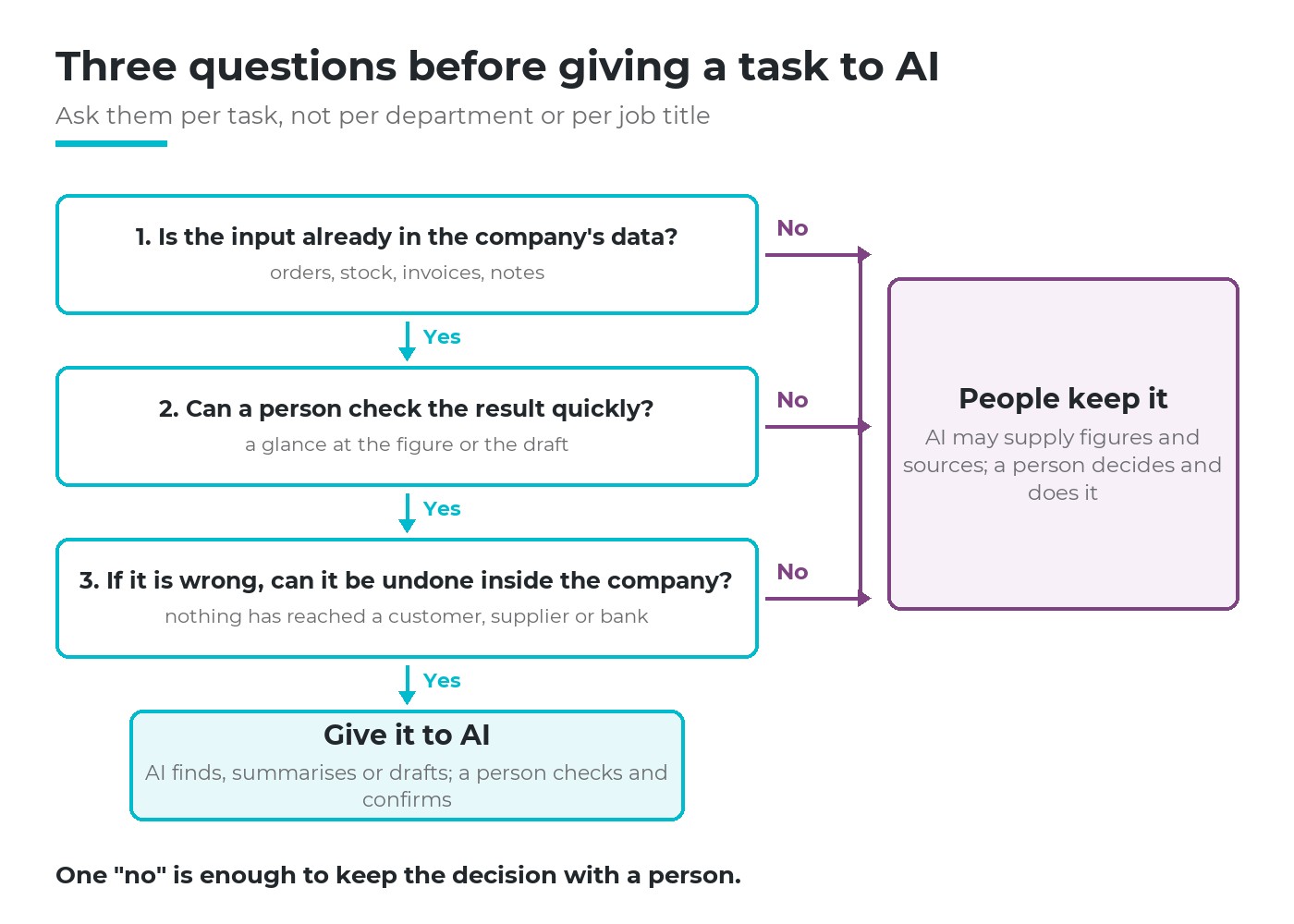
Applied to HR: counting contracts that end this month passes all three; an email to a candidate fails the third, so a person confirms it.
Where an HR team should start with AI in HR management
1. Clean the profiles
A department and a manager for everyone, skill levels up to date.
2. Date every contract
End date and end of trial period on every fixed-term contract.
3. Move leave and check-ins in
No leave approved only in a chat; attendance synchronised regularly.
4. Ask three questions a week
Contracts ending, leave overlaps, stalled applications, each read by a named HR person.
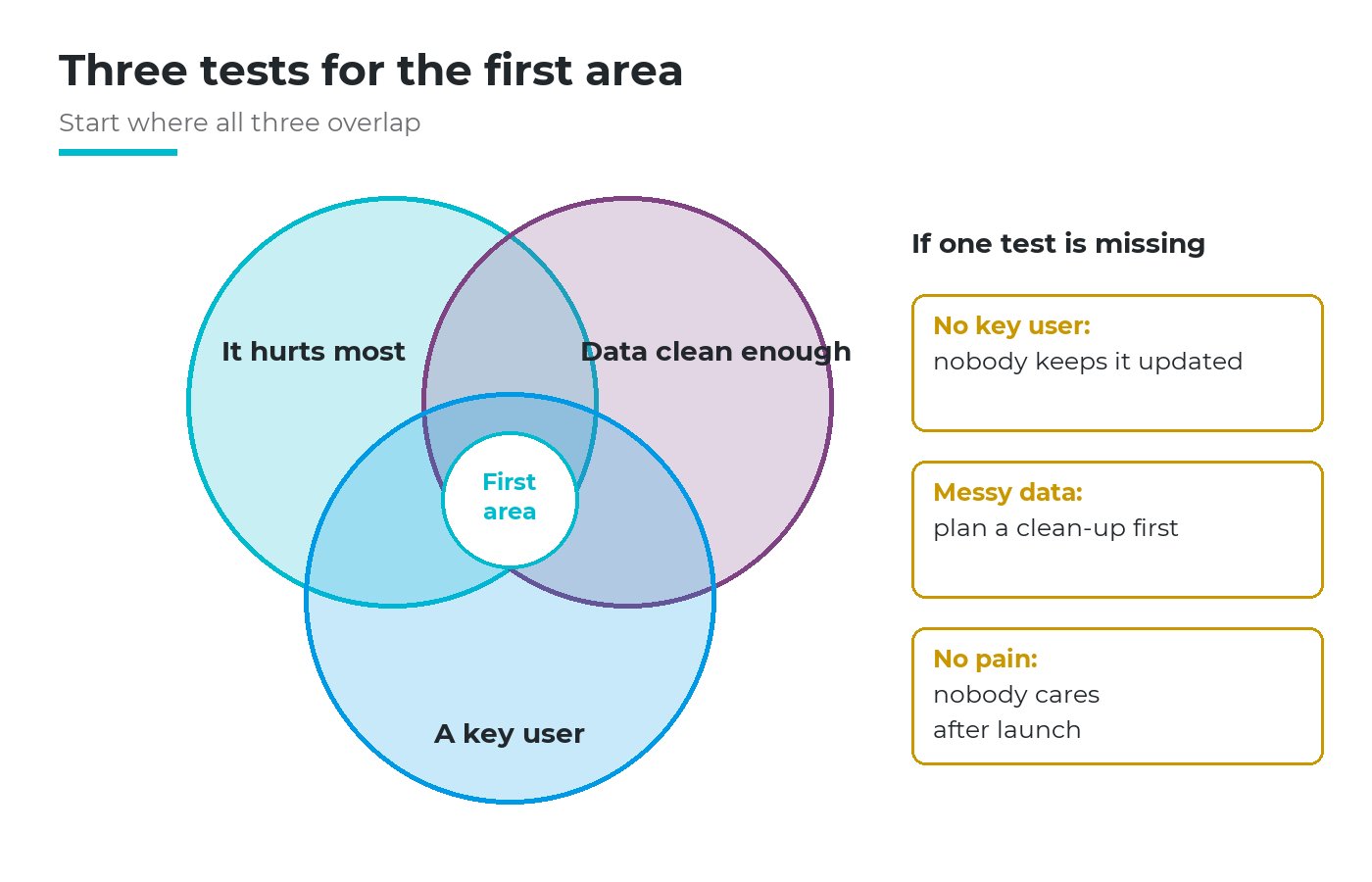
In many companies, contracts are the first HR area to pass all three: the pain is a missed deadline, the data a short list.
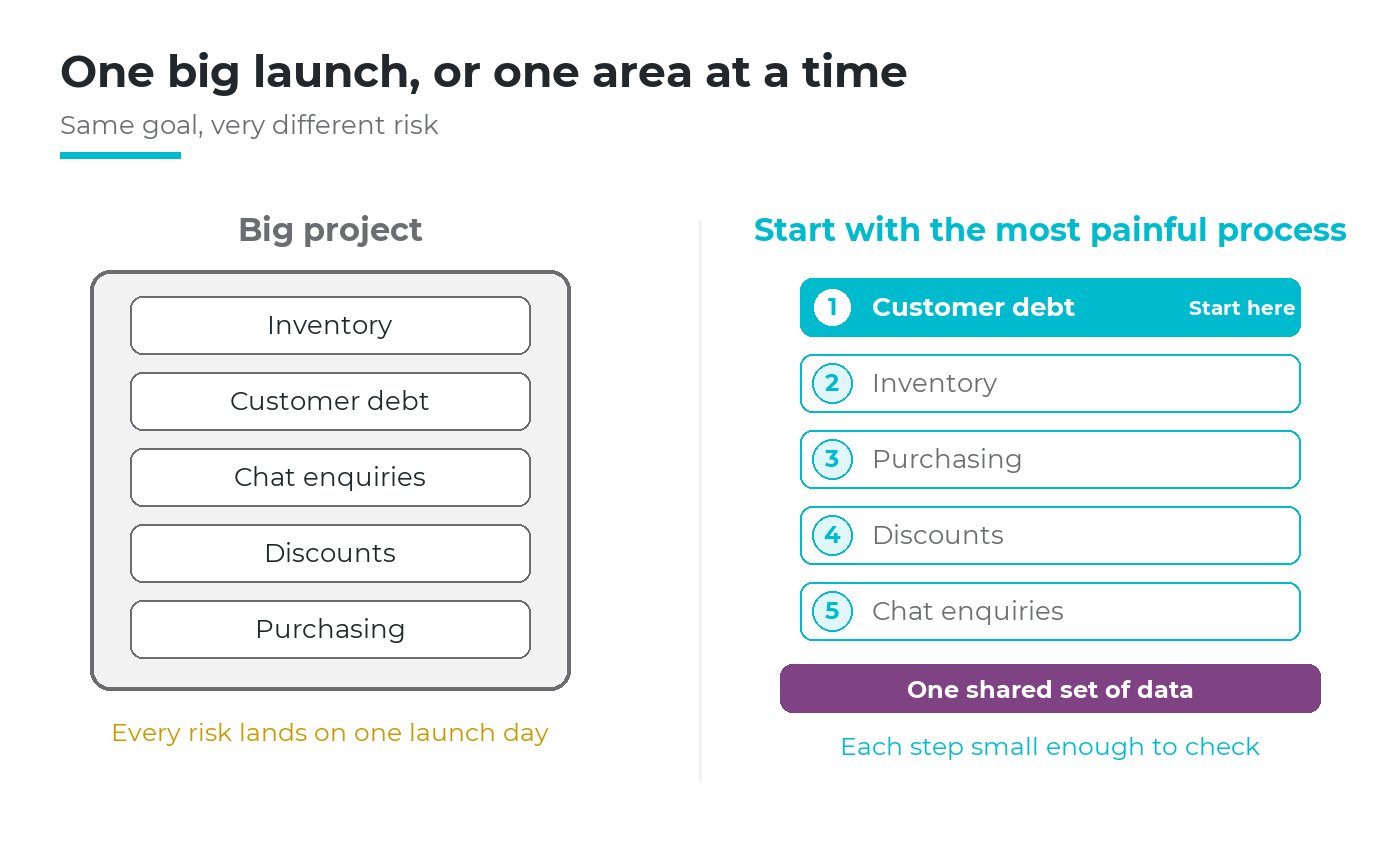
Start with the most painful process, then add the next one on the same set of data.
If you are still comparing HR tools, see the overview of HR management software. What agentic AI is, and whose rights it uses, is explained in the article on what agentic AI is.
Would you like to see AI answer questions about your own people, contracts and hiring? Tell us where it hurts most. Book a consultation and bring the list of contracts ending in the next three months, or see the costs first.
Frequently asked questions about AI in HR management
Only if their access rights already allow it. The AI reads with the rights of the person asking; in our test, a salesperson could read no contract and got no figure.
We did not test that, so we make no claim. We tested counting recorded facts such as skills, leave and check-ins; judging a person's work stays with their manager.
To the AI provider your company connects with its own key; each connection shows its data storage region, and you pay the provider directly. Viindoo does not resell AI. HR records are personal data, so choose the provider and storage region in line with Vietnam's Personal Data Protection Law.
Related articles
- What Is Agentic AI, and How Does It Work Inside a Business Management System?
- Separate Software Plus Spreadsheets, or One Platform for the Whole Business?
- AI for Manufacturing Companies: What Agentic AI Can Do from Order to Shop Floor
- AI for Accounting: What Agentic AI Can Do from Receivables to Reports
- Build Business Software with AI, or Use a Platform with AI Built In?
- AI in Sales: What Agentic AI Can Do from Opportunity to Quotation
- AI in Inventory Management: What Agentic AI Can Do from Stock to Delivery
- AI in Project Management: What Agentic AI Can Do from Deadlines to Logged Hours
- AI in Procurement: What Agentic AI Can Do from Late Deliveries to Unbilled Goods
- 10 effective online HRM human resource management software
- Top HR Contract Management Software for Streamlined HR Operations