AI in inventory management is worth judging on the most ordinary question a business asks every day: how many do we have, and where? In most trading and manufacturing companies, that answer still travels by phone. Sales calls the warehouse, the warehouse opens a spreadsheet or walks to the shelf, and the customer waits for a call back.
The question for a director is not whether an AI can talk about stock. It is whether its answer is solid enough to promise a customer a delivery, and what has to be true of the records for that to hold. Below are four situations we ran on a test company, the rules the AI works under, and what it does not do.
Why stock questions still travel by phone
Inventory management is about knowing the range and quantity of the stock a company holds and handling the demands placed on it. The difficulty in a small or mid-sized company is rarely the concept. It is that stock, customer orders and deliveries are recorded in different places, at different times, by different people.
Three mechanisms keep the phone ringing. The stock figure in a spreadsheet is a copy, already out of date by the next delivery. A stock figure on its own does not say how much of it is already promised to other orders. And the person who knows the real answer, usually the warehouse keeper, becomes the point every question has to pass through.
The director
How much stock of our best-selling lines do we hold, and in which warehouse? Which customer orders are waiting for goods?
Sales
A customer asks when the rest of the order arrives. What is left to deliver, and is the stock there?
Warehouse
Which deliveries are overdue, which backorders are still open, and which items are not enough for what we have promised?
Purchasing
Which items have run out or will run short, and is it a buying problem or a production problem?
Each of these questions already has an answer somewhere in the records. AI in inventory management earns its keep when it reaches that answer directly, in the words of the person asking, without anyone opening three screens or calling the warehouse.
What AI in inventory management reads, and the three stock figures it must not mix up
The AI in inventory management discussed here does not sit beside the business system; it works inside it. It reads the same records the warehouse uses: products and their variants such as colour or version, warehouses and the locations inside them, stock quantities, sales order lines with their delivered quantities, delivery notes and their scheduled dates, and receipts from suppliers. When it builds an answer from records, it lists those records under Sources, so the reader can open the delivery note or order the figure came from.
Most mistakes in stock answers, whether made by a person or an AI, come from mixing up three different figures. The inventory app keeps them apart, and a good answer says which one it used.
| Figure | What it means | Use it for |
|---|---|---|
| Quantity on hand | What the records say is physically in the location now | Answering "can we ship today?" |
| Reserved quantity | Part of the stock on hand already set aside for a specific delivery | Seeing which stock is already tied to a delivery and should not be moved |
| Forecasted quantity | Stock on hand, plus goods coming in, minus goods going out | Deciding whether to buy or produce more |
These are definitions of the inventory app, not of the AI. They matter because the AI answers with whichever figure the question calls for, and the reader has to know which one is on the table before acting on it.
AI in inventory management in practice: four situations from our test
To see AI in inventory management on real records, we asked these questions to the AI on Viindoo, using the data of a test company that assembles and sells electric bikes and holds stock in two warehouses. Every figure below belongs to that test company and only shows how the AI answers. The questions are shown as typed, translated where the test ran in Vietnamese; the answers are shortened excerpts.
Situation 1: stock of one product, by colour and by warehouse
Question typed: "How many Nova electric bicycles are in stock right now, by warehouse?"
What came back, in 10 seconds. 26 Nova bikes, all in the NM1 warehouse and none in the HCM warehouse, split by colour:
| Nova colour | NM1 warehouse | HCM warehouse |
|---|---|---|
| Matte black | 6 | 0 |
| Pearl white | 10 | 0 |
| Cement grey | 3 | No stock record |
| Moss green | 7 | No stock record |
| Total | 26 | 0 |
We checked the 26 against the stock records and it matched. Three remarks in the answer were worth more than the total. None of the bikes was reserved for a delivery yet; as situation 2 shows, that does not mean they were free, because confirmed orders can promise stock that nobody has reserved. The HCM warehouse had a record at zero for two colours but no record at all for the other two, which separates "sold out there" from "never stocked there". And the AI counted only the four finished bikes, leaving out the Nova plastic covers and frame assemblies because they are components.
Next step on Viindoo. If the HCM warehouse needs Nova bikes, the warehouse creates an internal transfer from NM1 to HCM in the inventory app. Which colours to move, and how many, stays a decision for the people who know the orders behind each warehouse.
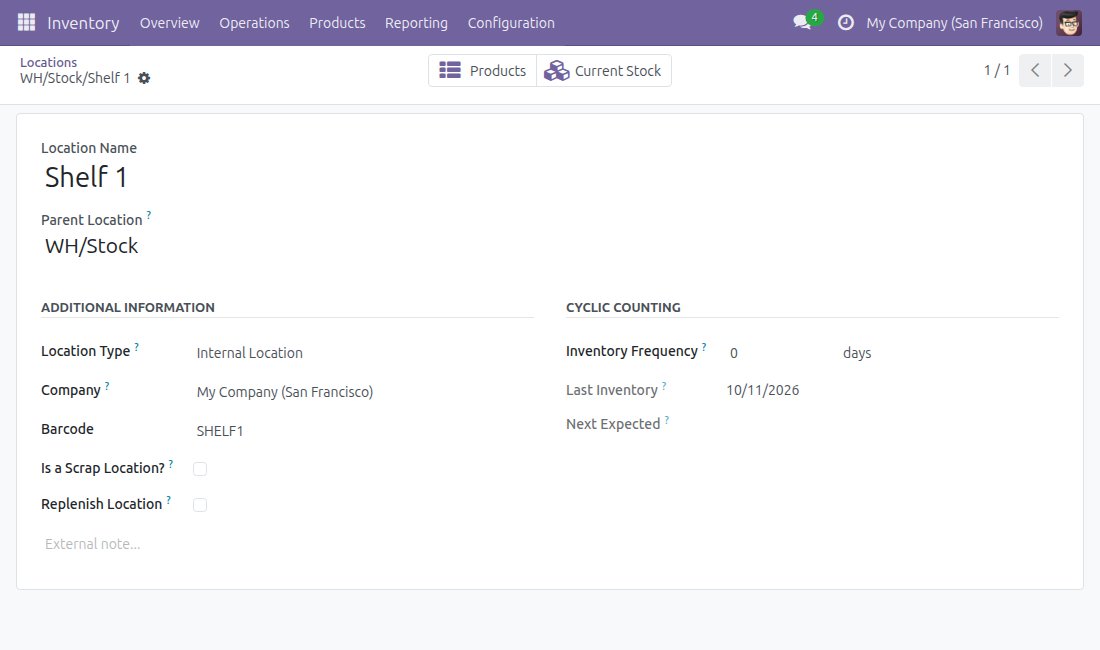
Example: each location is its own record with a barcode, so stock can be reported by warehouse and by location.
What to apply in your warehouse. An answer by colour and by warehouse is only possible when each colour is a product variant and each warehouse is set up as its own warehouse. If colours are written in a note, or two sites share one warehouse, the AI cannot split what the records do not split.
Situation 2: orders not fully delivered, and items short of stock
Question typed: "Are there confirmed sales orders not fully delivered? Which items are short of stock to deliver?"
What came back, in 33 seconds. 35 confirmed orders, 54 product lines, not fully delivered; service lines were left out. Only one order, S00170, had been partly delivered; the rest had not shipped anything yet. The AI compared the quantity still to deliver for each item with the stock on hand, and sorted the items into three groups. Six items were short, for example:
| Item | Still to deliver | On hand | Short |
|---|---|---|---|
| Nova electric bicycle, matte black | 15 | 6 | 9 |
| Aura electric motorbike, burgundy, premium | 12 | 5 | 7 |
| Electric bike, made to order | 11 | 1 | 10 |
| 60V 20Ah charger | 30 | 25 | 5 |
Sixteen more items had no stock at all, led by helmets (33 to deliver) and a group of machined parts such as steel flanges and drive shafts. The third group was covered, including two items covered exactly: two Lumi bikes in matte black for two to deliver, and one Aura in moss green for one. Note the Nova line: the 6 matte black bikes from situation 1 face 15 already promised.
The AI added two warnings without being asked. It had added up the demand of all orders for the same item, so a single order may still be covered even when the total is not. And the stock figure did not include goods arriving or production in progress, so some items at zero might simply be made to order. In other words, this answer used stock on hand, not forecasted quantity, and said so.
Next step on Viindoo. The warehouse checks which short items already have goods on the way. For traded goods such as helmets and chargers, purchasing compares the shortage with the reordering rules, where each item has a minimum, a maximum and an order multiple per warehouse. Made-to-order items go to production. For a plant, the related question of which work orders are blocked by missing components is covered in the article on AI for manufacturing companies.
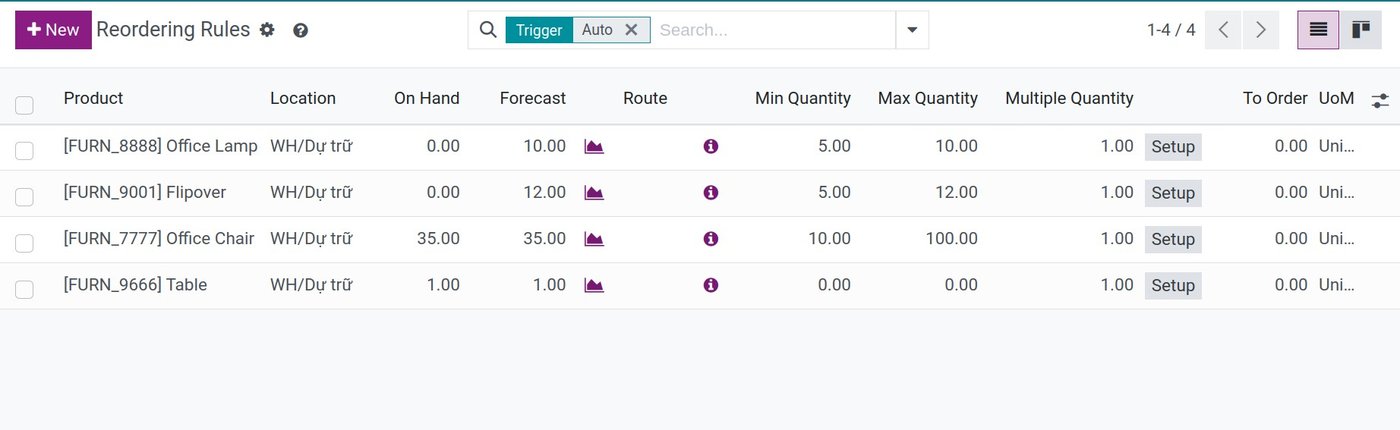
Example: reorder points are set by people in the inventory app; the AI does not set them.
What to apply in your warehouse. Read the warnings before the table. They tell you which figure was used and where the answer may overstate a shortage. A list of short items is a starting point for a check with purchasing and production, not a purchase order.
Situation 3: a customer asks when the rest of the order will arrive
Context. A distributor in Da Nang (test data) received part of order S00170 at the start of October and calls about the rest. The usual reply is "let me check with the warehouse and call you back".
Question typed on the order itself: "How many bikes are still left to deliver on this order? Answer briefly." The answer came back in a few seconds: 3 bikes, because 7 were ordered and 4 delivered. Two Lumi bikes in matte black, premium (4 ordered, 2 delivered) and one Aura in moss green, standard (3 ordered, 2 delivered).
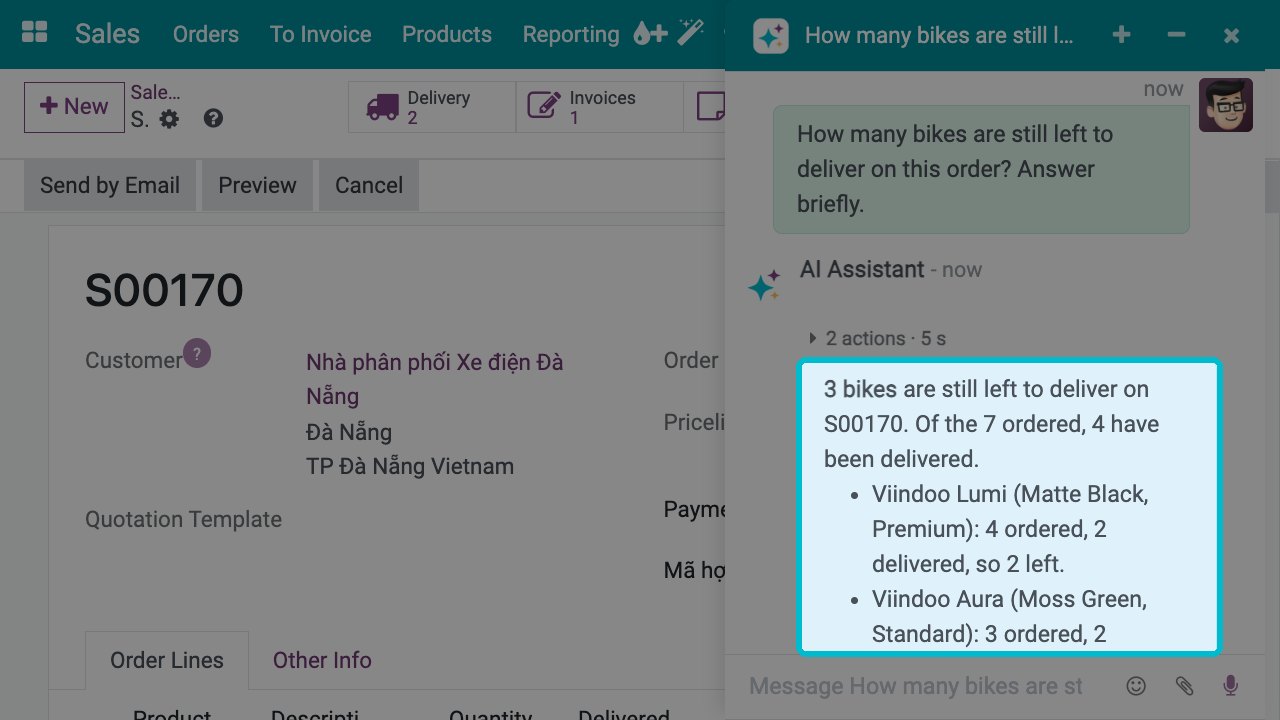
From our test: asked on order S00170, the AI answered that 3 of the 7 bikes were still to deliver, line by line.
Now put this next to situation 2. Those two models were exactly the items listed as covered: two matte black Lumi in stock for two to deliver, one moss green Aura for one. As far as the records show, the goods were in the warehouse. What was missing was the delivery itself: the backorder delivery note was still waiting to be processed.
A second question, "Where is order S00170 now, and what is left to do?", returned the steps already done (confirmation, first delivery, invoice) and what remained: the overdue backorder and a payment due in two days.
Next step on Viindoo. The salesperson asks the warehouse to process the backorder, confirms the date with them, and only then answers the customer. The AI can draft the message to the customer; it stops at a confirmation step, and nothing is sent until the salesperson approves it.
What to apply in your company. Check the order before you promise a date, and never promise from a stock figure alone. The stock may be there while the delivery is stuck, or the delivery may be scheduled while the stock is already promised elsewhere.
Situation 4: checking a delivery against the company's own rule
Context. The test company wrote its sales process once in its knowledge base. The delivery step says: the warehouse delivers within 3 working days of order confirmation; if a delivery is short, the backorder must follow within 7 days and the customer must be told.
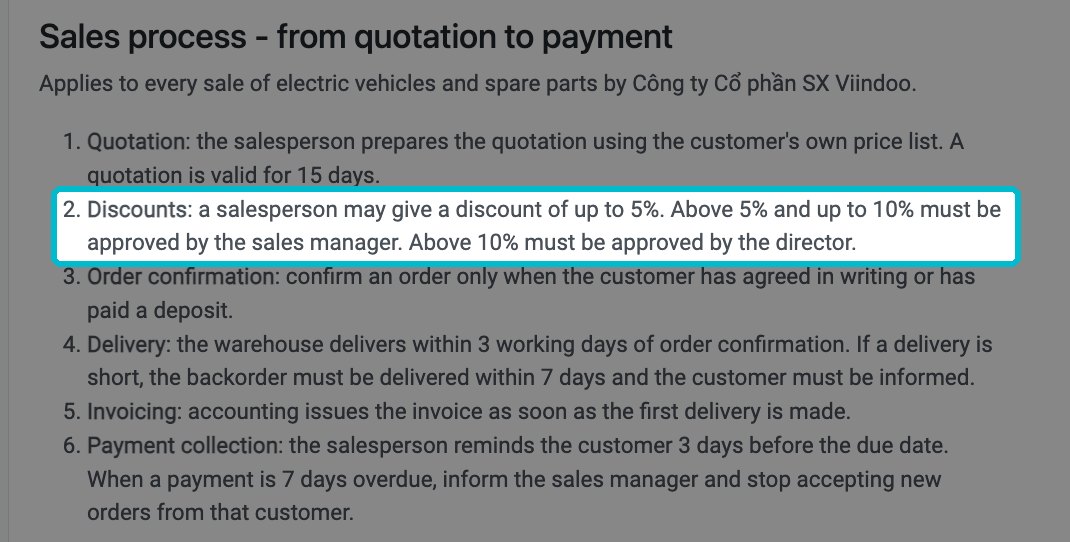
From our test: the knowledge base page the AI compared the order with. Step 4 sets the delivery and backorder rule.
Question typed: "What is still left to do on sales order S00170 under our company sales process? Is anything not following the process?"
What came back. Among the high-severity findings: the backorder was overdue. The first delivery was on 6 October, so under the 7-day rule the backorder was due around 13 October; on 19 November it had still not left, about five weeks late. The AI also found no record on the order showing that the customer had been told about the short delivery. The same answer flagged other points outside the warehouse, such as a discount above the approval limit.
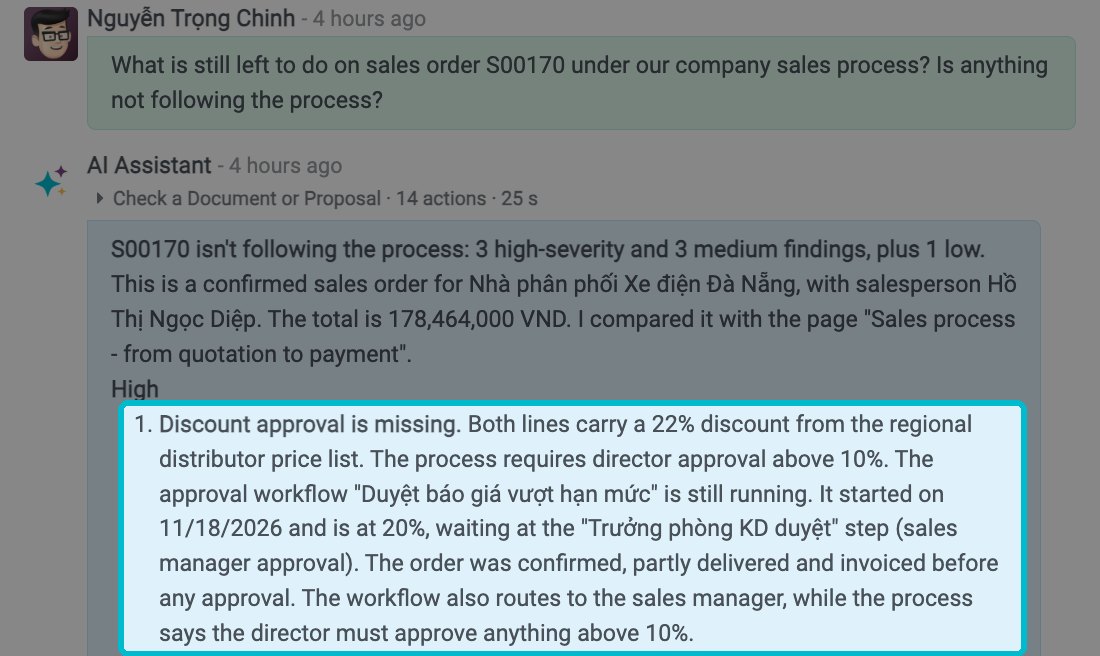
From our test: the AI lists what is left on the order and where it departs from the written process.
Without a written process the AI cannot do this. In our test, before the process page existed, it said plainly that it found no such process, rather than inventing one. This check was run with the director's account.
What to apply in your company. Write the delivery rule down once: how many days to deliver, how many days for a backorder, who tells the customer. A rule kept in someone's head cannot be checked by a person or by an AI.
Rights, sources and approval: three rules the AI works under
AI in inventory management touches stock value, customer orders and supplier data, so the rules it works under matter as much as its answers.
It sees what the person asking may see
The AI has no access rights of its own; it reads with the rights of the person asking. In our test, a salesperson asking about open quotations saw only their own 12 out of 41, and could not see payslips. If your company limits each storekeeper to their own warehouse, which the Multi Warehouse Access Control app does, the AI works inside the same limit. We tested this rule with sales rights, not with warehouse rights.
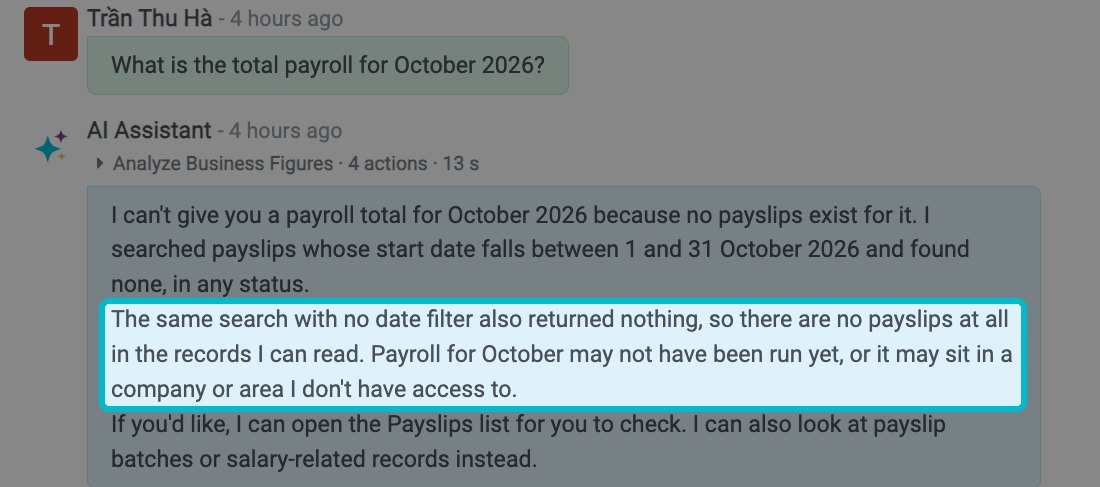
From our test: with sales rights only, the AI found no payslips in the records it could read, and said it may not have access.
The other side of this rule matters just as much. In the same test, the salesperson could see product cost and gross margin, because the default sales rights allow reading them. The AI shows exactly what the access rights leave open, so review the rights before you switch the AI on, especially for cost and stock value.
It lists its sources, and it can take you to the screen
An answer built from records ends with a Sources list of the records it used, limited to those the reader may open, so a figure can be checked before anyone acts on it. You can also ask for a list instead of looking for the right menu: in our test, asking for the open quotations, largest first, returned them in that order. The AI can also open the matching screen with a filter applied, but only a screen the person could reach by themselves.
A person approves every change
Answering changes nothing. When the AI is asked to create or change a record, such as a draft for a customer or an email, it prepares the step and stops at a confirmation card that says what it is about to do. Nothing is saved until the person approves it. Whether a given action must ask first is a setting the company controls.
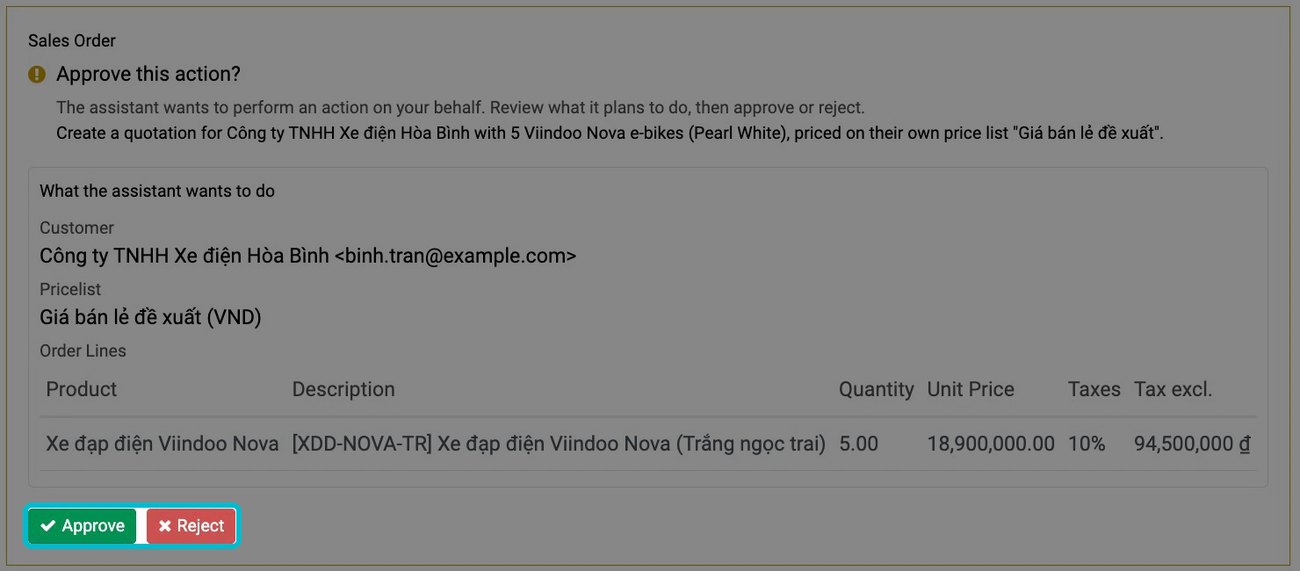
From our test: the AI shows what it wants to do and waits. Here it is a quotation for 5 Nova bikes; nothing is created unless a person clicks Approve.
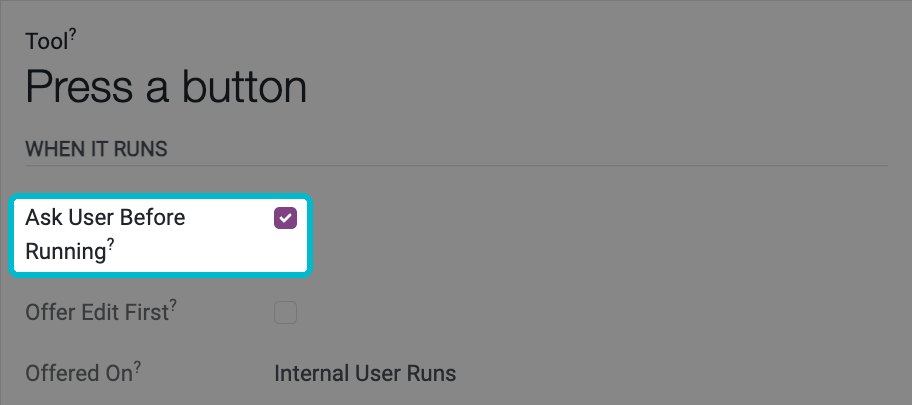
Example: the option that makes an AI action stop for a person's approval before it runs.
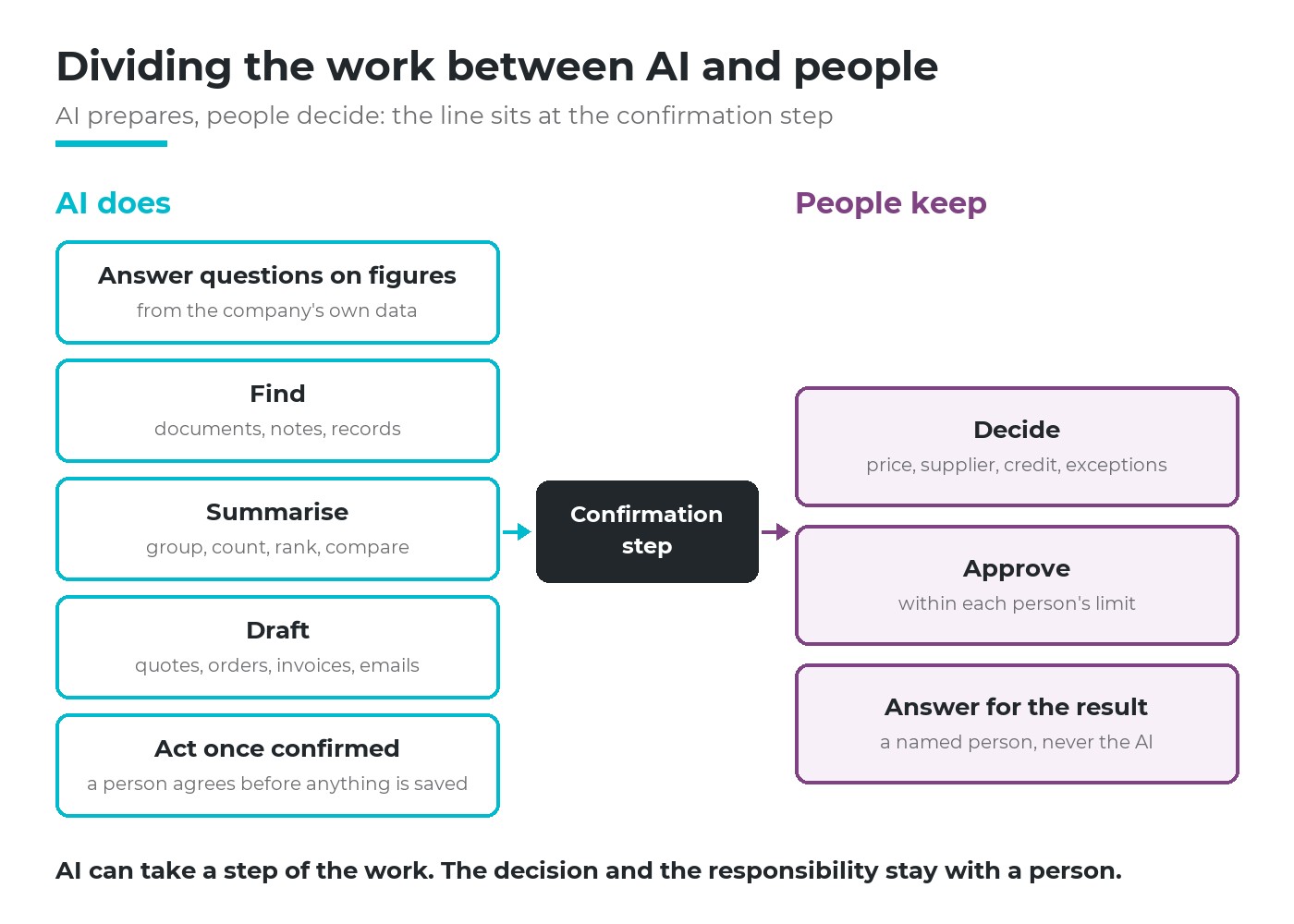
The line between the AI and people sits at the confirmation step.
What has to be true in the warehouse for AI in inventory management to answer correctly
The AI answers from the records, so its answer is only as current as the last record. If goods leave on a delivery note that is entered at the end of the day, every answer before that is wrong by the same amount, however fluent it sounds. The gap between book stock and shelf stock is rarely one big mistake; it is several small, unrecorded moves added together.
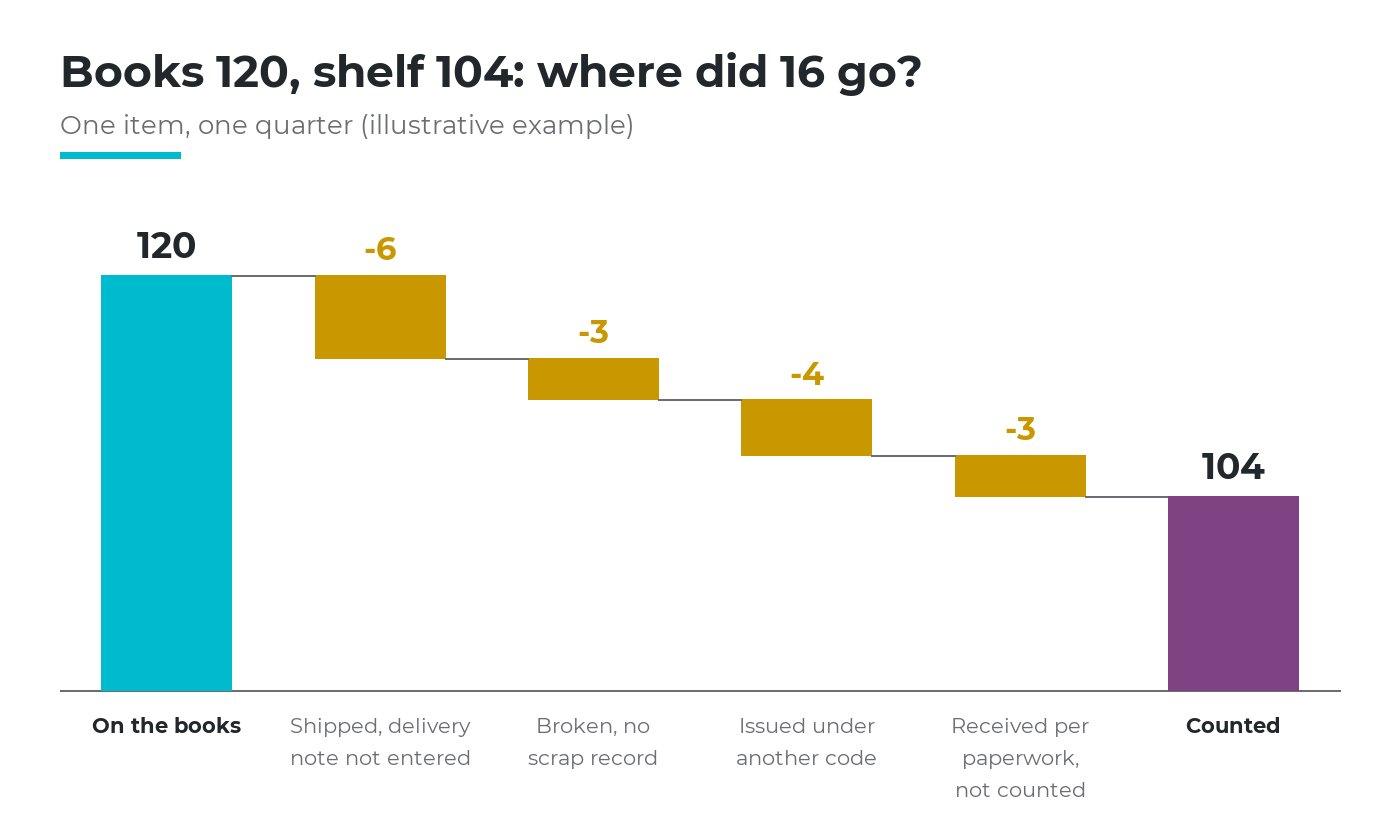
Illustrative example: deliveries not entered, breakage without a scrap record, items issued under another code.
Four control points keep the record close to the shelf: receive and record the counted quantity, put away by location, let nothing leave without a document, and give every loss a reason. A regular cycle count then shows which point is leaking.
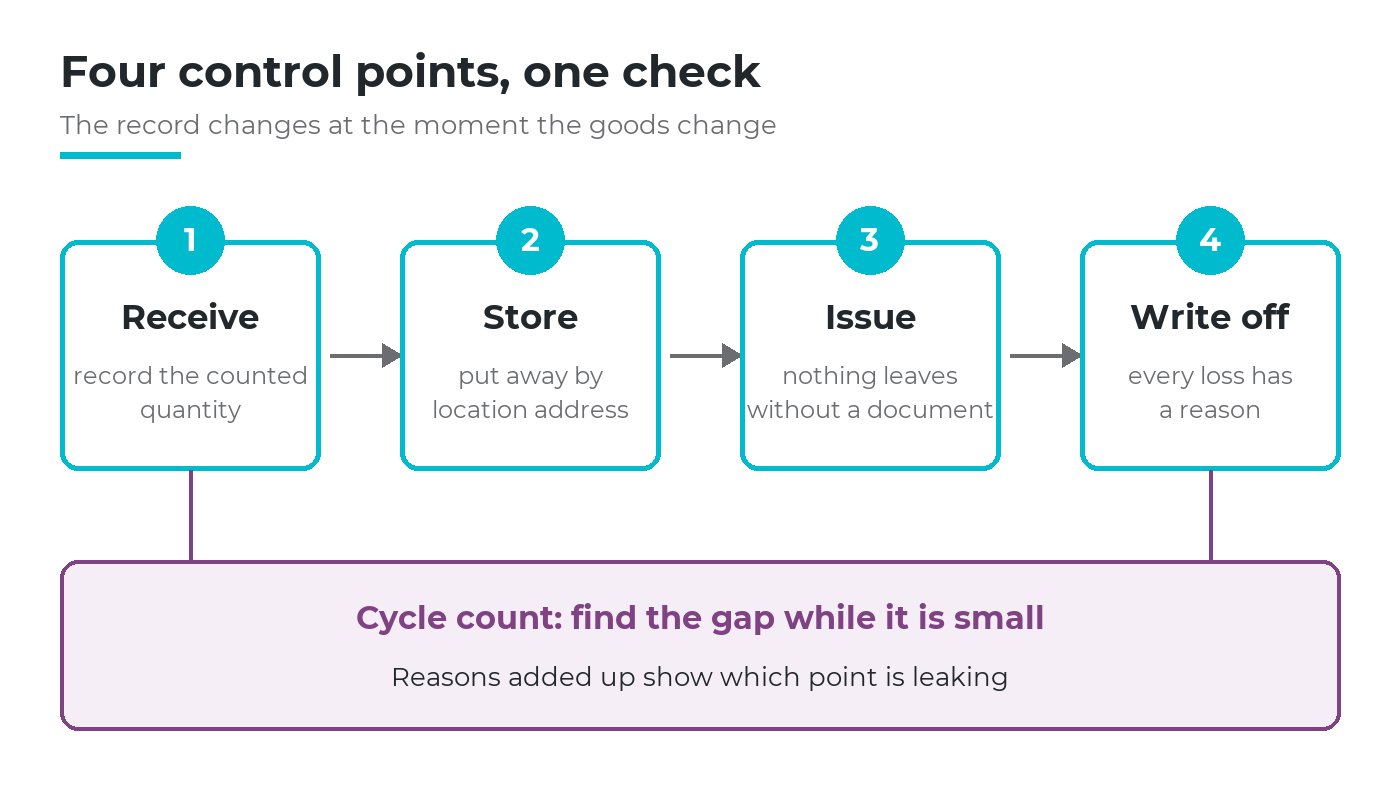
The record changes at the moment the goods change.
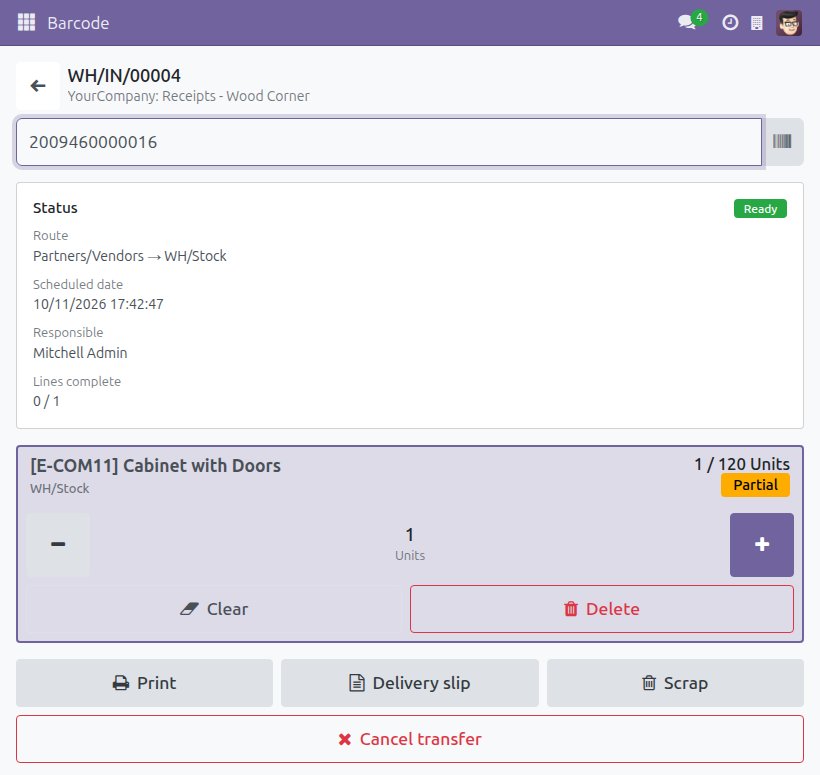
Example: on a receipt, each scan adds to the quantity received, so the record follows what actually arrived.
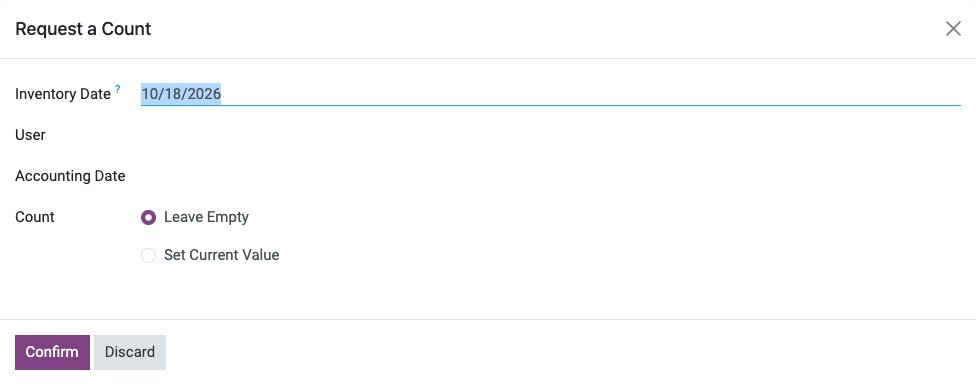
Example: a count request sets the inventory date and the person who counts, so the book figure the AI reads is checked against the shelf.
None of this is new to good warehouse practice. What changes with AI in inventory management is the payoff: once the records follow the goods, every person who has the right to ask can get the answer in under a minute, instead of queuing behind the warehouse keeper.
What AI in inventory management does not do yet
Being clear about the limits of AI in inventory management avoids promises the warehouse cannot keep. On Viindoo today:
- It does not count the shelf. The AI reads records, not shelves, cameras or sensors. Its stock figure is the book figure; only a count tells you whether the shelf agrees.
- It only knows what has been recorded. A delivery note on paper, or a stock list on someone's computer, is invisible to it.
- It does not decide what to buy or when to reorder. Reorder points live in reordering rules that people set. We have not tested the AI on demand forecasting, so this article makes no claim about it.
- It does not move stock or confirm a delivery by itself. By default, any change to a record waits for a person's approval.
- It is not always right. The stock figure we checked matched the records; we did not check the list of undelivered orders line by line. An answer still needs a person to read it, warnings included, before a decision.
Where to start with AI in inventory management
1. Clean products and warehouses
One code per item, variants for colour or size, one warehouse per site.
2. Record moves the same day
Receipts, deliveries and write-offs recorded when they happen.
3. Write the delivery rule down
Days to deliver, days for a backorder, who tells the customer.
4. Ask three questions daily
Stock of the fast movers by warehouse, orders not fully delivered, overdue backorders, each checked by a named person.
The inventory side of Viindoo, from receipts to deliveries, is described on the inventory and supply chain page, and if you are still comparing tools, see the overview of warehouse management software. What agentic AI is, and whose rights it uses, is explained in the article on what agentic AI is.
Would you like to see AI answer questions about your own stock and deliveries? Tell us where it hurts most. Book a consultation and bring the list of your twenty fastest-moving items, or see the costs first.
Frequently asked questions about AI in inventory management
No. AI in inventory management as described here reads the stock and order records you already keep. Barcode scanning helps keep those records accurate at receipt and delivery, but the AI does not need it to answer.
Reorder points are set in the reordering rules of the inventory app, per item and per warehouse, by people. The AI can show you which items are short against what you have promised; deciding the reorder level remains your decision.
Only if their access rights already allow it. The AI reads with the rights of the person asking, so restricting a storekeeper to one warehouse restricts the AI's answers for that person in the same way. Our test covered this rule with sales rights.
By default, no change is saved without approval. The AI prepares the step and shows it on a confirmation card; the person reads it and approves or rejects it.
To the AI provider your company connects with its own key. The question and the data needed to answer it are sent to that provider, and you pay the provider directly. Viindoo does not resell AI.
Related articles
- What Is Agentic AI, and How Does It Work Inside a Business Management System?
- Build Business Software with AI, or Use a Platform with AI Built In?
- Separate Software Plus Spreadsheets, or One Platform for the Whole Business?
- AI for Manufacturing Companies: What Agentic AI Can Do from Order to Shop Floor
- 12 best, professional warehouse and inventory management software
- What is inventory turnover? Calculation formula and meaning
- AI for Accounting: What Agentic AI Can Do from Receivables to Reports
- AI in Sales: What Agentic AI Can Do from Opportunity to Quotation