Late purchase orders usually only surface once the shop floor is already short of parts, and AI in procurement helps you see them sooner. The records of a test manufacturing company showed 23 confirmed purchase orders that were past their expected arrival dates, with no goods received. These represented nearly 1.96 billion dong, plus an import order worth 28,320 US dollars. At the same time, 17 production orders were waiting for parts, and two of the overdue purchase orders contained exactly the parts some of those production orders needed.
All these figures were already available in the purchase orders, goods receipts and production orders, but no single screen brought them together. As a result, the buyer called whichever vendor came to mind, while the production manager only discovered the delay when the production line stopped. For a director or purchasing team lead, the important considerations are what AI can answer using those records, how far its answers can be trusted, and who is allowed to see vendor prices and outstanding amounts owed to vendors.
Two ways to use AI in procurement and their impact on cash flow
Procurement covers finding suppliers, agreeing on prices, placing orders, receiving goods and services, and paying for what a company needs. Most AI tools for procurement fall into two categories. Some work independently of the company's internal records, helping users find new suppliers, compare catalogues or draft contracts. Others use the records the company already maintains: purchase orders, expected arrival dates, goods receipts, vendor price lists and vendor bills. They answer questions using those records and prepare the next step, such as drafting a request for quotation or a reminder email, for a person to approve.
| AI working independently of company records | AI using the company's purchasing records | |
|---|---|---|
| Data used | Websites, catalogues, contract templates | Purchase orders, goods receipts, vendor prices and vendor bills |
| Work it helps reduce | Searching and drafting | Following up on overdue orders, matching goods receipts with bills, and checking which parts production still needs |
| Typical request | "Find three battery suppliers in the north" | "Which vendor is most behind, and who should I call first?" |
This article focuses on the second approach. It directly affects cash flow and production: goods ordered but not yet delivered, goods delivered but not yet billed, and production orders that cannot start. A wrong answer can therefore be costly, leading a buyer to follow up with the wrong vendor or order parts that are already on their way.
AI in procurement starts with the questions purchasing teams ask every week
The data needed to answer these questions is already recorded, but it is spread across different areas: purchase orders in the Purchase app, goods receipts in Inventory, material shortages on individual production orders, and bills in Accounting. Answering a single question usually involves opening several lists, exporting the data and comparing the records manually. AI in procurement should help purchasing teams answer these questions more quickly.
Which orders are overdue, and which vendors should we contact?
Orders past their expected arrival dates, grouped by vendor, with their value and the number of days overdue.
What is production waiting for?
Parts missing from production orders, whether they have already been ordered, and when they are expected to arrive.
Which vendor should we buy this part from?
Each vendor's listed price, minimum order quantity and delivery lead time.
What has arrived but not been billed?
Goods already received but not yet billed by vendors, and the amounts the company owes its vendors.
AI in procurement: results from thirteen test requests
We ran these requests on 24 November 2026 using data from a test company that manufactures electric bikes. No purchasing data was added for the test. The company already had 107 purchase orders from August to December, 71 goods receipts, 69 unpaid vendor bills and credit notes, and 435 entries in its vendor price lists. We submitted requests using three different roles: the director, the purchasing team lead and a sales employee without purchasing access rights. After each request, any changes to the business records were reversed. Each response took 10 to 48 seconds, and the total AI usage cost for all thirteen requests was about one US dollar. The table summarises the nine questions about business data. The four remaining requests (one about price history, two to prepare a request for quotation and one to draft a reminder email) are described in the situations and the sections that follow. We checked the figures below against the original records.
| Request | AI response | Verification against original records |
|---|---|---|
| Purchase orders confirmed in October and the five leading vendors by purchase value | 33 orders, totals reported separately by currency, and the five leading vendors by purchase value based on orders in dong | Figures matched; the explanation of exchange rates was only partly correct |
| Overdue purchase orders and which vendors to contact first | 23 orders across 12 vendors, with order values, days overdue for each vendor and a suggested order of priority for contacting them | Matched |
| Requests for quotation still in draft | 28 drafts, including the one with the earliest order deadline and the one with the highest value | Matched |
| Production orders with missing parts and additional purchasing requirements | 17 production orders, shortages by part, purchase orders already placed, and recommendations on what to order or confirm | Matched |
| Vendors, prices and delivery lead times for a particular part | Three vendors, with their prices, minimum order quantities and delivery lead times | Matched |
| Goods received but not billed | 10 orders with no bills at all; outstanding amounts on partially billed orders were not included | Partial match |
| Amounts owed to each vendor and bills due within the next 14 days | The five vendors to which the company owes the most; no bills due within the next 14 days because all were already overdue | Matched |
| Which vendors deliver on time | 45 completed goods receipts: 24 late, 14 early and 7 on time, together with the AI's warning about the reliability of the data | Matched |
| A sales employee's request for purchase prices and outstanding amounts owed to vendors | Displayed vendor prices but did not disclose outstanding amounts owed to vendors | Consistent with the configured access rights; see the section on data access |
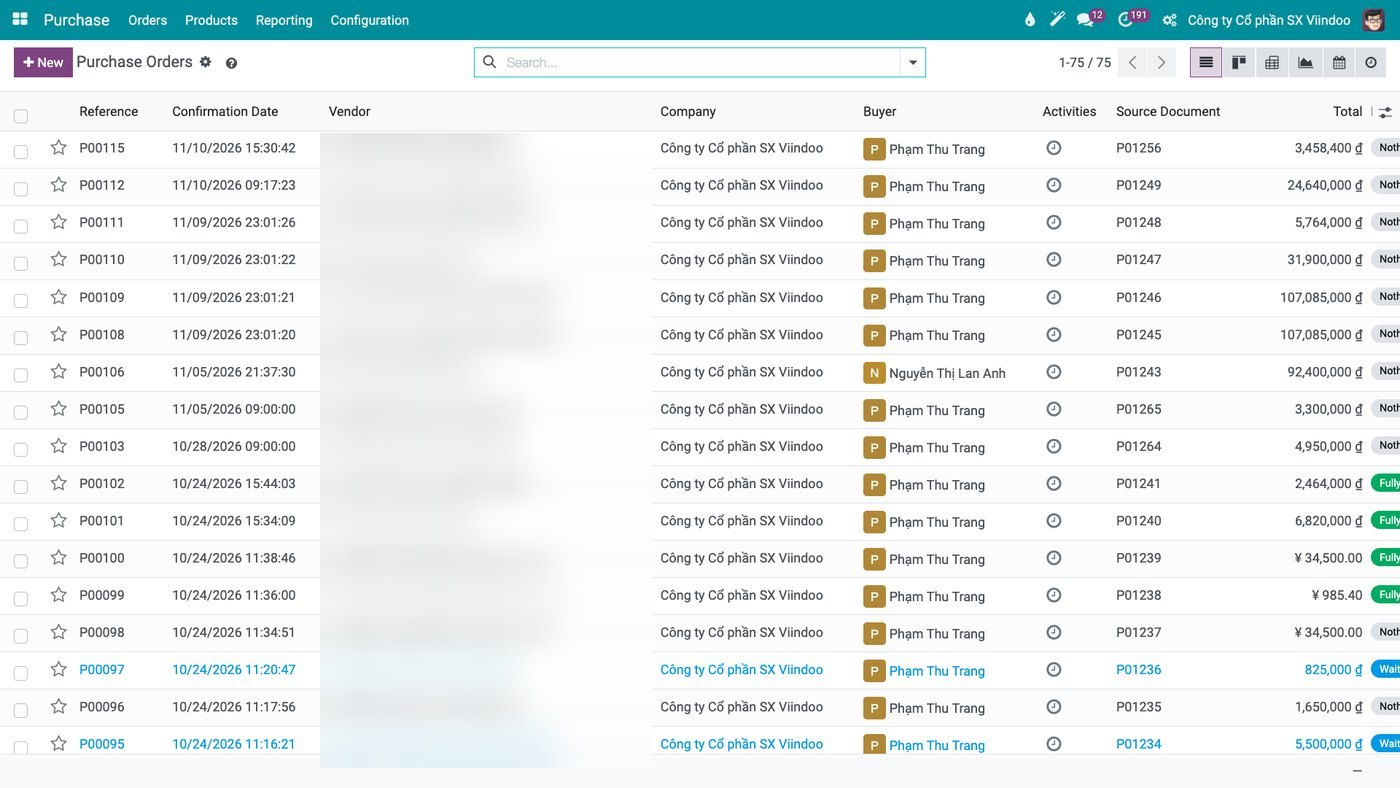
The purchase orders used by AI: each includes a vendor, a buyer, an expected arrival date and a billing status.
AI in procurement in practice: six situations from our test
Each situation below shows how AI in procurement handled a specific request, including the original request, the AI's response, how we checked it and what purchasing teams can put into practice.
Situation 1: overdue purchase orders and which vendors to contact first
The purchasing team lead asked: "Which purchase orders are past their expected arrival date and still not fully received? Which vendor is the most behind, and who should I call first?" The AI identified 23 confirmed purchase orders for which no goods had been received and found no partially received orders. It grouped the orders by their 12 vendors and reported the order value and longest delay for each vendor. It recommended contacting the battery vendor first, as it had three overdue orders worth a total of 863,170,000 dong. One of those orders was worth 649,000,000 dong and was already 40 days overdue. The AI also noticed that two orders placed with a motor vendor had identical values and dates, and suggested checking whether an order had been duplicated.
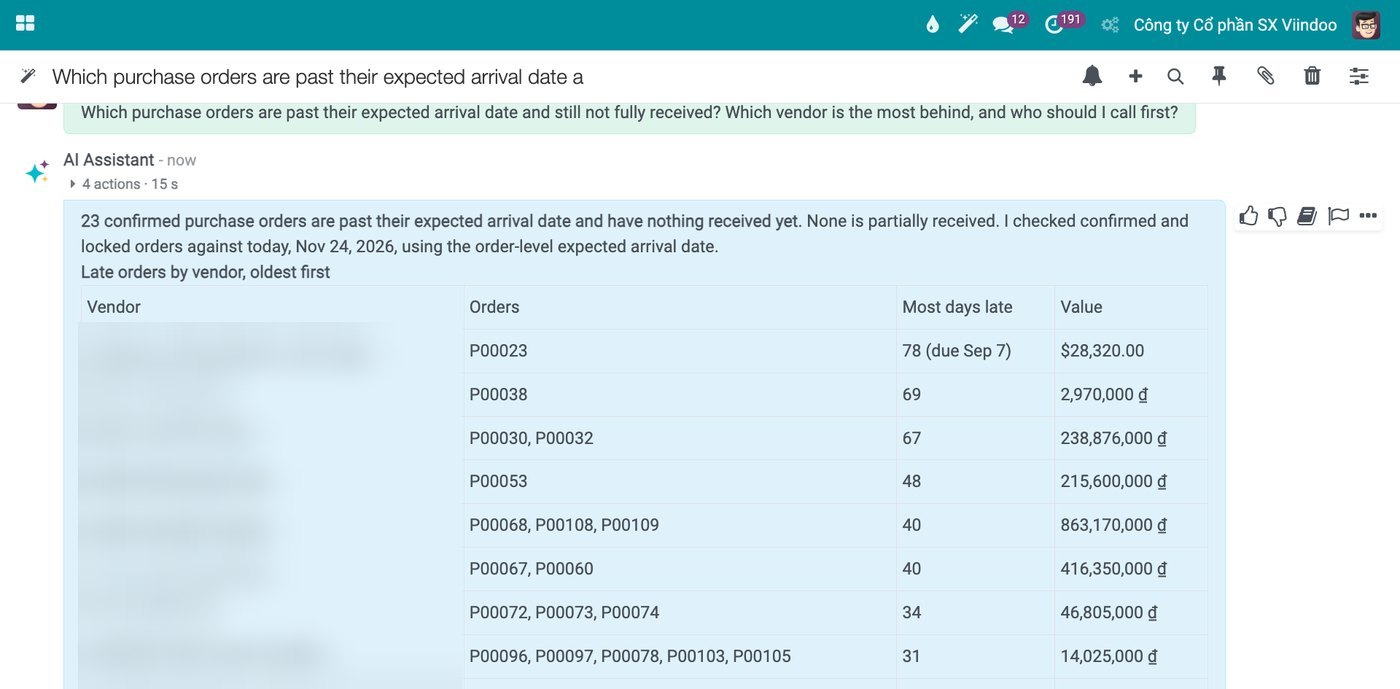
The AI's response to the same question from the director: overdue purchase orders grouped by vendor, showing the value of goods not yet received and the longest delay.
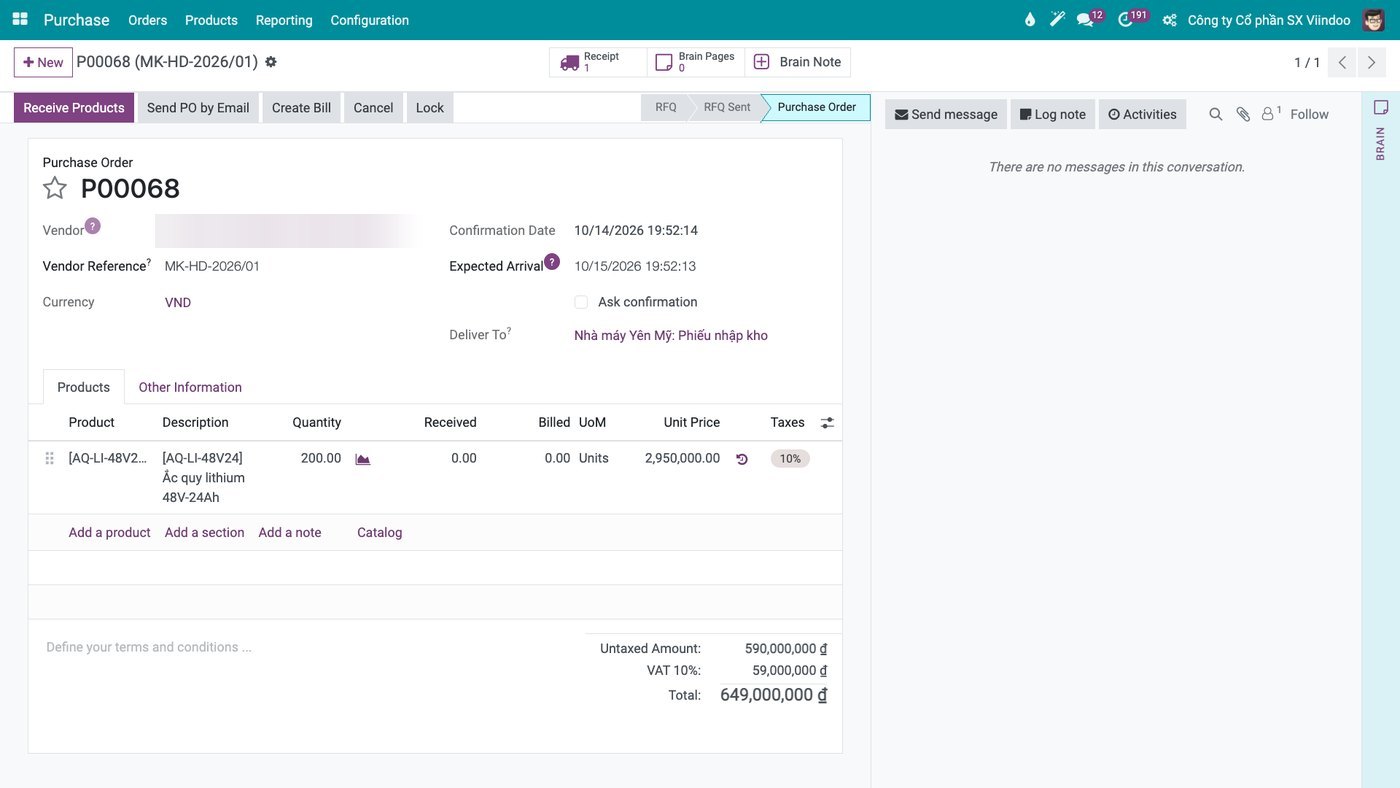
The purchase order prioritised for follow-up: 200 batteries expected on 15 October, 0 received, with a total value of 649,000,000 dong.
The order counts, values and delays all matched the original records. The AI excluded four overdue orders that covered only battery inspection services, as these services do not generate goods receipts. When we asked the same question in English, the figures were identical, but the suggested order of priority changed: the vendor with the import order that was 78 days overdue moved into second place, rather than appearing after four other vendors. The suggested ranking is advisory; purchasing teams should base their decisions on the figures.
Asked next to "draft an email reminding the vendor of the most overdue order to deliver soon, so I can review it before sending", the AI correctly selected the import order and drafted an email about 120 lithium batteries worth 28,320 US dollars that had been due on 7 September. It requested a firm delivery date and displayed a confirmation card for the user to review. No email was sent. The draft was written in Vietnamese because Vietnamese was the vendor's configured language in the system, even though the vendor was based abroad.
What to apply. Update the expected arrival date on a purchase order whenever the vendor confirms a new date. The overdue order list is only as accurate as these dates. Also check the language configured for each overseas vendor before asking AI to draft emails to them.
Situation 2: production shortages and additional purchasing requirements
The director asked: "Which production orders are short of parts? Are those parts already on order, and when will they arrive? What else do we need to buy?" The AI identified 17 production orders that could not start because of material shortages and created a table organised by part. It used the forecast stock quantity for each part, calculated as the stock currently available plus incoming goods, minus quantities already reserved for other orders. One type of charger had a shortage of 63 units, but five draft requests for quotation already covered exactly 63 units. The AI therefore recommended confirming those requests rather than placing additional orders. A motor controller still had a shortage of 13 units despite a confirmed purchase order for 20 units, which was already overdue.
The AI also identified a mismatch between the quantity needed and the quantities on draft requests: one type of battery had a shortage of only 4 units, while two old draft requests for quotation each listed 94 units. It recommended cancelling the drafts or reducing the quantities rather than confirming requests for 94 units each. The shortages, draft quantities and overdue order all matched the original records. The AI also explained that its recommended purchase quantities could be slightly higher than needed, because the stock forecast includes demand from production orders beyond the 17 it had listed.
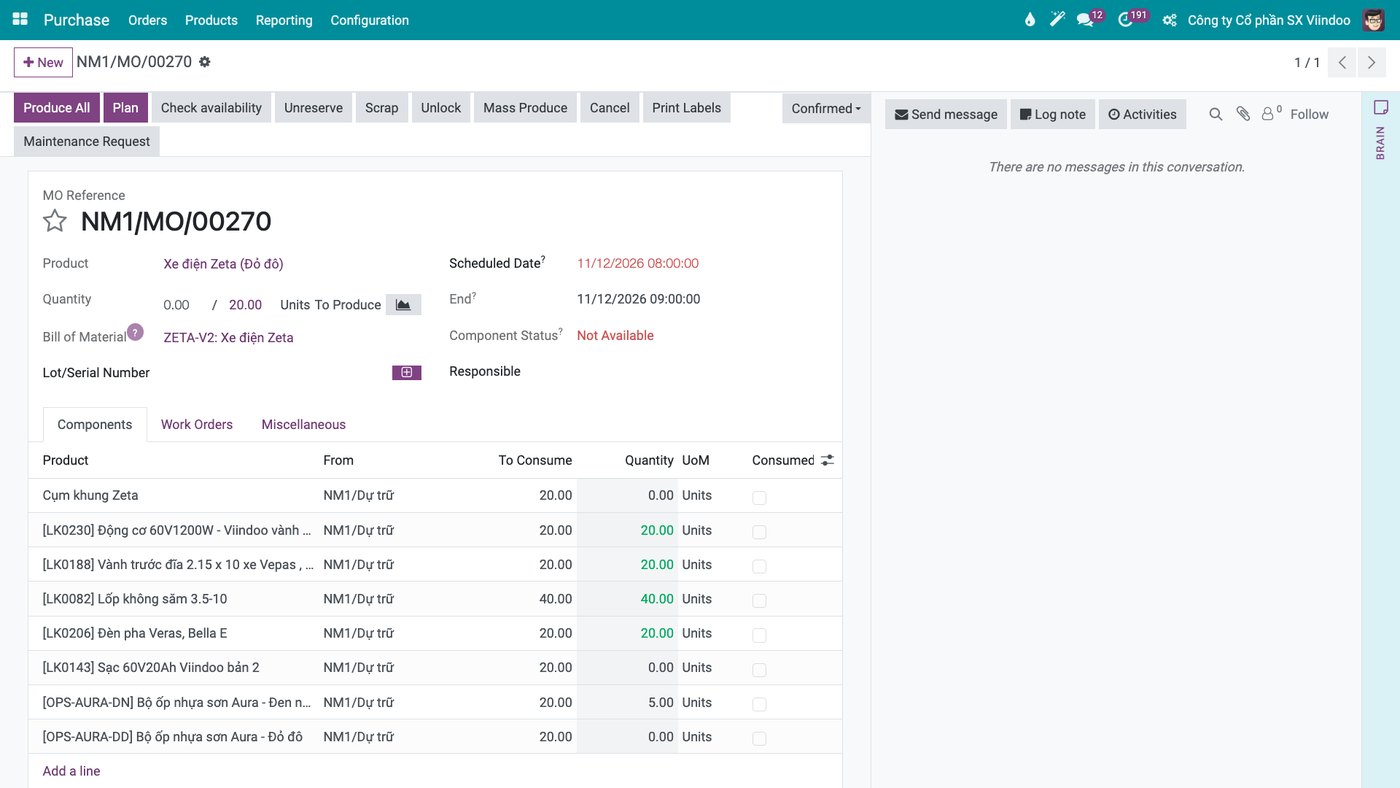
One of the 17 production orders: the frame, charger and red body panels each show 0 units available out of the 20 required.
What to apply. Answering this question requires data from three departments: production, purchasing and the warehouse. The answer is reliable only when the required parts and quantities are recorded in bills of materials and every purchase order is entered in the system. A part ordered by phone but never recorded in the system may still appear as missing. The production side is discussed in more detail in the article on AI for manufacturing companies.
Situation 3: requests for quotation left in draft
The team lead asked: "How many requests for quotation are still in draft and not confirmed? Which one has been waiting longest, and which is the largest?" The AI identified 28 drafts. As all 28 had been created on the same day, their creation dates could not distinguish them, so the AI compared their order deadlines instead. The draft with the earliest deadline had been due on 3 September, about 82 days before the test. The draft with the highest value was worth 544,940,000 dong and was also overdue. The AI also considered whether the user might have meant sales quotations and listed those separately. The counts and values matched the original records.
Draft requests for quotation (unconfirmed purchase orders used to request prices from vendors) are an easy place for purchasing requirements to be overlooked. Someone prepares an order, the requirement changes, and the draft is never dealt with. Situation 2 illustrates the cost of this: confirming the two old drafts would have resulted in an order for 188 batteries when only 4 were needed.
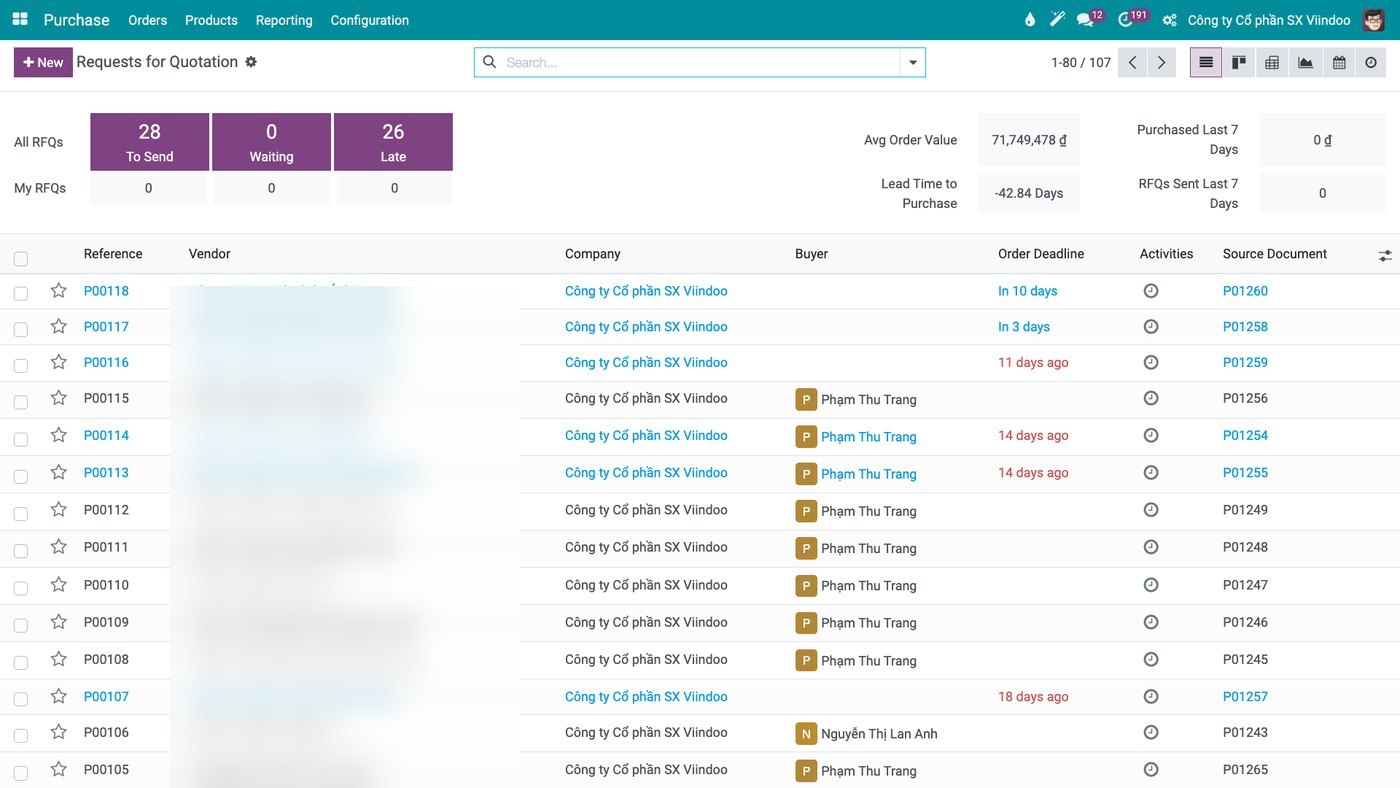
The requests for quotation screen: 28 drafts waiting to be sent, with passed order deadlines shown in red.
Situation 4: selecting a vendor for an urgent purchase and preparing a request for quotation
The team lead asked which vendors supplied a 48V 600W motor controller, what their prices and delivery lead times were, and which vendor to choose for an urgent purchase. The AI consulted the vendor price list and identified three vendors: two domestic vendors offering a unit price of 256,000 dong, a 10-day delivery lead time and a minimum order quantity of one unit, and one overseas vendor offering a unit price of 68 yuan, a 30-day delivery lead time and a minimum order quantity of 100 units. For an urgent purchase, it recommended a domestic vendor. The AI also explained that it could not make a complete price comparison because the available data contained no exchange rate for the yuan and the overseas vendor's price excluded shipping costs and import tax.
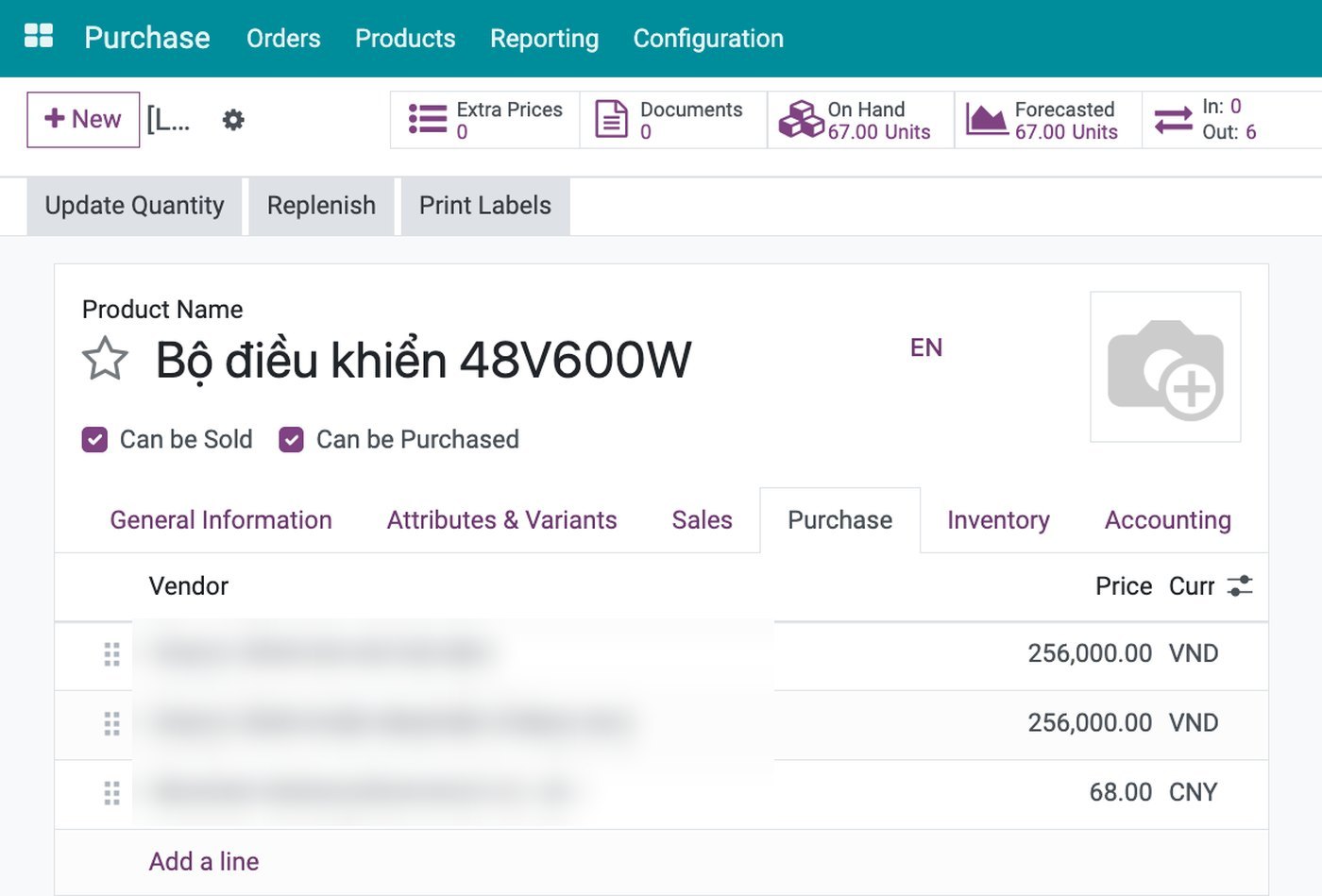
The vendor price list used by AI. Delivery lead times and minimum order quantities appear in further columns of the same table.
The team lead then asked the AI to create a request for quotation for 50 units "from the vendor with the best price, due before 15 December 2026". As the two domestic vendors offered identical prices and delivery lead times, the AI asked the user which vendor to select rather than choosing one arbitrarily. It also explained why the overseas vendor was unsuitable: its minimum order quantity was 100 units, and its 30-day delivery lead time meant the goods would arrive after 15 December. Once the user specified a vendor, the AI prepared a request for quotation for 50 units with 15 December as the expected arrival date and displayed a confirmation card. The request for quotation would only be created once a person approved it.
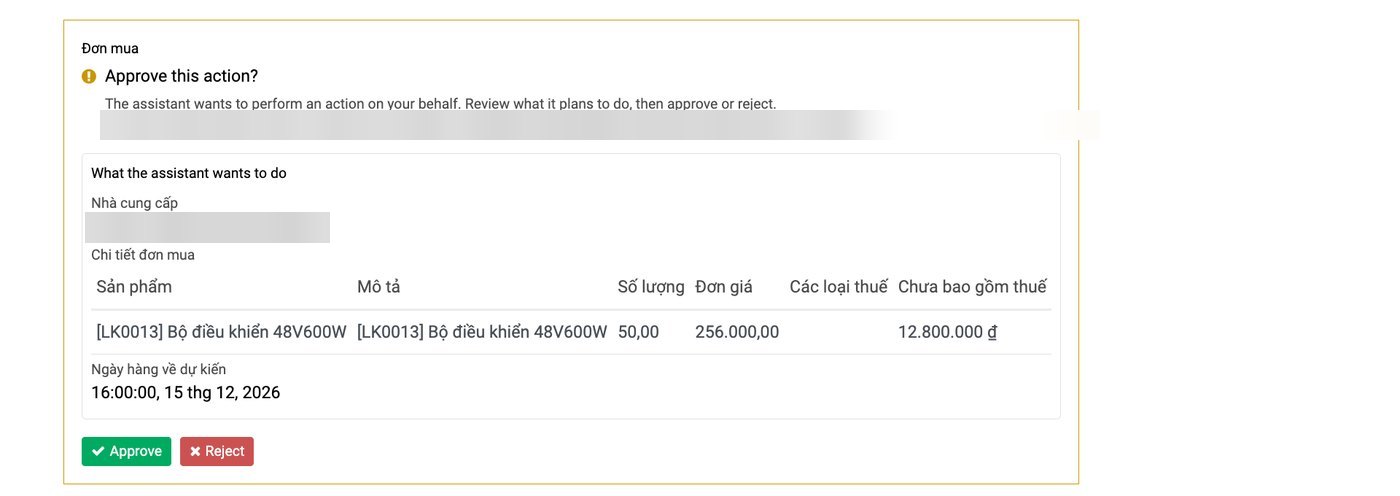
The same request asked again on screen: the card shows the vendor, 50 units at 256,000 dong, 15 December, and waits for Approve or Reject. In our English test, the labels inside the card still appeared in Vietnamese.
What to apply. AI compares vendors using only the information recorded in the price list. Keep each vendor's prices, minimum order quantities and delivery lead times up to date, and record the exchange rates your company uses for foreign currencies. Other factors in supplier evaluation, such as quality and payment terms, are covered in the article on supplier management software.
Situation 5: goods received but not yet billed and amounts owed to vendors
The director asked which purchase orders had been received but not yet billed by vendors, and what their total value was. The AI identified 10 orders for which all goods had been received but no bills had been issued: nine orders in dong with a total value of 217,080,000 dong before tax, and one order worth 476 US dollars, which it reported separately rather than combining the two currencies. These figures matched the original records. The AI also identified two orders that already had one bill each but were still awaiting further billing. It explicitly stated that it had not checked the remaining unbilled amounts. Our checks confirmed that one of these orders still had an unbilled amount of 28,840,000 dong before tax. The answer was accurate within the scope of the AI's checks, and it made clear to the director what had not been included.
When asked which vendors the company owed the most and which bills were due within the next 14 days, the AI calculated outstanding balances across 30 vendors using 69 unpaid bills and credit notes, after deducting the amounts covered by credit notes. It then listed the five vendors with the highest outstanding balances. These figures matched the original records. The AI reported that no bills were due within the next 14 days because all 69 were already overdue, with the earliest due date being 8 September. In an operating business, this finding would be more important than the ranking itself: either the company is paying late, or its payment terms and payment records are not up to date.
What to apply. When an AI answer about financial figures identifies information it has not checked, verify that information before acting on the total. Matching goods receipts with bills is a routine financial control. Ask this question every month and refer any purchase orders requiring further investigation to the accounting team, as discussed in the article on AI for accounting.
Situation 6: vendor delivery performance
The team lead asked which vendors delivered on time and which frequently delivered late. The AI compared the actual completion dates of 45 completed goods receipts with their scheduled delivery dates. It found 24 late receipts, 14 early receipts and 7 completed on time, with the longest delays being 9 and 6 days. These figures matched the original records. More useful was the AI's warning: most receipts recorded as "one day late" had been completed in batches at the same time on particular days. The figures might therefore reflect how the records were updated rather than actual delivery delays. In addition, each vendor had only one to four receipts. The AI recommended verifying the data before assessing any vendor's performance.
What to apply. Confirm goods receipts on the day the goods actually arrive, rather than processing them together at the end of the week. The Purchase app also tracks each vendor's on-time delivery rate over the past year, but this measure is only as accurate as the recorded receipt dates.
How AI in procurement responds when purchasing data is insufficient
Several answers in our test were useful precisely because the AI did not try to fill gaps in the data with guesses. For AI in procurement, an honest statement that "there is no data" is worth more than a number that merely sounds plausible.
| What was asked | What was missing | What the AI did |
|---|---|---|
| Changes in the purchase price of a 48V 20Ah lithium battery since August | The product had never appeared on a purchase order | Explained that there were no purchase records for the product, did not suggest a price trend, and identified three products with similar names |
| Total value of October purchases | No exchange rate for the yuan was recorded in the company's data | Reported totals separately by currency and ranked vendors using only purchase orders denominated in dong |
| Requests for quotation that had remained in draft the longest | All drafts had the same creation date | Explained that the creation dates could not distinguish the drafts and compared them by order deadline instead |
| Selecting the vendor offering the best price | Two vendors offered identical prices and delivery lead times | Asked the user to select a vendor rather than choosing one automatically |
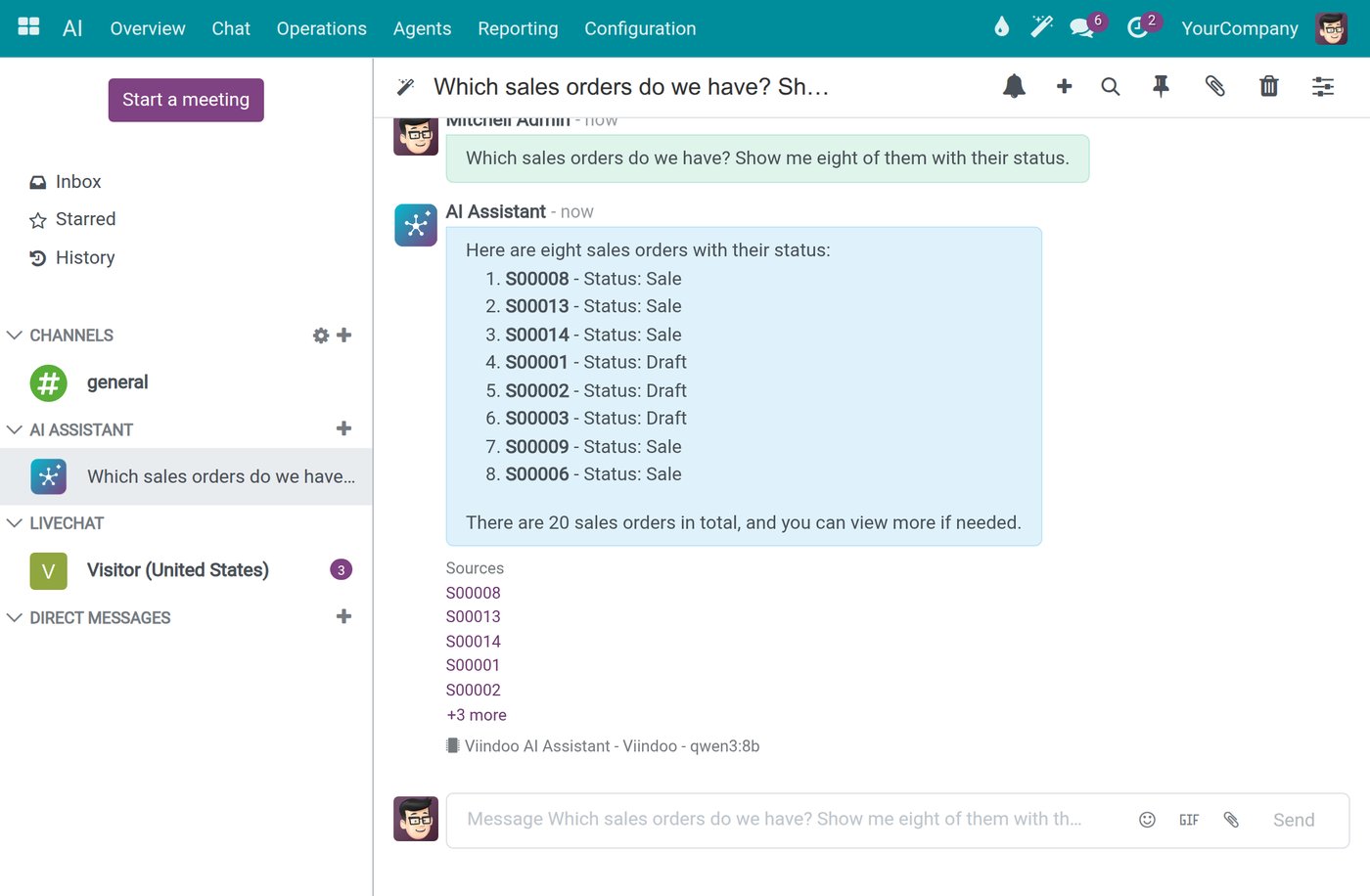
In AI in procurement, each answer ends with a Sources list; clicking a line opens the record the AI read.
One answer contained an inaccurate explanation. When calculating the October totals, the AI stated that no exchange rates were available, even though the company had an exchange rate for the US dollar. Reporting the totals separately by currency was still the safer approach, but the explanation was only partly correct.
The purchasing data needed for reliable answers from AI in procurement
AI bases its answers on the data the purchasing team records. The following four habits are important to the reliability of answers from AI in procurement.
Every purchase is recorded on a purchase order
This includes urgent purchases agreed by phone. If a part is purchased without being recorded in the system, it may still appear as missing in the production records, and the accounting team will have no corresponding purchase record.
Expected arrival dates are kept current
When a vendor confirms a new delivery date, update the expected arrival date on the purchase order. The accuracy of the overdue order list depends on it.
Goods receipts are confirmed on the day the goods arrive
Confirming multiple receipts together distorts on-time delivery figures and the forecast stock quantities that production relies on.
Vendor price lists are kept up to date and draft requests for quotation are reviewed
Update prices, minimum order quantities and delivery lead times, and cancel draft requests for quotation that are no longer needed.
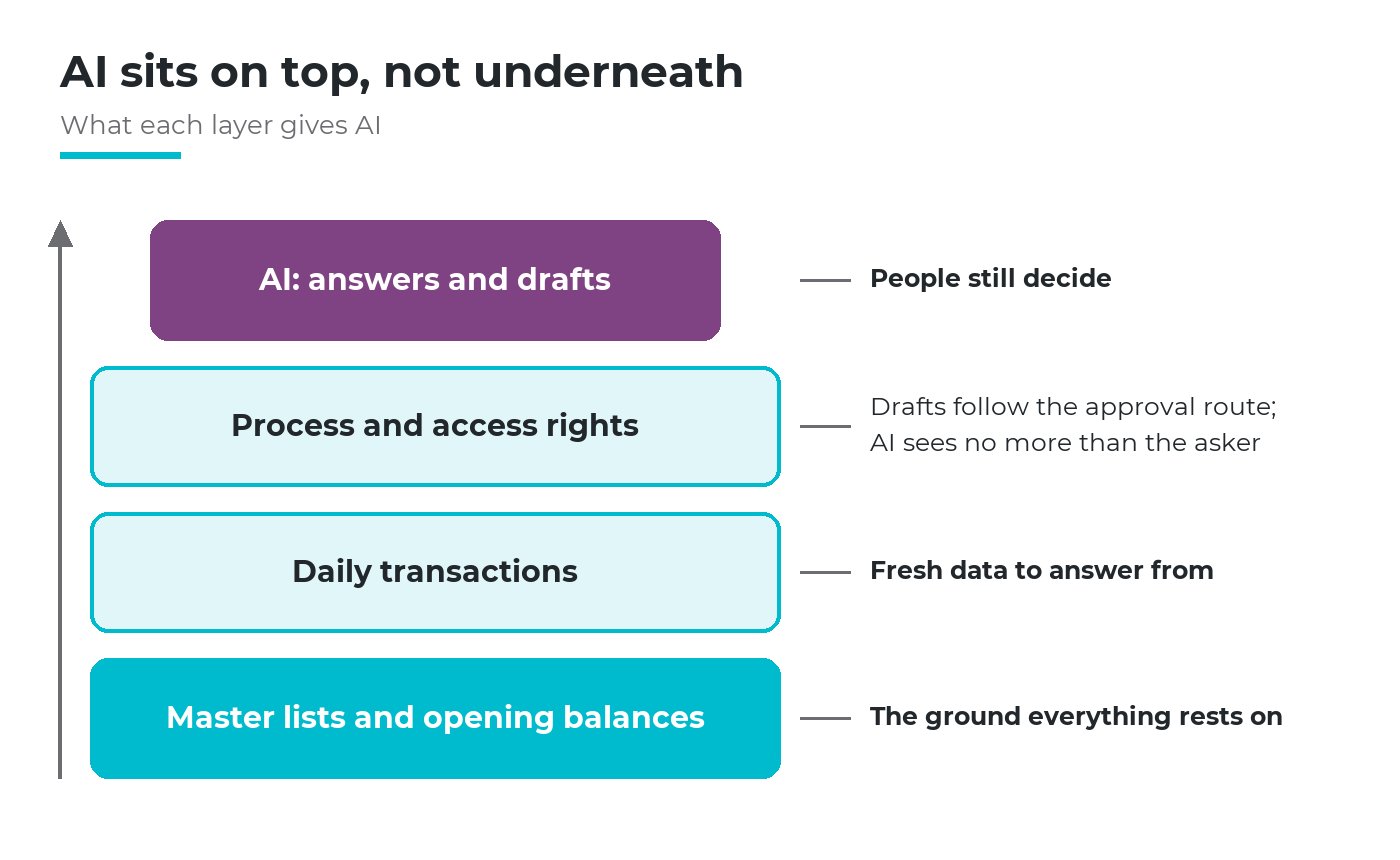
In purchasing, the most important records are purchase orders, their expected arrival dates, goods receipts and vendor bills.
Access, approval and cost when using AI in procurement
AI accesses data within the user's existing permissions
A sales employee without purchasing or accounting access rights asked for each vendor's price for the motor controller and the total amount owed to vendors. The AI found no purchase orders or vendor bills within the data that this employee was allowed to access, so it did not provide any outstanding balances. However, it still displayed all three vendor prices. This was not an AI access control error: by default, every internal user can access the vendor price list. The AI simply accesses the data permitted by the user's existing access rights.
The wording of the AI's answer about outstanding balances also deserves attention. It began by stating that the system contained no vendor bills, and only later mentioned that the user might not have permission to access accounting data. In this case, the user's lack of access was the actual reason. Someone reading only the opening statement could therefore be misled.
What to apply. If purchase prices are sensitive information in your company, decide who is allowed to access the vendor price list before enabling AI, rather than afterwards. Review these access rights whenever new apps are installed, as discussed in the article on AI data governance.
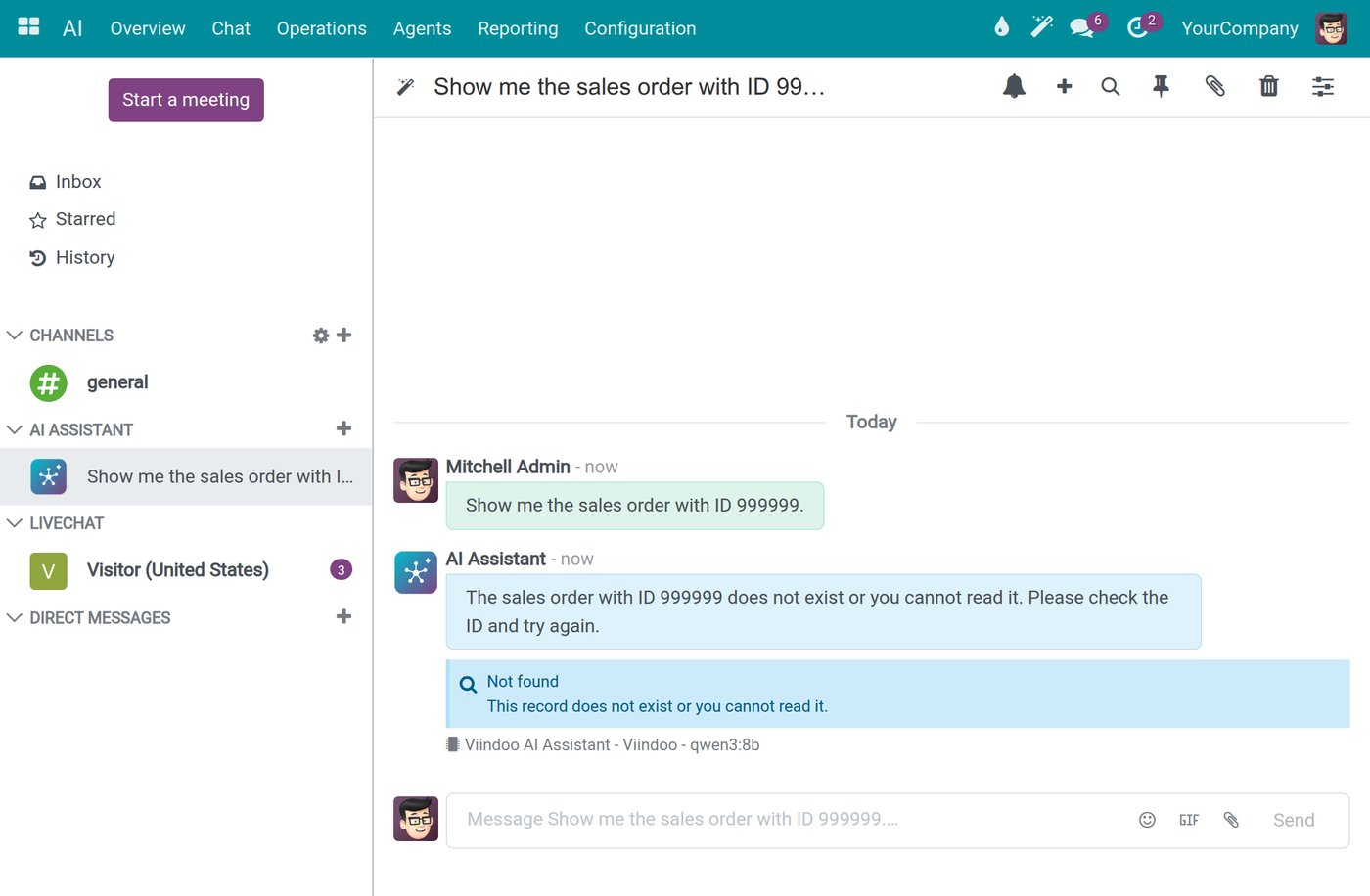
In purchasing, review access permissions for vendor price lists, purchase orders and vendor bills.
New orders and emails required approval in our test
Answering a question does not change business records. In our test, preparing a request for quotation and sending a reminder email to a vendor both required approval through a confirmation card, as shown in situations 1 and 4. The company can specify which individual AI actions require prior approval. Deciding who may confirm purchase orders above a specified amount is a separate control, covered in the article on purchase approval limits.
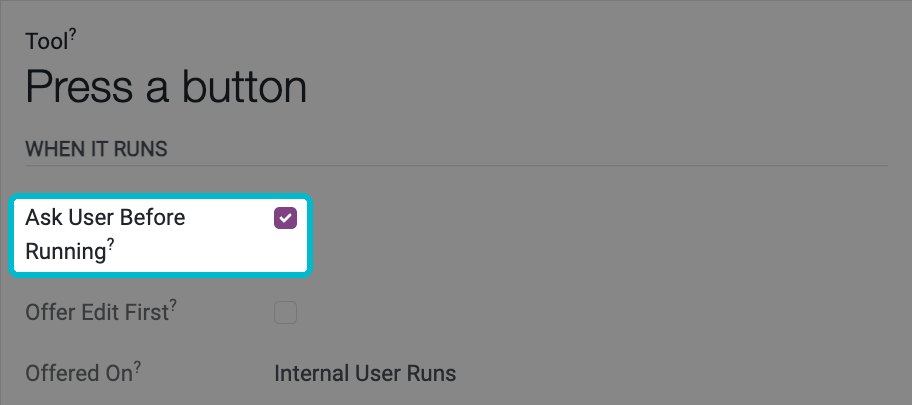
The setting that requires human approval before an AI action can be carried out.
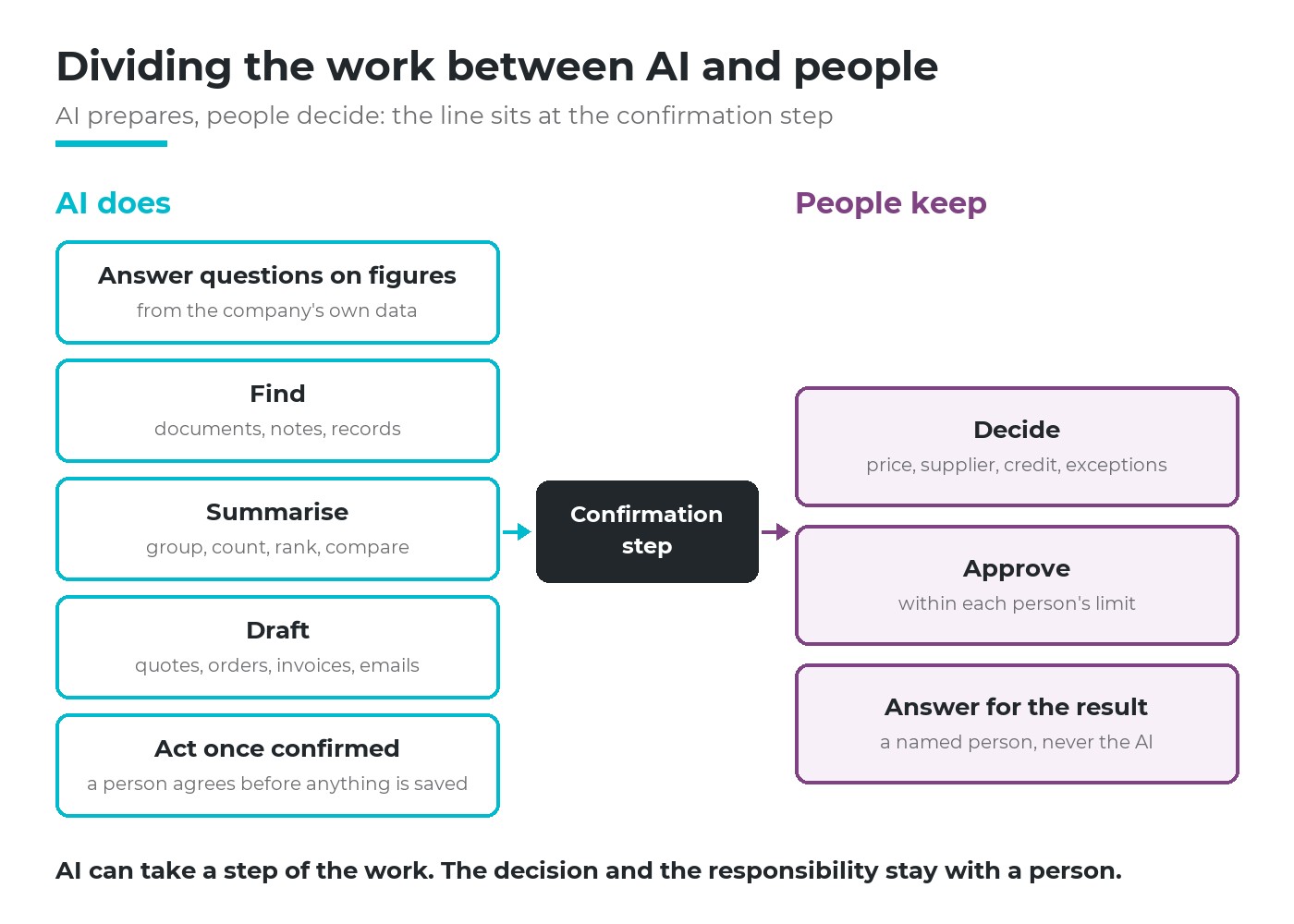
In purchasing, the decisions shown on the right include selecting a vendor, deciding what to order or cancel, and determining what to communicate to the vendor.
AI spending limits and usage history
The company can set AI spending limits for individual users, the company as a whole and individual questions. Each request is recorded together with the user's identity, its cost and its status. In our test, the most expensive purchasing question concerned production shortages and cost about 0.13 US dollars.
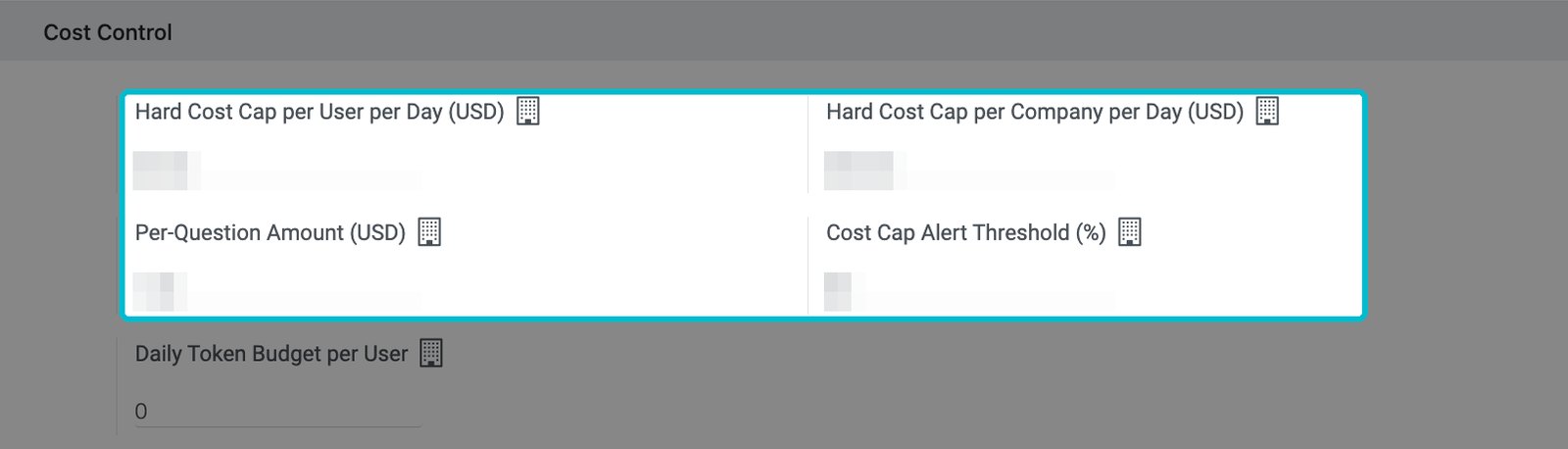
AI spending limit settings, with the specific amounts hidden. The company sets each limit.
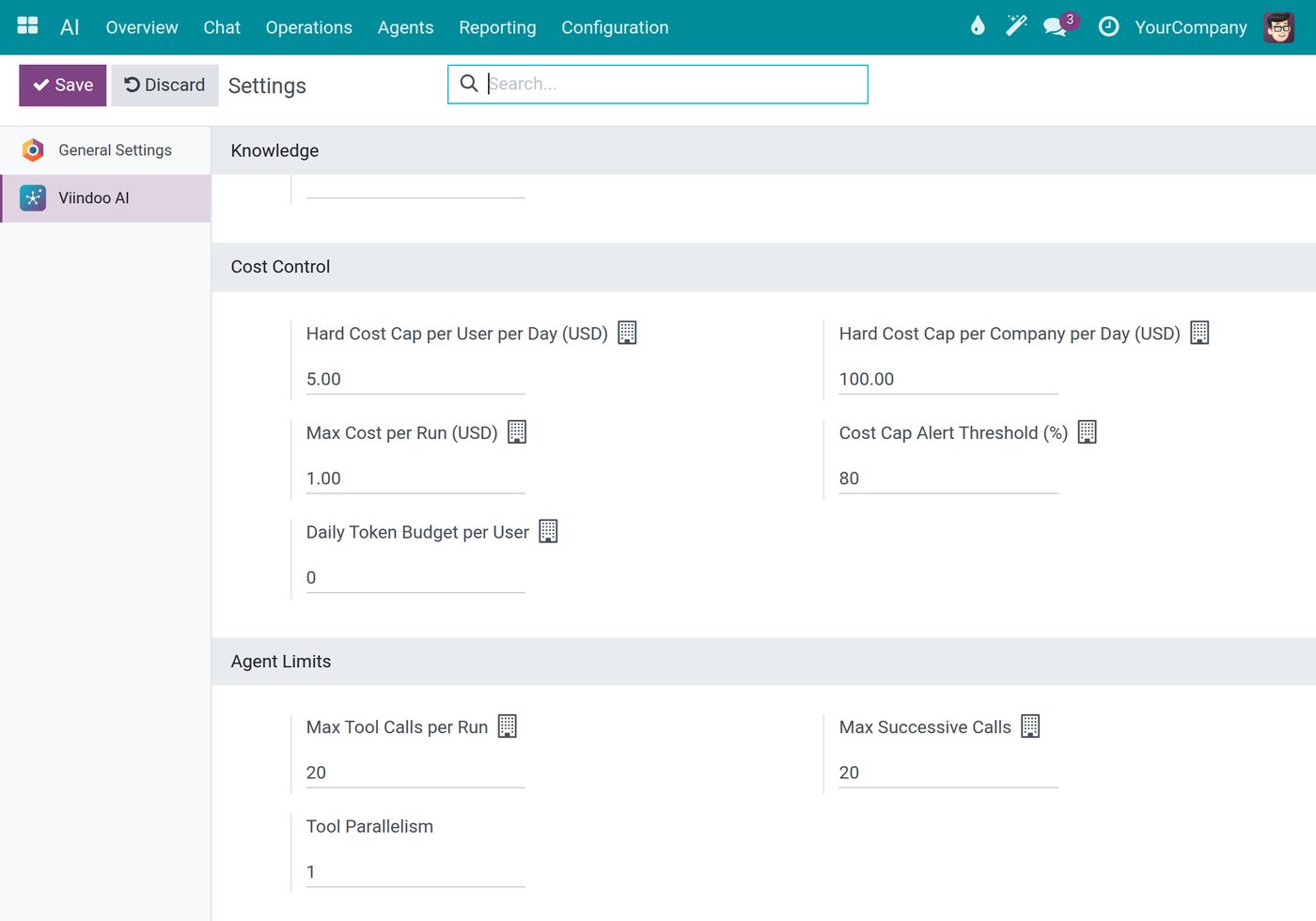
Three levels of cost cap keep AI in procurement from running up an unexpected bill.
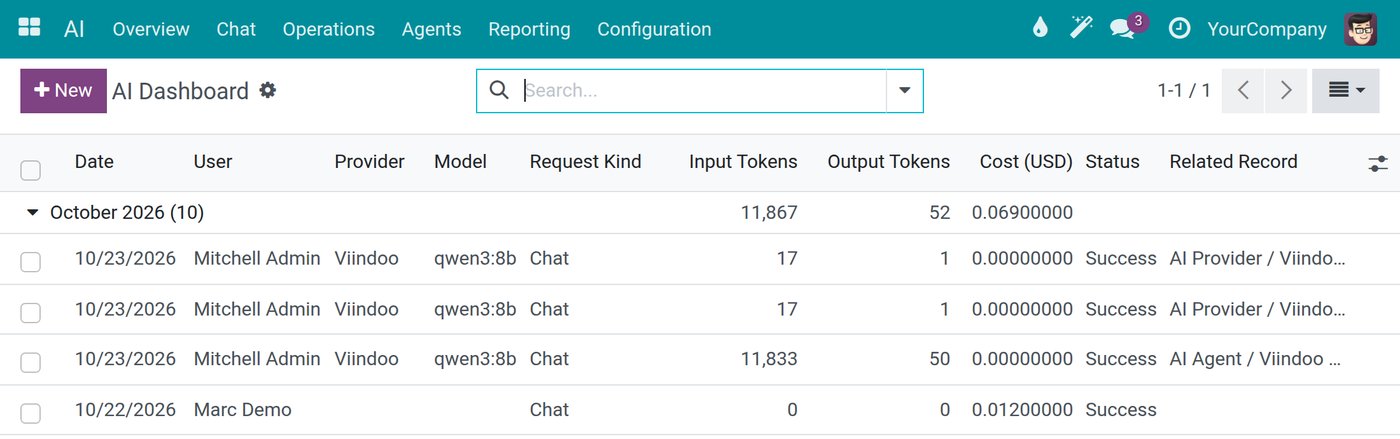
Each AI request is logged with its date, user and cost.
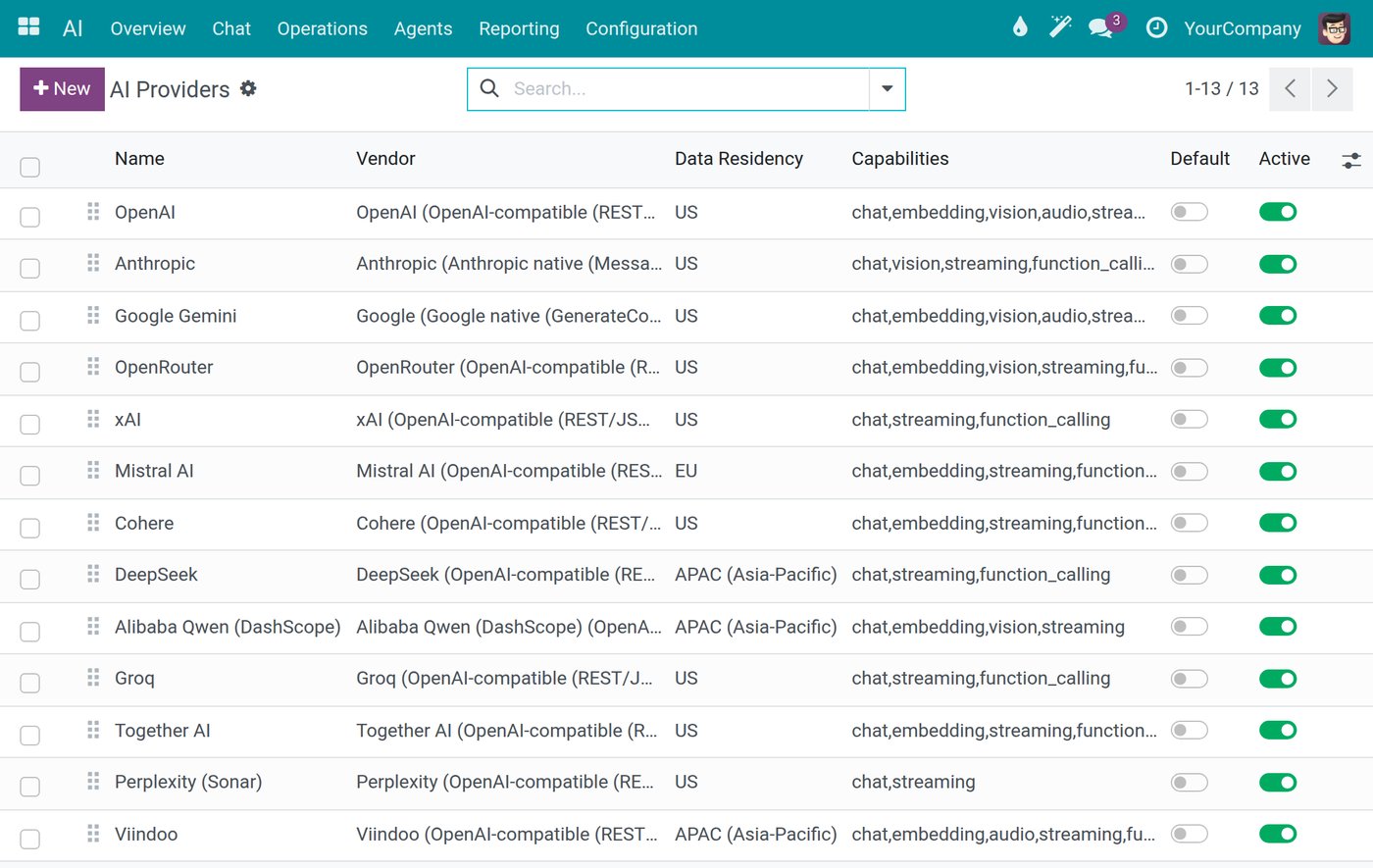
The company chooses which AI provider to connect; each connection shows where its data is stored.
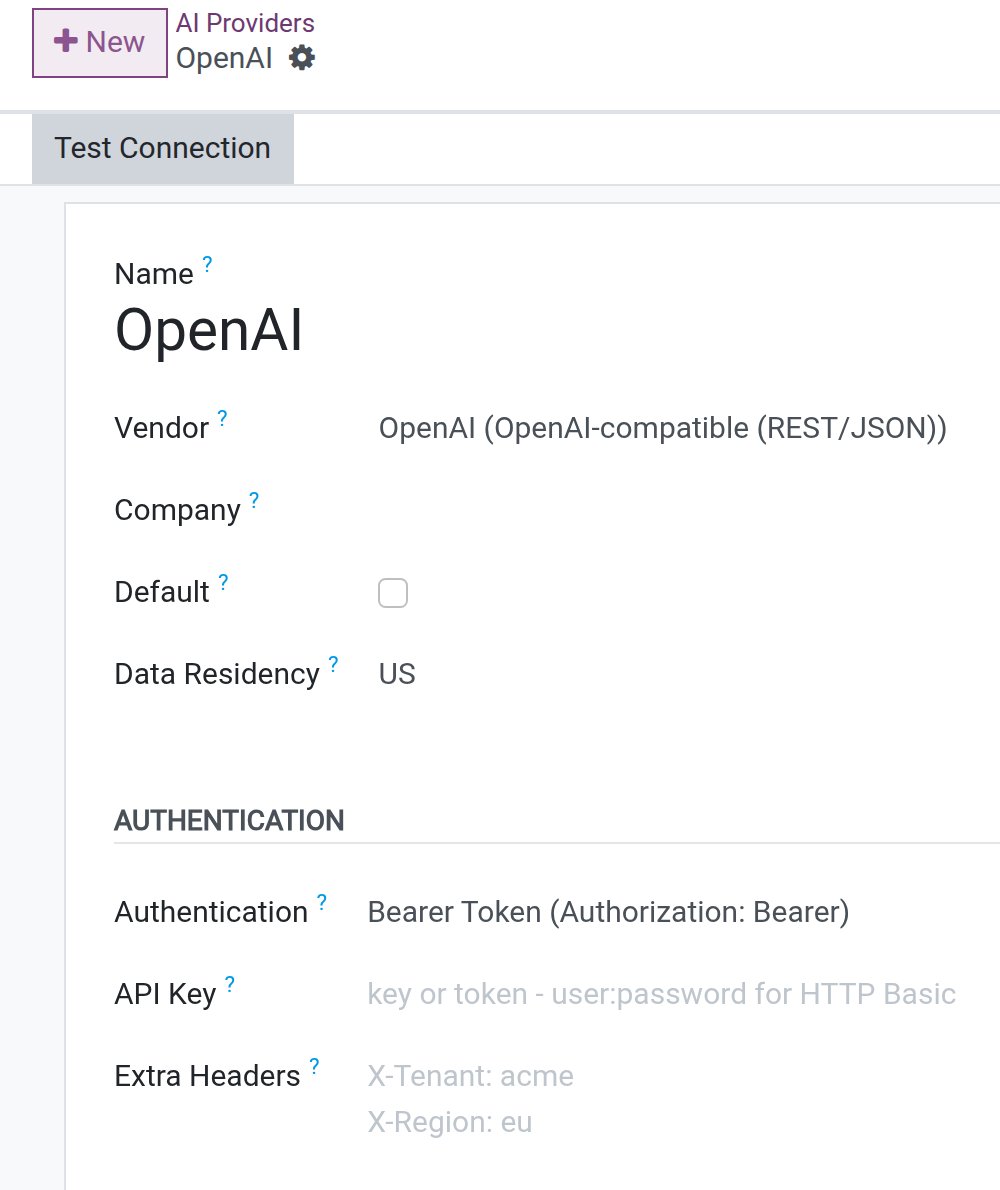
The connection uses the company's own access key, and the provider bills the company directly.
What AI in procurement does not do
- It does not look outside the company's records. In our test, the AI compared only the vendors and prices already recorded in the system. It did not search for new suppliers, check market prices or access information about stock held by vendors. It also identified two vendors whose phone numbers were not recorded.
- It compares only what the price list holds. Shipping costs, import tax, quality and payment terms were not recorded in the price list and therefore could not be included in the comparison. The AI explained this limitation when assessing the overseas vendor. For other comparisons, buyers should ask whether these factors have been taken into account.
- Its suggested order of action can change. Asking the same question about overdue orders in Vietnamese and English produced identical figures but different recommendations on which vendors to contact first. Use the figures to inform your decisions, but determine the priorities yourself.
- AI in procurement is not always complete. When answering the question about unbilled goods, the AI did not include outstanding unbilled amounts on orders that already had one bill. In one case, the omitted amount was 28,840,000 dong before tax. Although the AI stated that it had not checked this information, the reported total was still lower than the actual amount. The other figures we checked matched the original records. Nevertheless, any total used for making payments or closing the accounts should be verified.
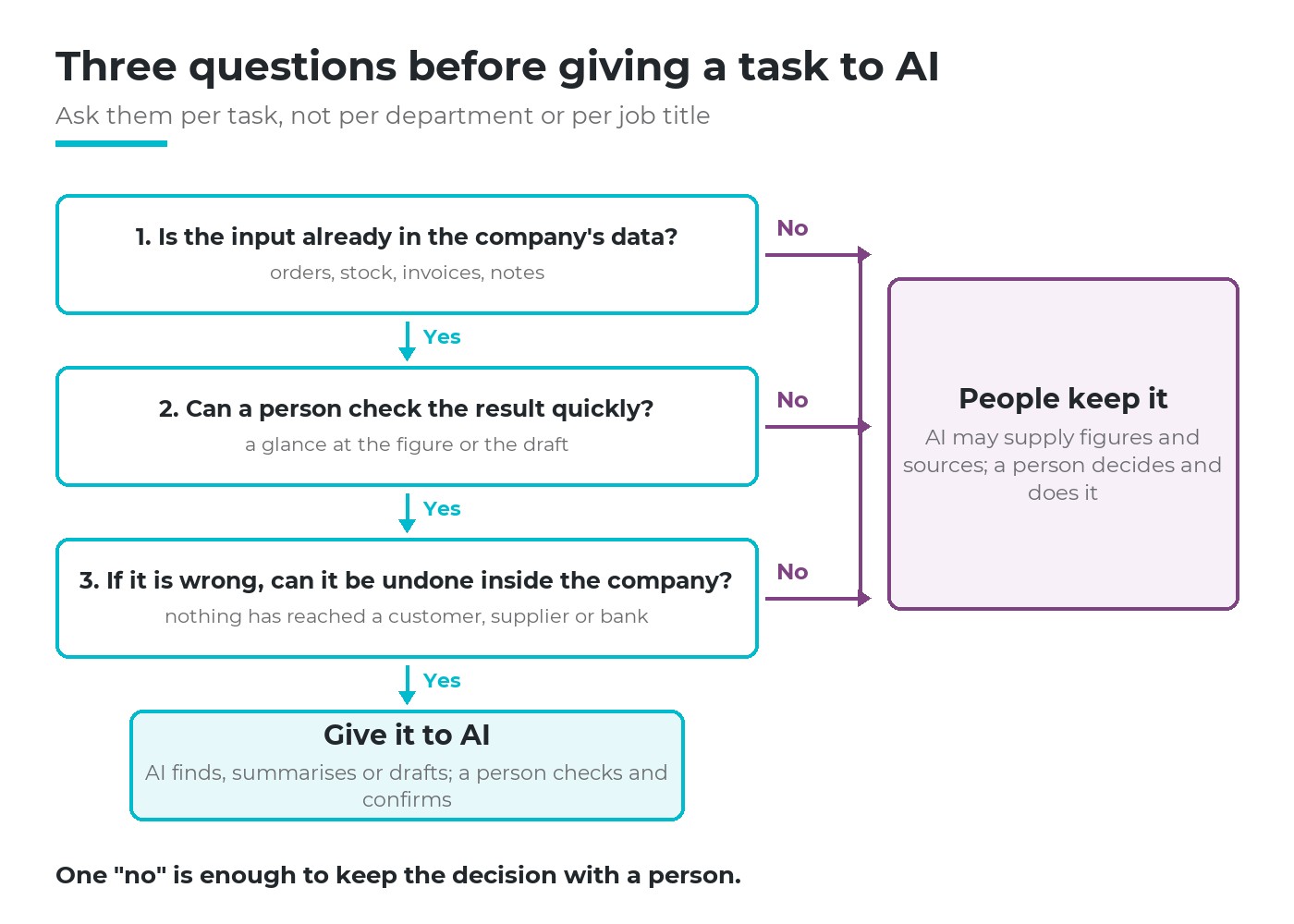
In purchasing, listing overdue orders meets all three criteria shown in the illustration. Communicating a new delivery deadline to a vendor does not meet the third criterion and therefore requires human confirmation.
Getting started with AI in procurement: a guide for purchasing teams
1. Start with overdue orders that are causing problems
Focus on orders for parts that production is waiting for, or goods that have already been promised to customers.
2. Keep delivery and receipt dates accurate
Update expected arrival dates based on vendor confirmations, and confirm goods receipts on the day the goods actually arrive.
3. Review draft requests and update vendor price lists
Cancel draft requests for quotation that are no longer needed, and update vendor prices, minimum order quantities and delivery lead times.
4. Ask three questions each week
Which orders are overdue? Which parts does production still need? Which goods have arrived but have not yet been billed? The purchasing team lead reviews each AI response.
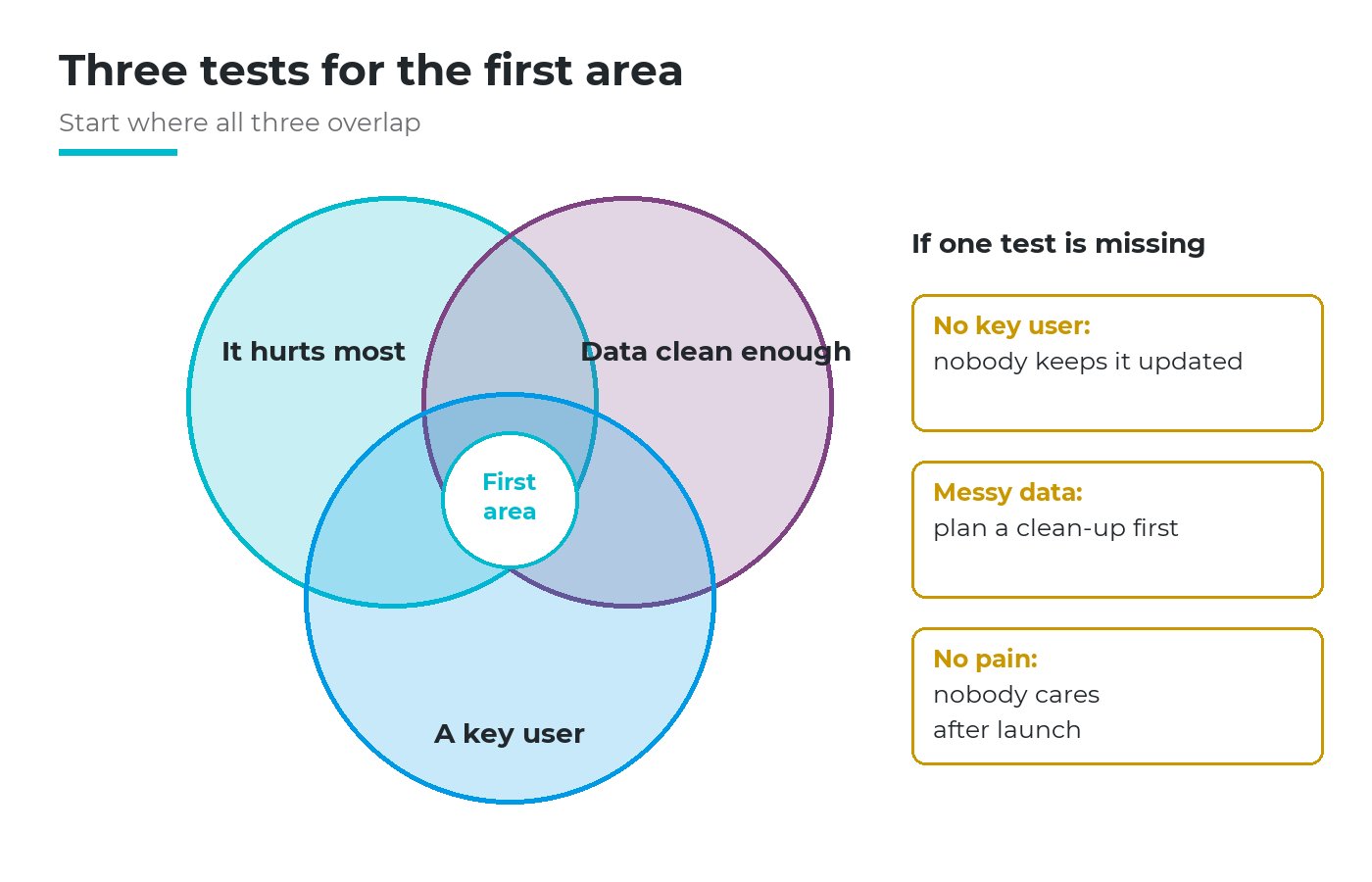
In a manufacturing company, overdue purchase orders for production parts often meet all three criteria shown in the illustration. The business problem is a production line that has stopped, and the data needed includes the purchase orders, their expected arrival dates and the parts lists for the production orders.
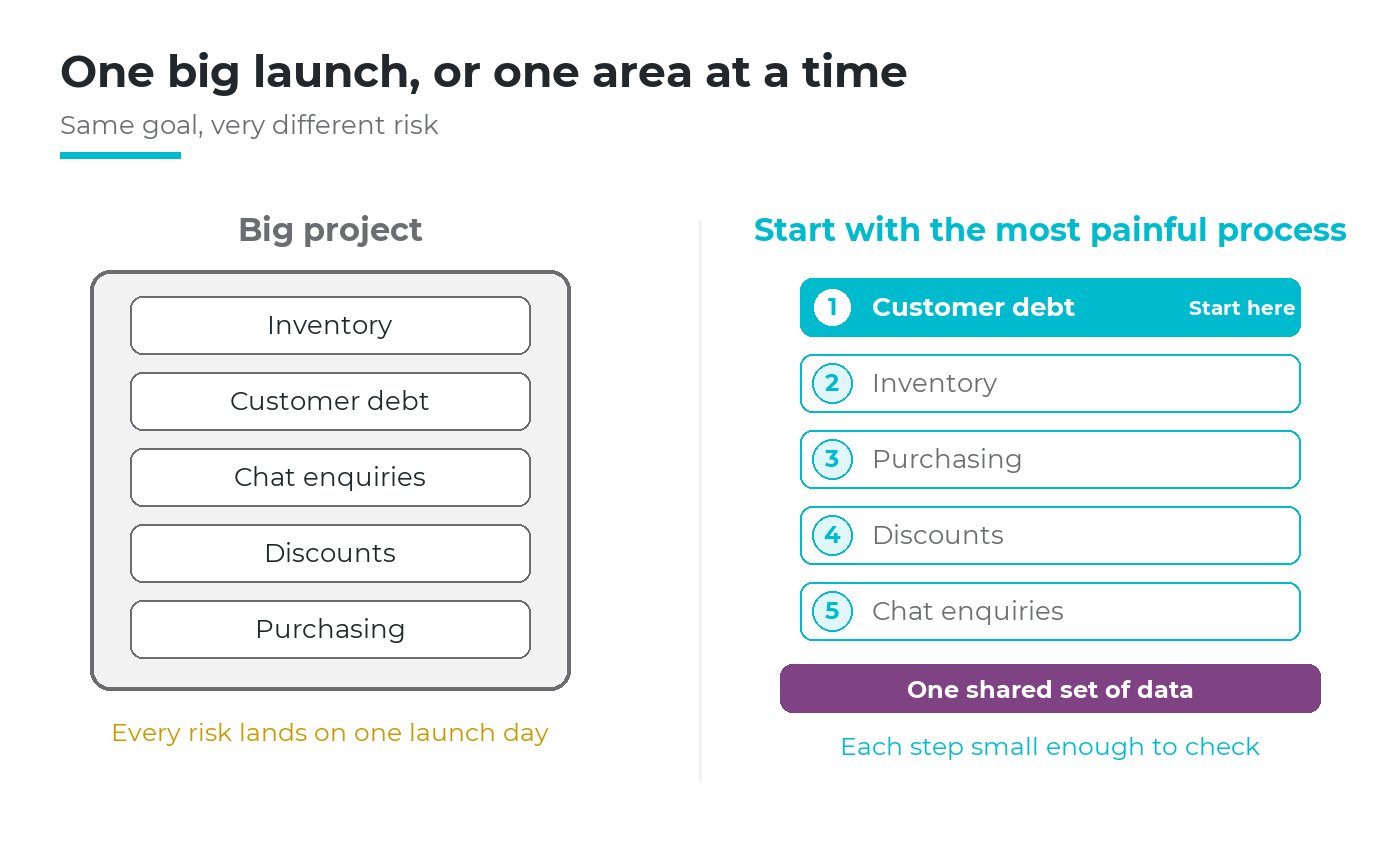
Start with vendors supplying the parts that production is waiting for, then extend the approach to other vendors using the same purchasing data.
To see how purchasing is organised in the system, from requests for quotation to vendor bills, visit the Purchase app page. The concept of agentic AI and the access rights under which it operates are explained in the article on what agentic AI is.
Would you like to see AI answer questions about your company's overdue orders, vendor prices and goods that have not yet been billed, using your own data? Tell us where it hurts most. Book a consultation and have your list of overdue purchase orders for this month ready, or see the costs first.
Frequently asked questions about AI in procurement
Not by default. In our test, both the request for quotation and the reminder email required approval through a confirmation card. Neither action was carried out until a person approved it. The company decides which AI actions require prior approval.
Not with the approach tested in this article. The AI compared vendors and prices already recorded in the company's vendor price list. Finding new suppliers or checking market prices was beyond the scope of our test.
Staff can only access information permitted by their existing access rights. By default, every internal user can access the vendor price list. In our test, a sales employee could see vendor prices but could not access purchase orders or outstanding amounts owed to vendors. If purchase prices are sensitive, restrict access to the vendor price list before enabling AI.
Your purchasing data and questions are sent to the AI service provider your company connects to using its own access key, which authenticates the connection. Each connection specifies the region where the data is stored, and your company pays the provider directly. Viindoo does not resell AI services.
Related articles
- What Is Agentic AI, and How Does It Work Inside a Business Management System?
- Build Business Software with AI, or Use a Platform with AI Built In?
- Separate Software Plus Spreadsheets, or One Platform for the Whole Business?
- AI for Manufacturing Companies: What Agentic AI Can Do from Order to Shop Floor
- AI for Accounting: What Agentic AI Can Do from Receivables to Reports
- AI in Sales: What Agentic AI Can Do from Opportunity to Quotation
- AI in Inventory Management: What Agentic AI Can Do from Stock to Delivery
- AI in HR Management: What Agentic AI Can Do from Headcount to Hiring
- AI in Project Management: What Agentic AI Can Do from Deadlines to Logged Hours
- From Purchase Request to Vendor Bill: the Right Approver, the Right Numbers