After ERP goes live, the question of management value versus waste in data entry comes up quickly: "Why do employees have to enter so much data?" It is a completely reasonable question, because every data entry step has a cost: it takes time, puts pressure on users, increases the risk of errors and slows the process down when it is poorly designed.
On the other hand, if the business does not record enough of the necessary data, the system cannot follow the flow of work, measure deviations, trace causes, calculate cost correctly or support Kaizen. So the right question is not:
"Should we enter as little data as possible?"
But rather:
"Which data creates enough management value to be worth recording?"
This is one of the most important questions when implementing ERP for SMEs, and it continues the previous article on data entry and Kaizen.
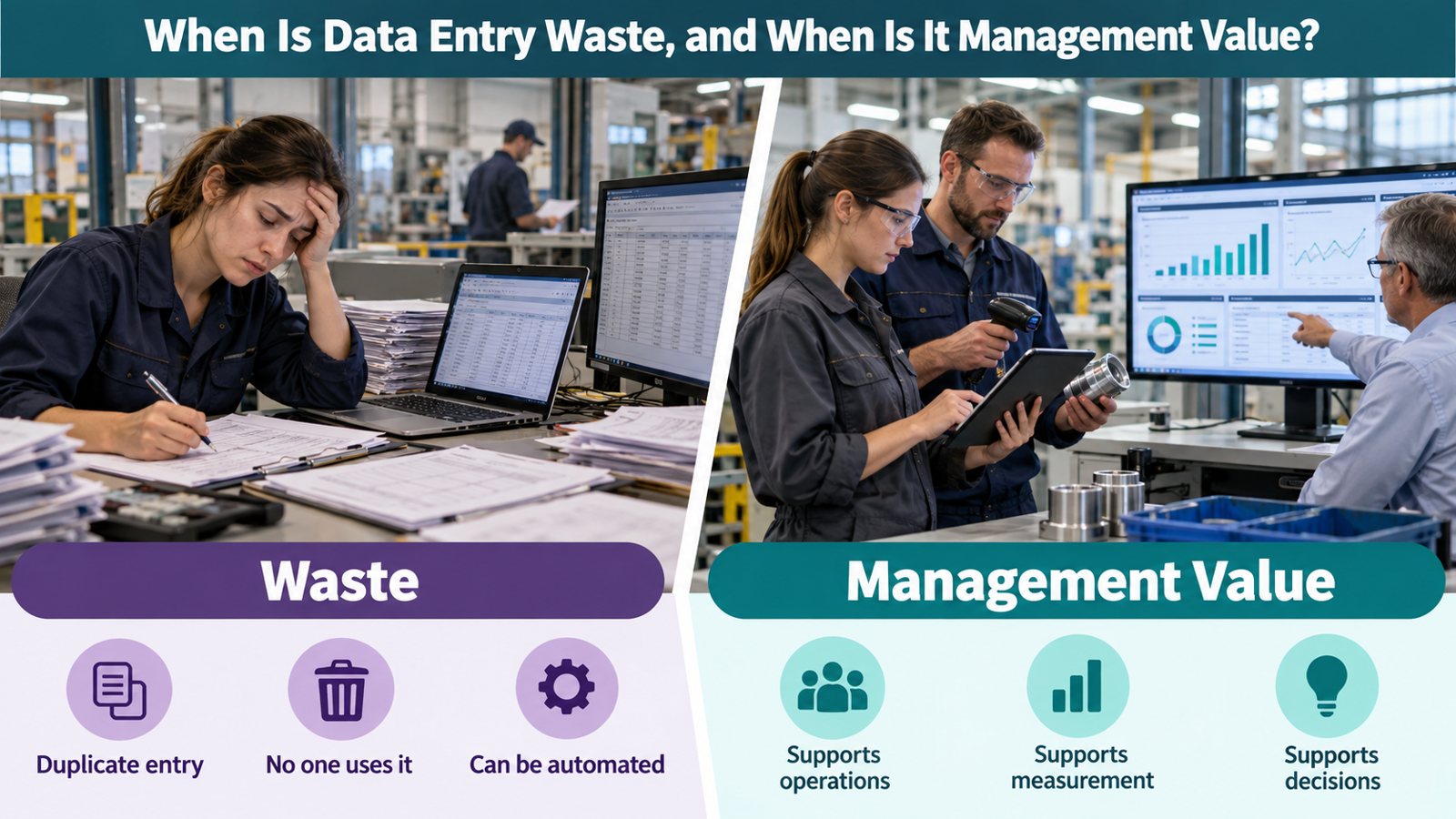
Illustration: duplicate, unused or automatable entries are waste; data that supports operations, measurement and decisions creates management value.
Not all data has the same value
Some data is almost mandatory because it drives operations; other data only has value in certain situations.
Data that drives operations
Product code, quantity, delivery date, BOM, materials, work status.
Data valuable only in some situations
Defect causes, machine downtime, reasons for late delivery, who caused a deviation, classification of causes.
If the business does not yet need to manage at that level, forcing users to enter the second group from day one can make the project too heavy. Conversely, if it really needs to analyze defects, productivity or cost, that data becomes very important.
The management value of data depends on the management question the business wants to answer.
Data has management value when it serves at least one decision
A very simple principle:
If nobody uses the data to operate, control, measure or decide, reconsider whether it should be collected.
Data usually has management value when it belongs to one of four groups.
1. Data that drives the process
The BOM determines material needs, the delivery date shapes the production plan, stock drives purchasing decisions, the status of an operation decides the next step. Without it, later steps cannot run correctly.
2. Data for control
QC results, approval status, pass and fail quantities, stock limits, credit limits. It helps detect anomalies before they cause bigger consequences.
3. Data for measurement
Start and end times, actual quantities, material consumption, waiting time, defect rate. It shows how reality differs from the plan.
4. Data for improvement
Defect causes, downtime causes, reasons for delays, types of incidents, sources of deviation. Not always needed day to day, but very valuable for Kaizen.
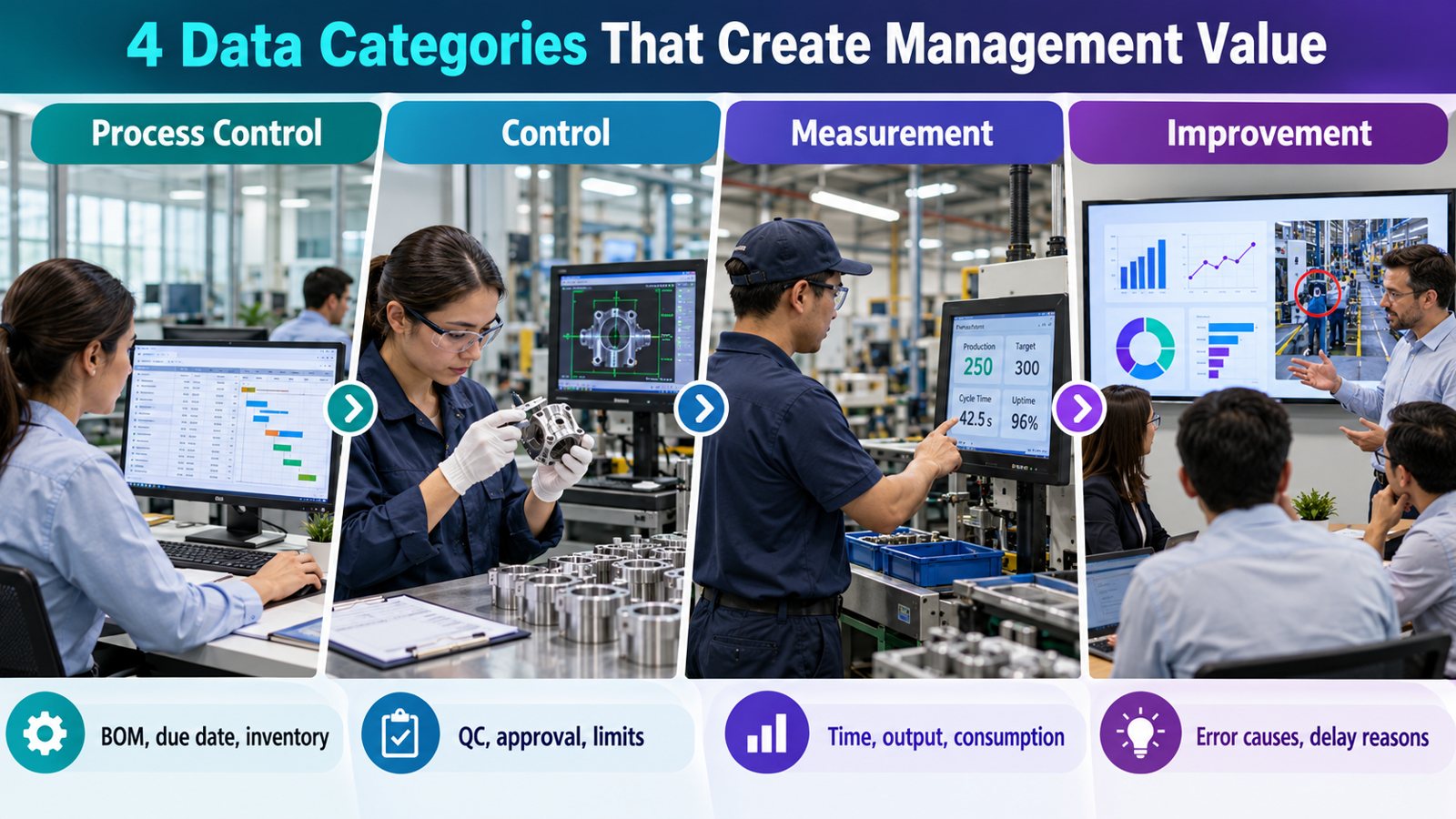
Illustration: process control, control, measurement and improvement.
In Viindoo, data of the first group is visible directly on documents: each manufacturing order shows its component status (available, expected or not available), which drives purchasing and production planning decisions.
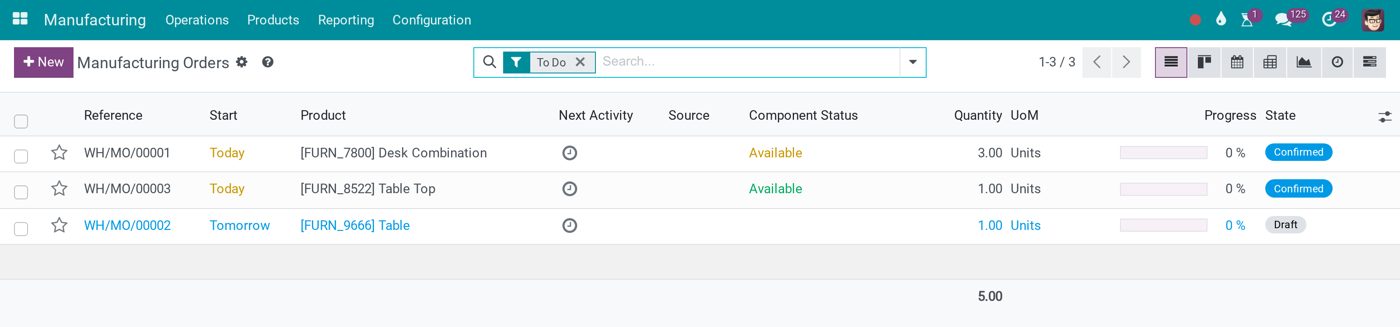
Component status on manufacturing orders is data that drives the next decision.
Control data works the same way. With Manufacturing Quality Control, quality checks appear on the operations whose materials are covered by a quality control point, and a work order cannot be finished while its checks have not been performed. For receipts and deliveries, a quality control point can be set to "No Proceed if Failed", which blocks the transfer when the check fails.
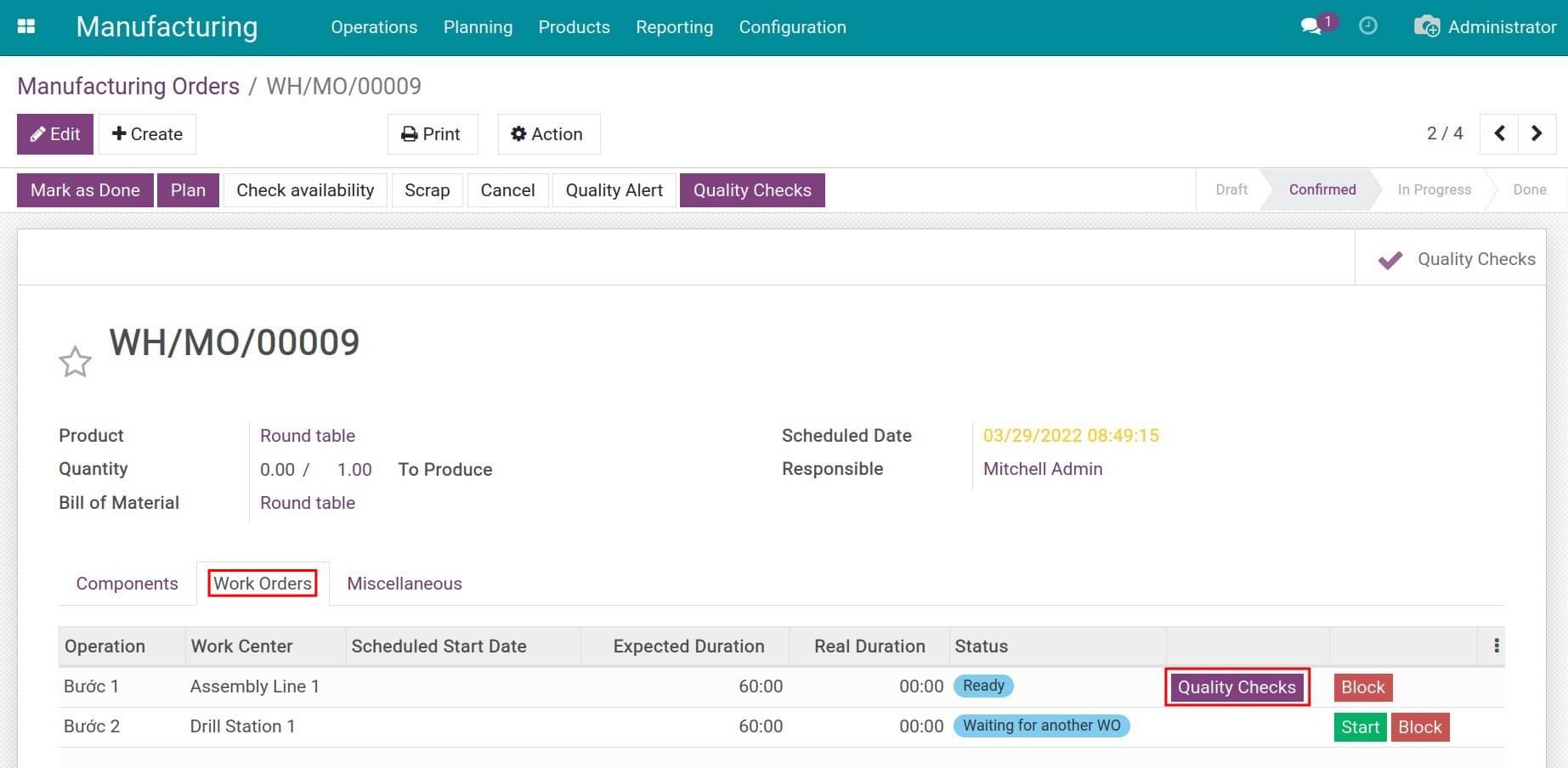
Quality checks shown on the operations of a manufacturing order.
When does data entry become waste?
Data entry becomes waste when the cost of creating the data is greater than the value it brings. Some easy signs:
1. Nobody uses it after entry
Users fill in 10 fields but reports use only 3; the other 7 are hardly ever looked at. A clear signal to review.
2. The data already exists elsewhere
The customer name is already on the sales order, yet users retype it on the delivery slip, then accounting enters it again. A typical form of waste.
3. It could be calculated but is typed by hand
Total value, processing time, days late, the gap between plan and actual. If the system can calculate it, users should not enter it again.
4. Too detailed for current management capability
A business that has never measured operation time asks from day one for every minute of downtime, every sub-reason and very detailed cause codes. Users get tired and stop entering.
5. It is not linked to any action
An indicator only matters if the business knows what it will do when it changes. Data kept "just to know" is worth very little.
Example in a mechanical company: how detailed should the BOM be?
This is a very common situation. Suppose the business receives an order for "Steel frame assembly A, 10 sets". If the BOM only lists steel, bolts and paint, users can enter it quickly. But the business will struggle to answer which type of steel exceeds the standard, which part often has defects, which operation takes the most time and which component raises the cost of goods sold.
On the other hand, if the BOM goes down to every small item while the business does not manage inventory or cost at that level, the volume of data can become too large. The balance point is:
The BOM should be detailed enough for purchasing, production, consumption control and costing as the business really needs, and no more just because the system allows it.
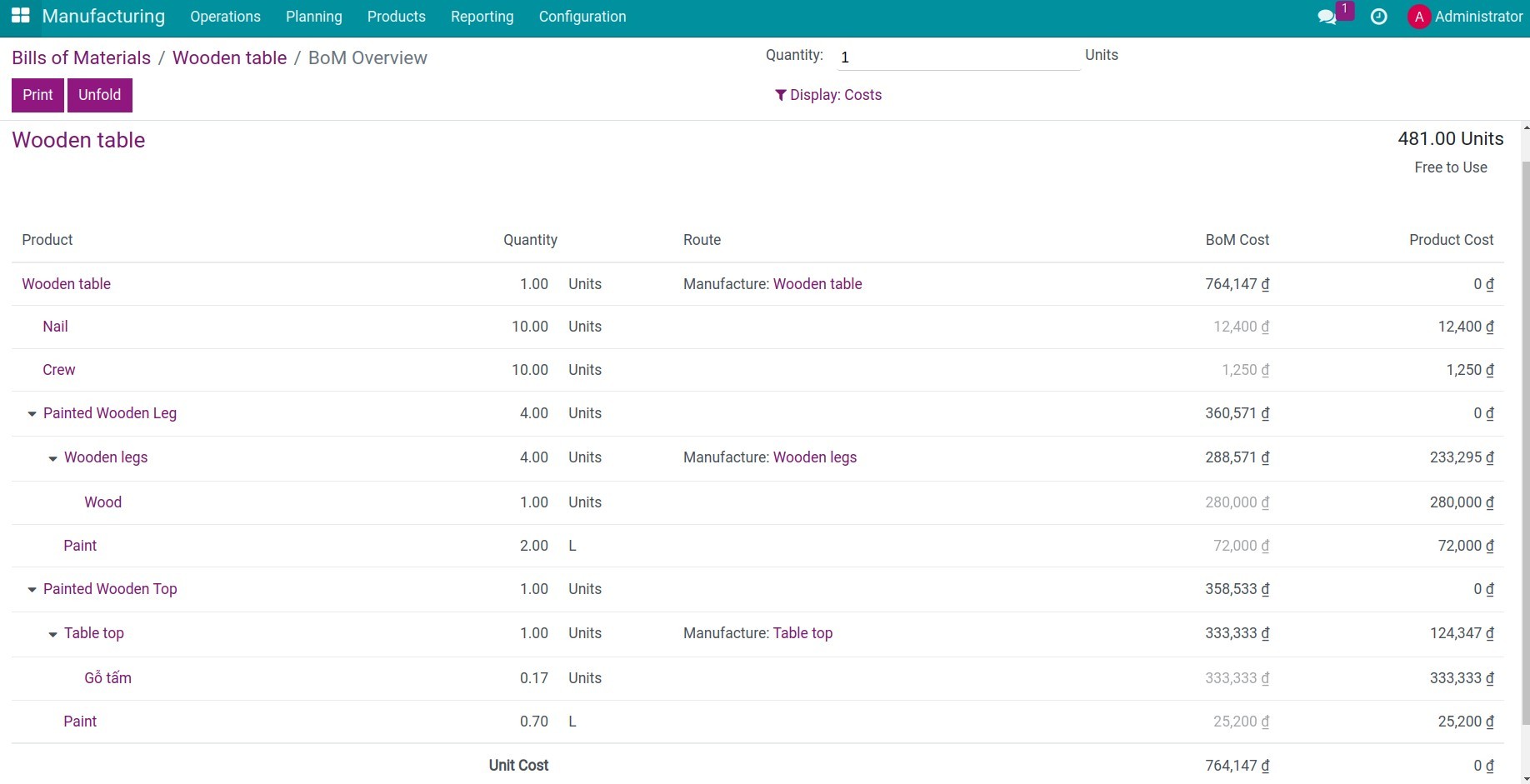
A multi-level BOM with components, quantities, routes and costs: its depth should follow what the business needs to manage.
The level of detail should follow the depth of management
This can be pictured in three levels. Not every business needs to start at level 3.
Level 1: Operable
Which product, how many, the main materials, which operation it is at. Goal: follow the flow of work.
Level 2: Measurable
Add standards, time, consumption, defects and actual output. Goal: measure deviations.
Level 3: Analyzable
Add defect causes, downtime causes, delay reason codes and cost categories. Goal: find causes and do Kaizen.
How to assess whether data is worth entering
Five questions help:
1. Which process does it serve?
If it is not linked to any later step, review it.
2. Who uses it?
If no specific user can be named, its value may be low.
3. Which decision depends on it?
If no decision changes because of it, review it.
4. Can it be captured automatically?
If yes, reduce manual entry.
5. What capability is lost without it?
This is the most important question.
For example: without operation times, cycle time cannot be measured; without a detailed enough BOM, consumption cannot be calculated correctly; without defect causes, root cause analysis is impossible. Once this question is answered, the management value of the data becomes clear.
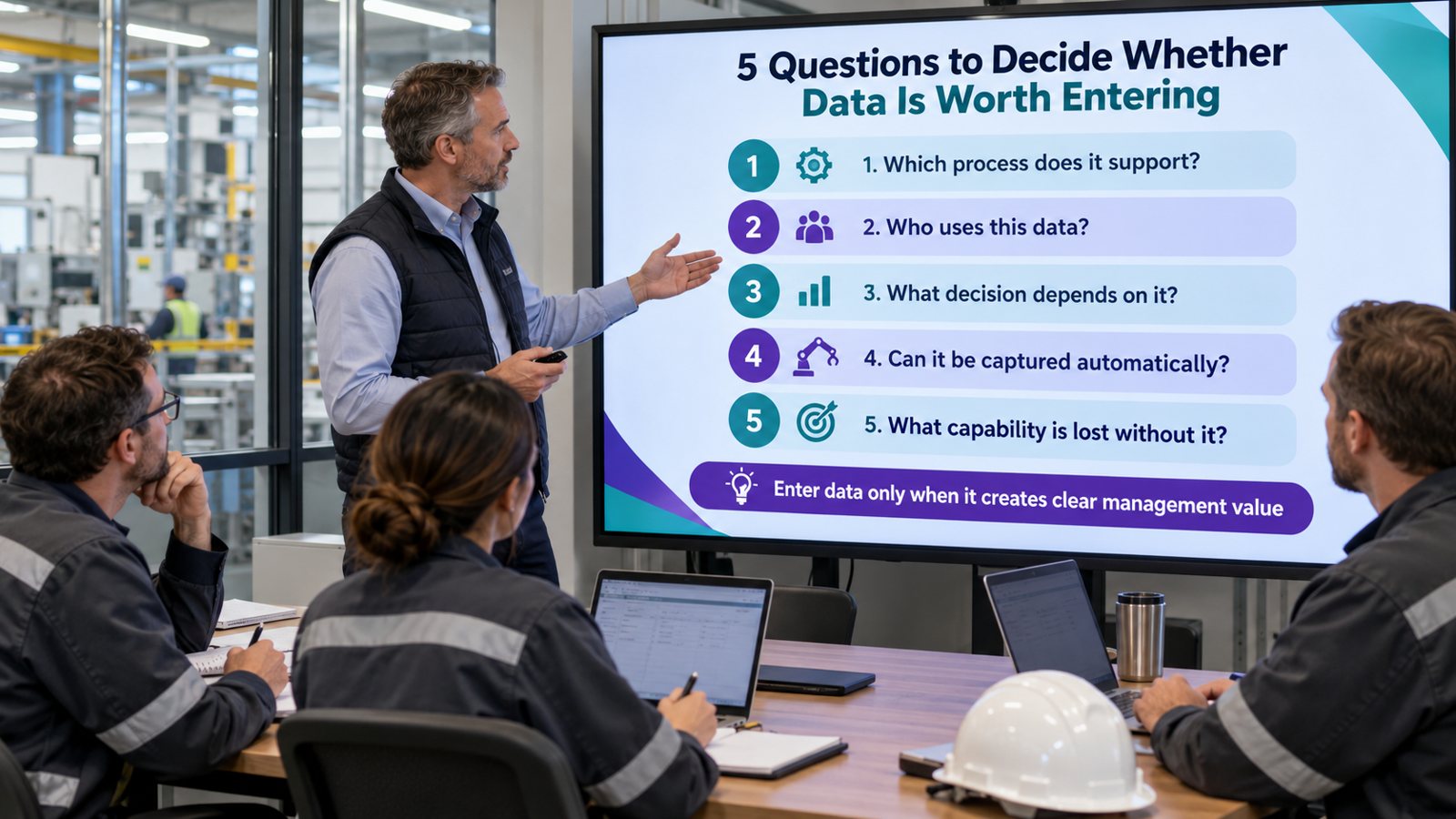
Illustration: enter data only when it clearly serves management.
Don't judge data only by immediate financial ROI
For SMEs, a big difficulty is that there is often no baseline: the current lead time, waiting time, rework rate and cost of deviations are unknown. So it is very hard to prove right away how much money a piece of data will save. In that case, value can be seen in layers:
Visibility
Know what is happening
Control
Keep the process under control
Decision
Make better decisions
Productivity
Less time, stock, defects, labor
Financial
Clear financial results
Not every piece of data has to prove itself in money right away. Some data first creates the ability to see, and that ability is the foundation for ROI later.
The cost of not knowing also has to be counted
When assessing data, businesses usually look at the cost of data entry and forget the cost of not having the data:
Without an accurate BOM
Buying too little or too much material, wrong cost of goods sold, delayed production.
Without recording defects
Defects repeat, causes stay unknown, suppliers cannot be evaluated.
Without recording time
Bottlenecks and real productivity remain invisible.
Cost of Blindness: the cost of not seeing.
In many cases, this cost is far greater than a few seconds of data entry. Recording a defect is a good example: in Viindoo a quality alert can be raised directly from the operation where the problem occurs, so the defect becomes data with a clear purpose instead of an entry made just to fill a form.
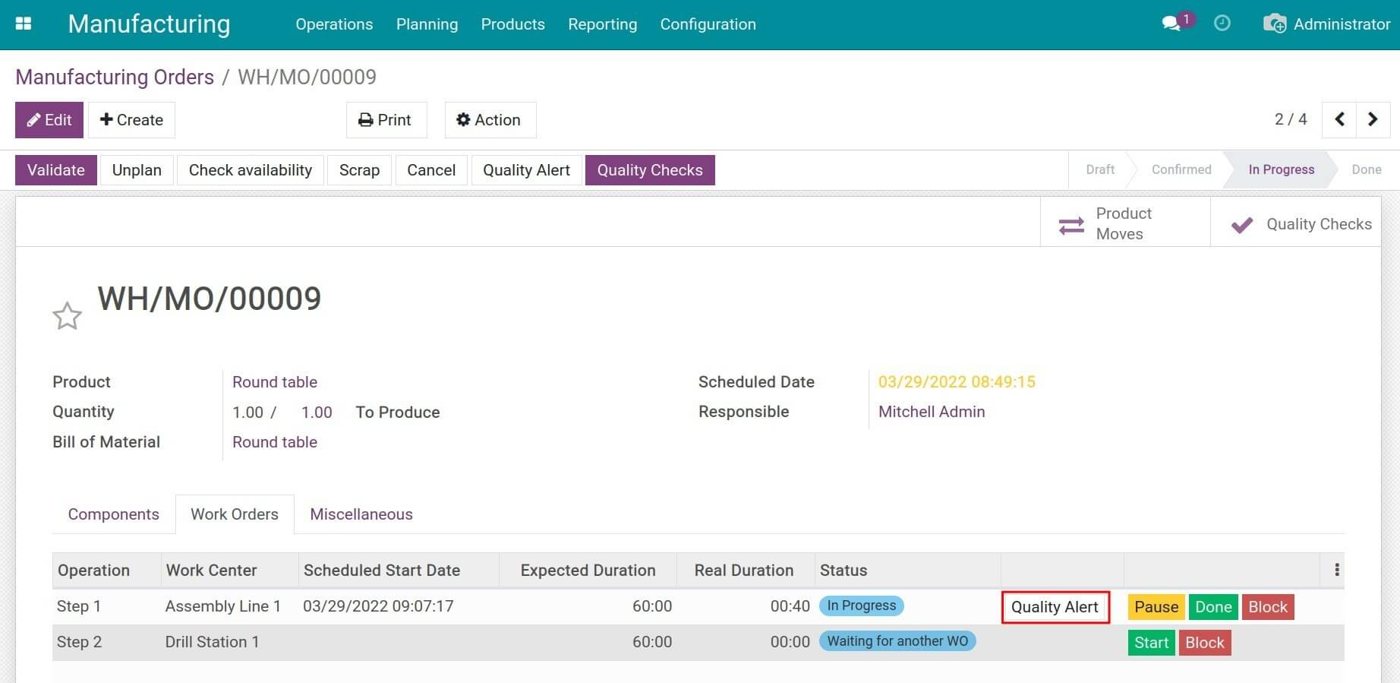
A quality alert raised from the operation where the problem occurs, with corrective and preventive actions to follow.
Data Contract: a simple way to align leadership and the implementation team
One way to reduce debate is to define a clear "data contract" for each entry point. No complex document is needed, just five lines: Data (what is entered), Creator (who enters it), Timing (when), Purpose (what it is used for) and Consequence if missing (what capability is lost).
Example: defect quantity
Creator: QC staff. Timing: at inspection. Purpose: track the defect rate and analyze quality. If missing: the defect rate cannot be measured.
Example: BOM
Creator: engineering. Timing: before production planning. Purpose: material requirements planning (MRP), material issue, costing. If missing: consumption and material needs cannot be managed.
I am not entering data for the software. I am creating data for a specific management purpose.
Implement Viindoo on the principle of Minimum Management Data
The goal is not to collect as much data as possible, but to collect the minimum data that is still enough for the business to see, measure and improve. This can be called Minimum Management Data. The principle balances both sides: leadership does not want a heavy system, and the implementation team still ensures enough data to manage.
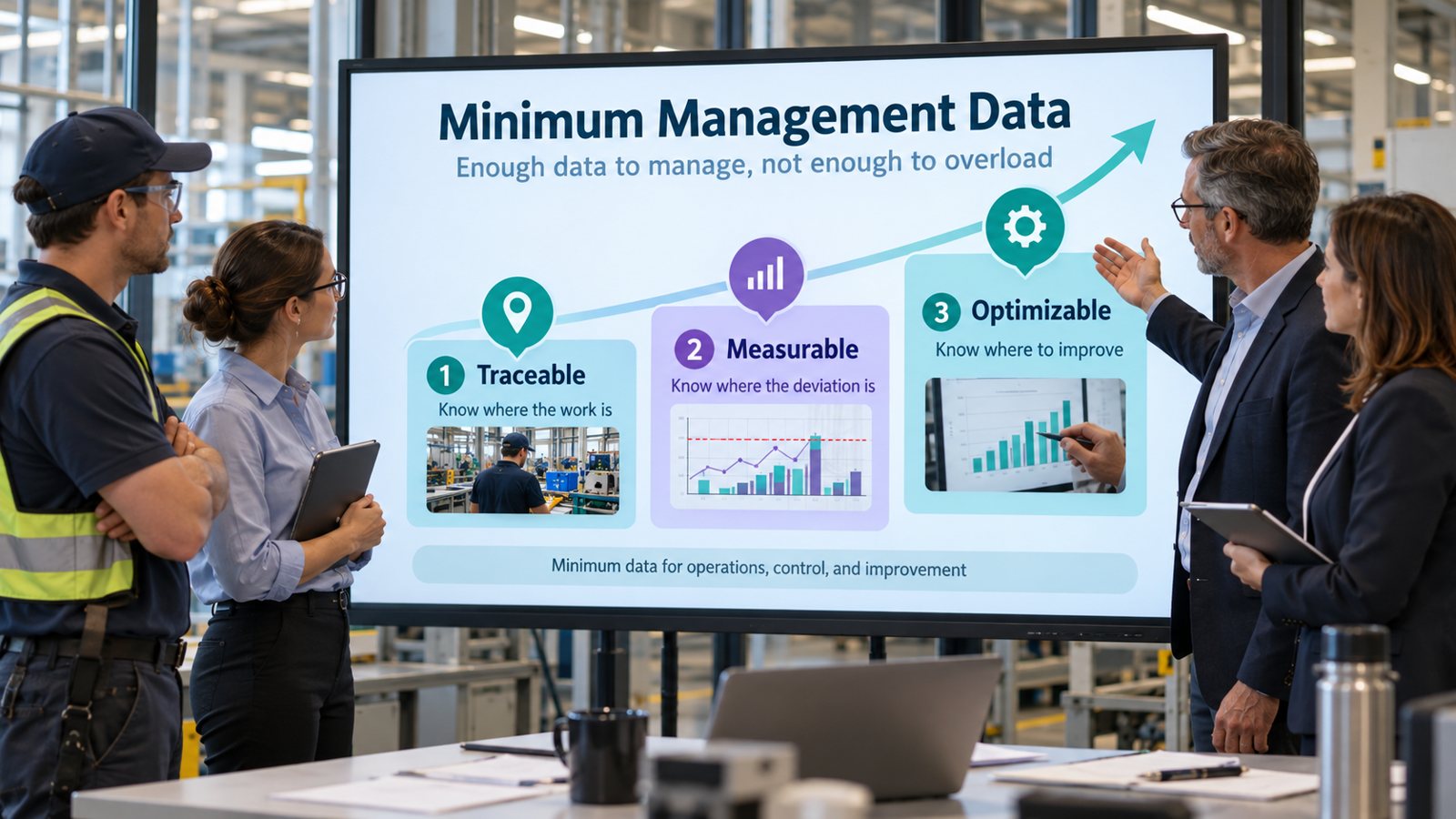
Illustration: traceable, measurable, optimizable with the minimum data needed.
In Viindoo, this principle can be applied by:
- enabling only the features and fields that are really needed,
- reusing data that already exists instead of entering it again,
- using automation rules and OmniApproval to reduce manual confirmations,
- applying barcode scanning (including QR codes read by a scanner) where it fits, with Stock Barcode and MRP Barcode,
- not asking for very deep records from the start,
- increasing detail only when the business really needs it.
Quality control points are a good illustration: each point applies only to the products (or product categories) and operation types that need checking, so data is recorded at the right control point instead of everywhere.
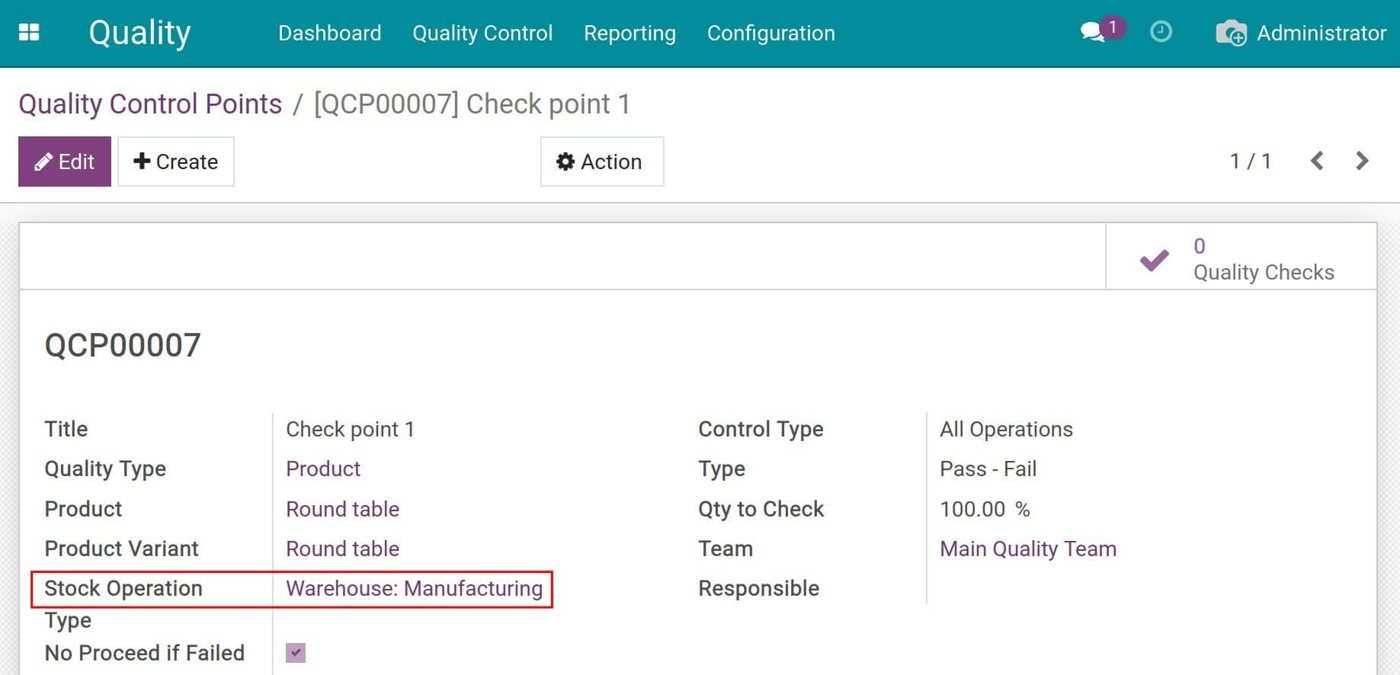
A quality control point defined for a specific product and operation type, with its check type and quantity to check.
Good data is created within the flow of work
Do not create a separate data entry process if the data can be created as the work happens.
- Sales confirms the order: demand data is created.
- Engineering completes the BOM: material data is created.
- The warehouse scans at issue: stock data is created.
- Production confirms the operation: progress data is created.
- QC inspects: quality data is created.
Data entry then is no longer "extra work"; it becomes a natural part of the flow of work.
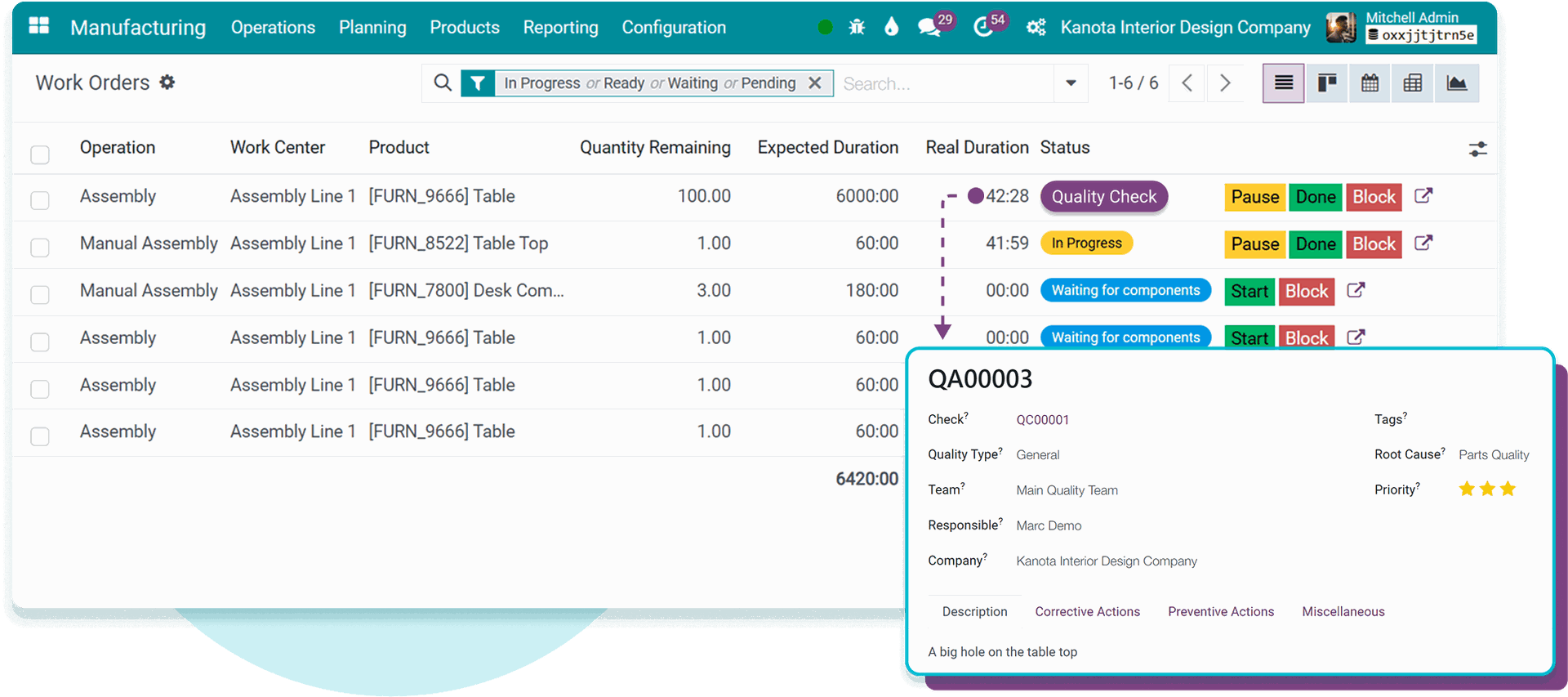
Starting and finishing a work order is part of the job, and it records real duration and status.
From minimum data to deeper Kaizen
In the first phase, the business only needs enough data to be traceable, then it can move to measurable, and finally optimizable.
Traceable
Know where the work is
Measurable
Know where the deviation is
Optimizable
Know where to improve
What matters is not to digitalize in more detail than the business can currently decide on, but also not to simplify so much that the business loses sight of the flow of work. That is the most practical balance.
Conclusion: data has management value when it changes how the business is managed
Data is worth recording when it helps the business operate better, control risk, measure deviations, make decisions or do Kaizen. Conversely, if nobody uses it, it is entered twice, it can be automated or it is not linked to any action, it is likely waste.
Don't ask "how much data do users have to enter?"; ask "what management value does each piece of data create?"
That is also an important principle in how Viindoo approaches implementation: do not collect data just because the software can; collect only the data the business needs to see, measure and improve.
Frequently asked questions about the management value of data
No. Data entry is waste only when the data is not used or can be captured automatically. If it serves operations, control, measurement or Kaizen, it is worth recording.
Identify which process it serves, who uses it, which decision depends on it and what capability the business loses without it.
Not necessarily. SMEs should start with the minimum data needed to follow the flow of work and the main deviations, then add detail when there is a clear management need.
Yes. Viindoo reuses data across operations, calculates automatically, connects workflows and supports barcode scanning (including QR codes read by a scanner) to reduce manual and repeated entry.
It is the minimum set of data that lets the business operate, control, measure and improve without creating an unnecessary data entry burden.
Next in the series: More data is not always better, just enough to manage
If this article answers which data is worth entering, the next one answers at which level of detail the business should stop. We will look at the Minimum Management Backbone, the minimum management backbone that helps SMEs implement ERP deeply enough to manage without turning the project into an overly heavy system.