What is agentic AI? It is AI that can carry out a piece of work instead of only answering a question: it finds the data it needs, takes several steps in a row, and then prepares or performs an action.
For a company, three questions matter more than the definition: where does this AI work, whose access rights does it use, and who approves what it does. This article explains the term with an example and then answers those three questions.
What is agentic AI, explained with one example
Suppose a salesperson types: "Prepare a quotation for customer Hoa Binh, five electric bikes." A chatbot and an agentic AI system respond in very different ways.
A chatbot
It writes a piece of text that looks like a quotation. It does not know your customer, your price list or your stock. You copy the text into your software and fill in the real figures yourself.
An agentic AI system
It finds the customer, the price list and the product in your system. If something is unclear, such as the colour, it asks. Then it prepares the quotation and stops for you to confirm.
The difference is not that one is smarter. The difference is that agentic AI is connected to the place where the work is done and is allowed to take steps there.
| Chatbot | Agentic AI | |
|---|---|---|
| What you receive | An answer in text | A piece of work that is done or ready for approval |
| Where the data comes from | Whatever you paste in | The system the AI is connected to |
| Who takes the next step | You copy the answer somewhere else | The AI does it, or stops and asks you |
| What can go wrong | A wrong answer that someone trusts | A wrong action that nobody approved |
The term comes from the word "agent": a program that works towards a goal on someone's behalf. A short definition is on Wikipedia.
What agentic AI can do in a company
What is agentic AI in a company's daily work? The work it can take on falls into three groups. The examples below are questions we ran on a test company's data.
Answer questions on real figures
"How did October sales compare with September, and which customers caused the change?" The AI reads the records and answers with the figures and the reason.
Help decide what to do first
"Which invoices are overdue, and which customer should we call first?" The AI returns a call list in order, with the reason for each.
Carry out work, with approval
"Draft an email reminding this customer of the payment date and let me read it first." The AI drafts the email and stops at a confirmation card.
How to split work between AI and people, department by department, is covered in the article on what AI can do in business operations.
Why many companies use AI without seeing results yet
Many teams already use AI every day, yet the benefit stays with individuals and does not reach the company's results. Three causes are common. The figures quoted here are international and come mostly from large companies.
The AI stands outside the work
Each person uses a personal AI tool. They ask a question, then copy the answer into the company's software by hand. The AI never sees the real orders or invoices, so it cannot check anything and cannot finish anything. One sign: after months of using AI, the weekly report is still put together by hand.
Nobody controls what the AI may see
When staff paste contracts, price lists or payroll into a public AI tool, the company no longer knows where that data goes. An IBM report in 2025 found that 97% of organisations that suffered an AI-related breach had no proper access controls for AI (link under Sources).
The AI acts and nobody approves
The more an AI can do, the more damage a wrong action causes. In July 2025, an AI coding agent deleted a company's live database while changes were supposed to be frozen. The case was reported by Fortune (link under Sources). The lesson is simple: an action that changes data needs a person's approval.
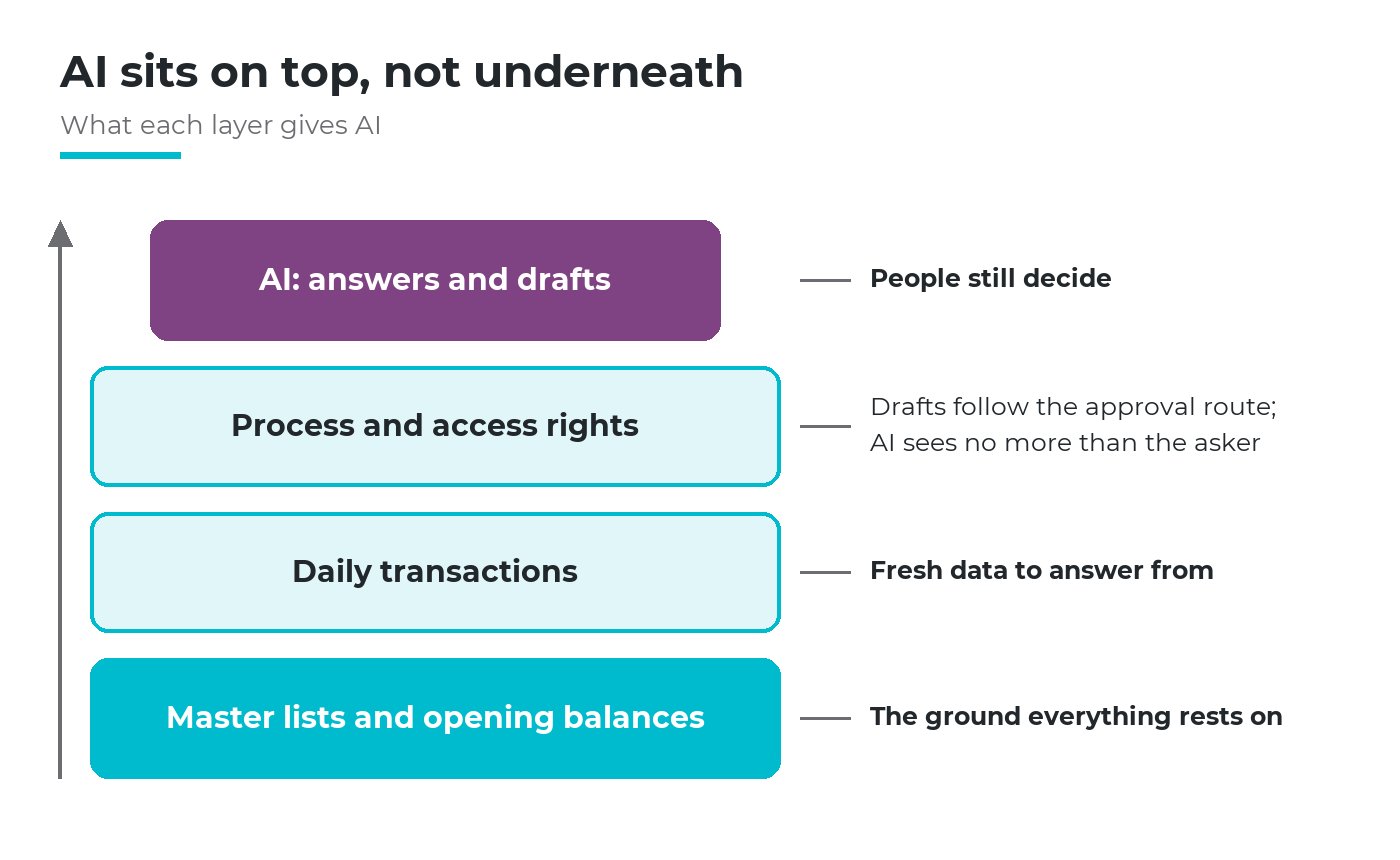
AI sits on the top layer. Without the layers beneath it, its answers are fluent but have nothing to rest on.
Four conditions for agentic AI to work in a business
So what is agentic AI that a company can rely on? The three causes above point to four conditions. When one is missing, the AI is either not useful or not safe.
1. The data is in one system
Sales, purchasing, inventory, manufacturing, accounting and HR are recorded in one place. The AI then reads the same figures everyone else uses. If each department keeps its own file, the AI answers from one file and contradicts another.
2. The AI uses the asker's access rights
The AI has no rights of its own. It sees and does only what the person asking is allowed to see and do. A salesperson who asks about payroll gets nothing, exactly as in the software itself.
3. The AI asks before it acts
Sending, scheduling, creating and editing all stop at a confirmation step. A person reads the draft and then approves, edits or cancels. The person who confirms is the one accountable.
4. Every request is recorded and has a cost limit
Each request is logged with who asked and what it cost, and spending is capped. When something goes wrong it can be traced, and the AI bill does not arrive as a surprise.
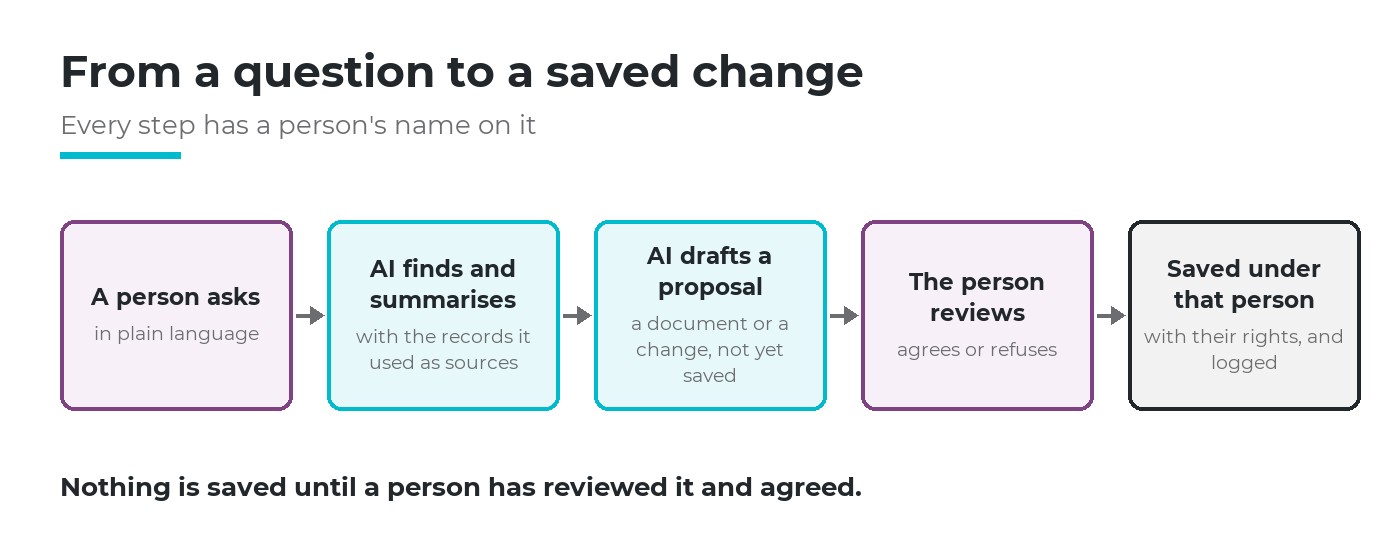
AI finds, summarises and drafts in the middle steps. A person starts the chain and closes it.
Agentic AI is worth having when it works alongside the team and follows the rules the company has set.
How Viindoo meets these four conditions
Viindoo is an agentic business management platform: the whole business on one platform, with AI working alongside the team, and you set the rules. This is how each condition is met.
- One assistant for the installed apps. The same assistant answers from sales, inventory, manufacturing, accounting, payroll, maintenance and CRM data. There is no separate add-on to install for each app.
- Answers come with their sources. Under each answer there is a Sources list. Clicking a line opens the record the figure came from, so the reader can check it.
- The asker's access rights apply. In our test run, a salesperson who asked for open quotations saw only their own, and could not see payslips. No separate setup for AI was needed.
- The AI asks first. When asked to prepare a quotation or an email, the AI drafts it and stops at a confirmation card with the choices to approve, edit or cancel.
- You choose the AI provider and the spending limit. The company connects the provider it prefers with its own key, pays that provider directly, and can set daily spending caps per user and per company.
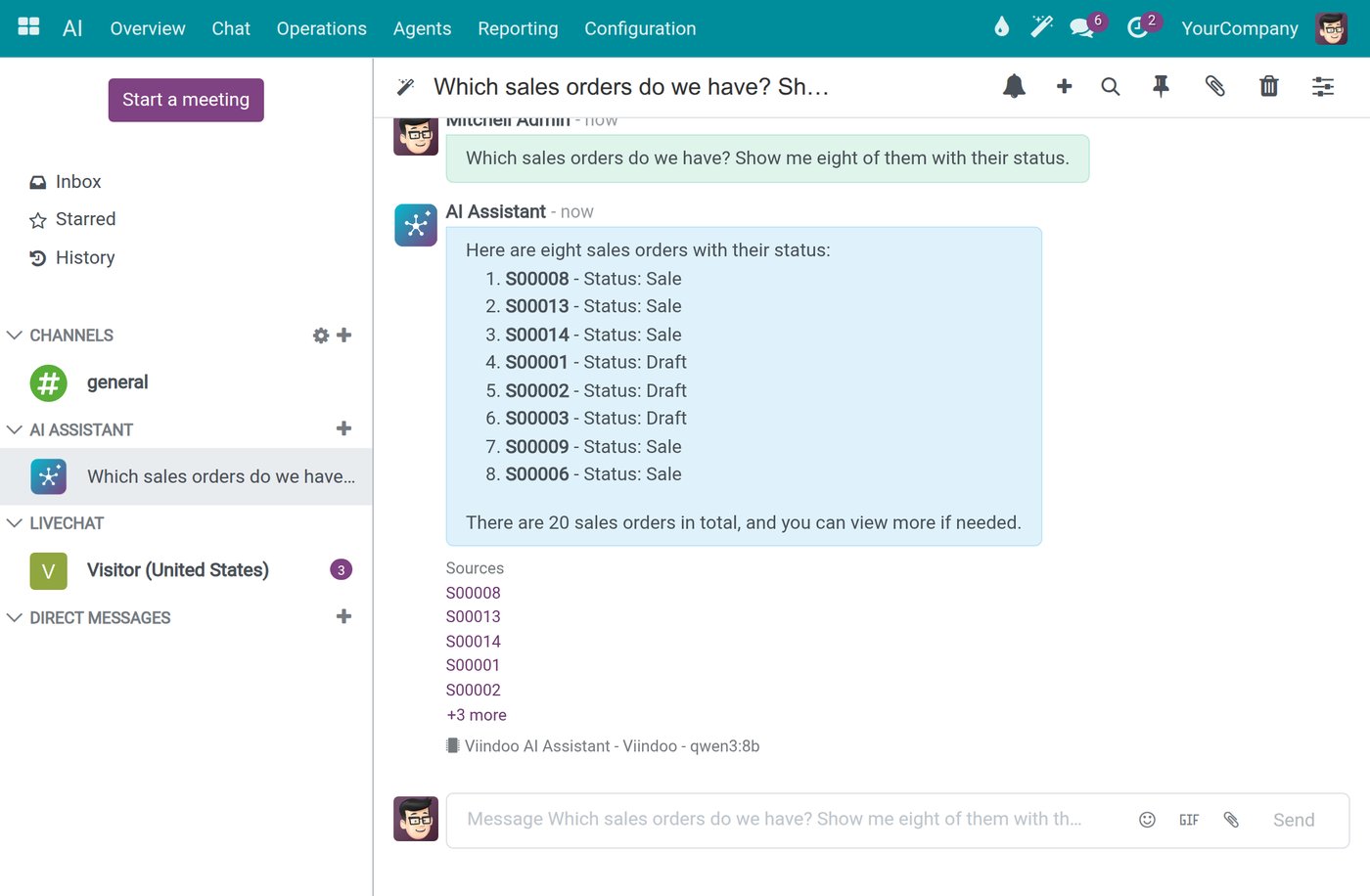
Example: asked for a list of sales orders, the AI answers with a Sources list; clicking an order number opens the record.
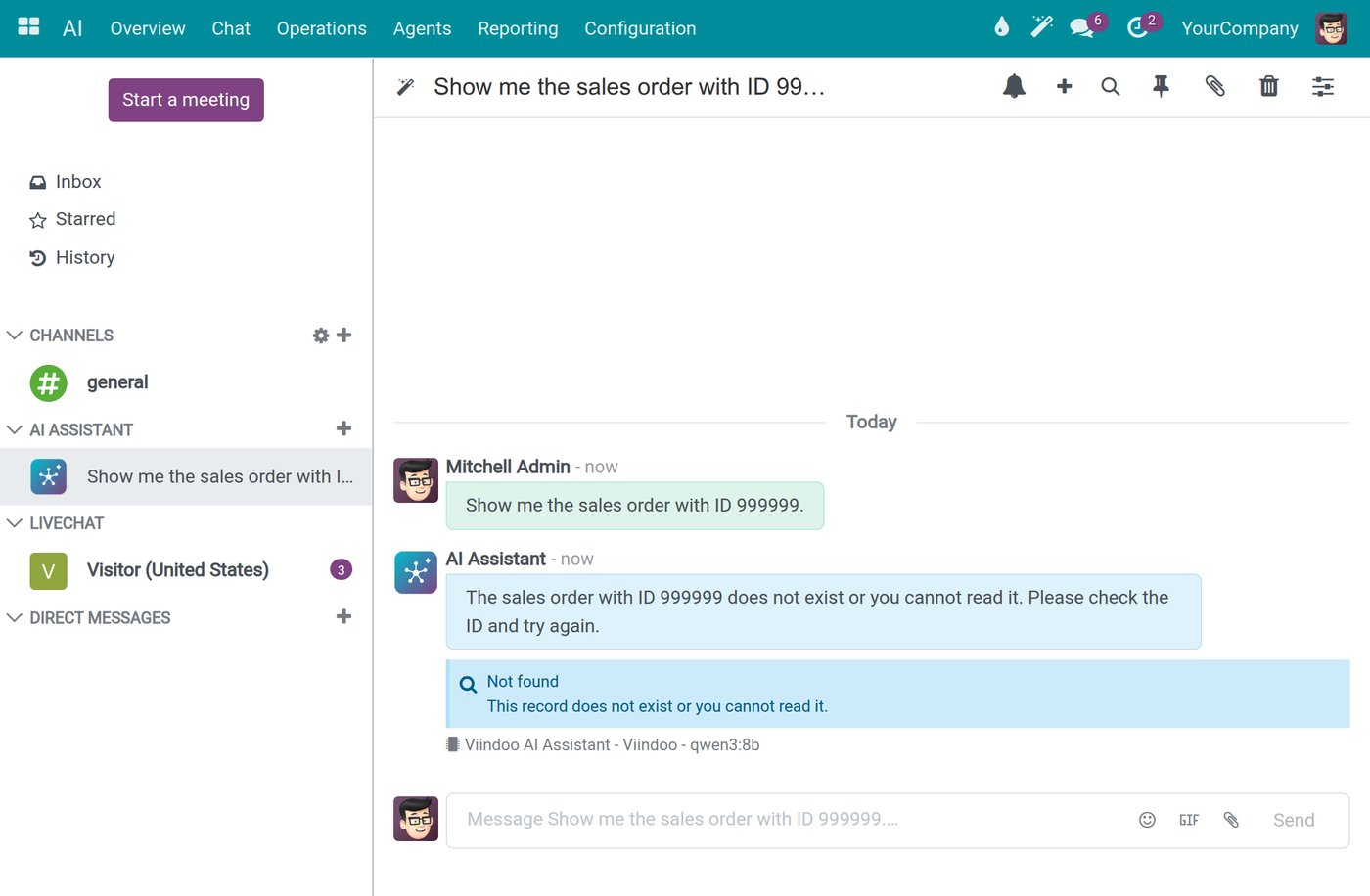
Example: asked about a record the user may not read, the AI replies "Not found" instead of guessing.
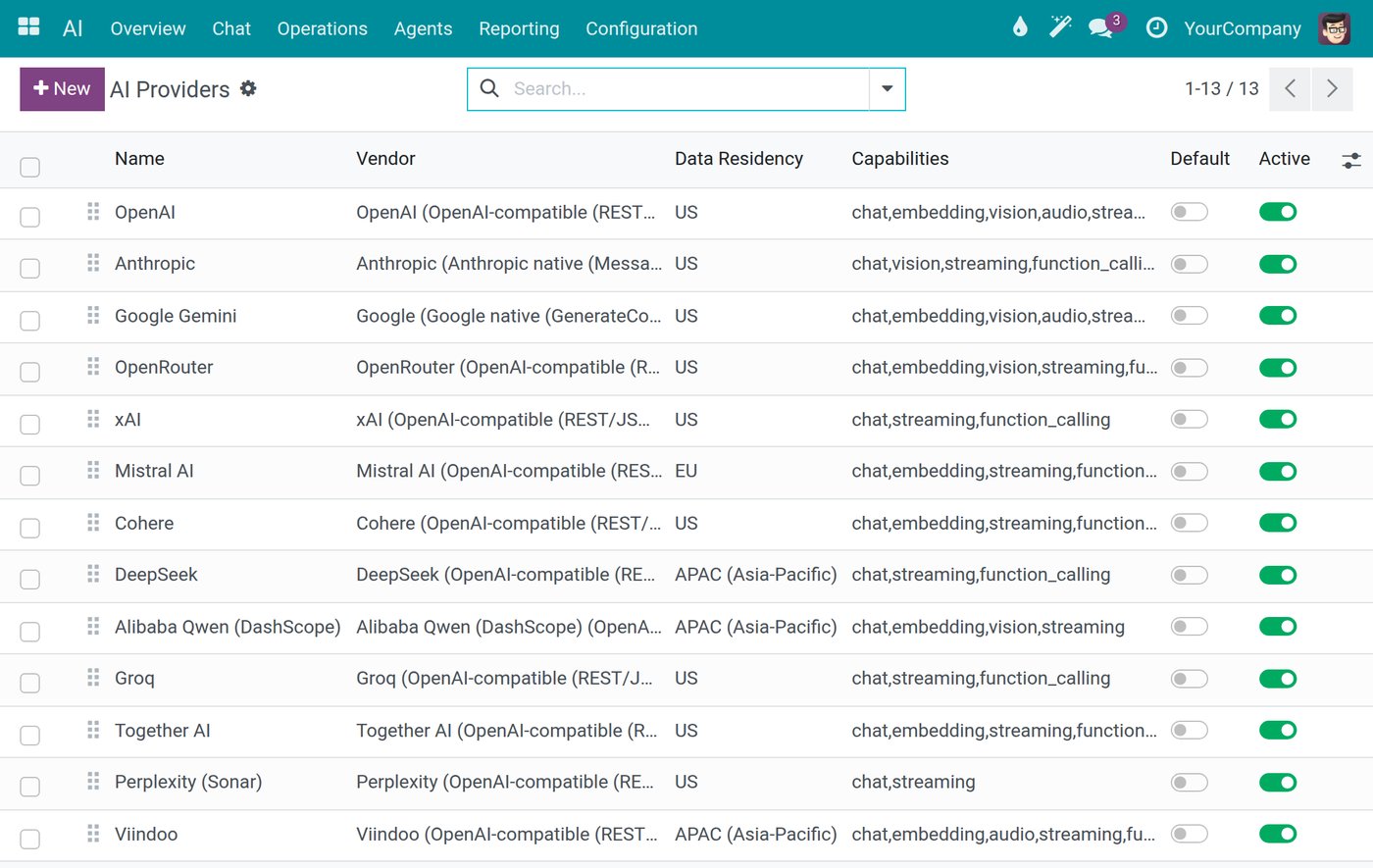
Example: the company chooses which AI provider to connect; each connection shows its data residency region.
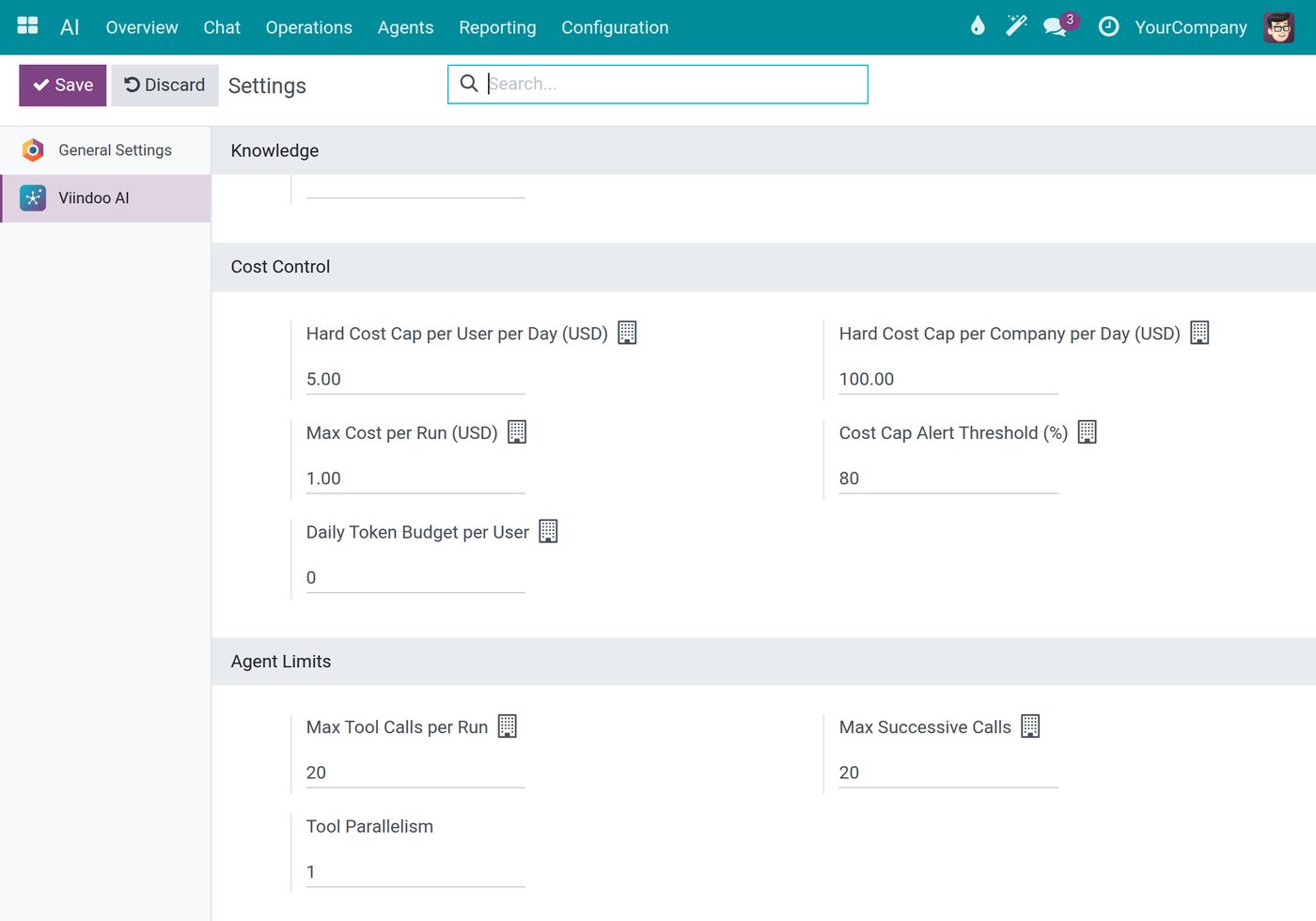
Example: the administrator sets daily AI spending caps per user and per company.
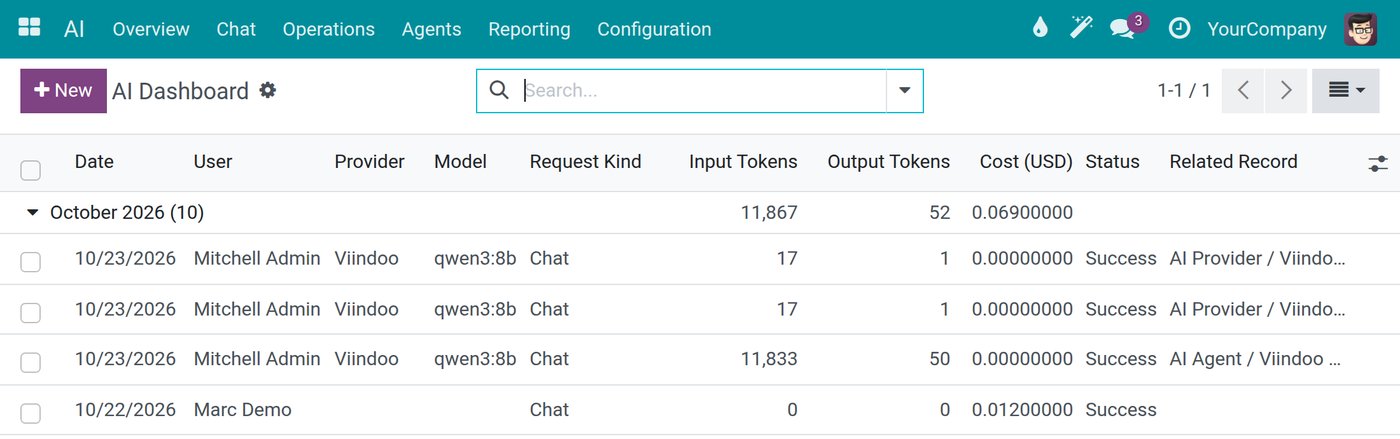
Example: each AI request is logged with date, user, model and cost.
The limits you should know before you start
- The AI is only as careful as your access rights. It follows the rights you have set. If a role can already read cost prices, the AI will also show cost prices to that role. Review access rights first.
- The AI knows only what is in the system. It reads the data in Viindoo and the knowledge sources you add. A spreadsheet kept on someone's computer is invisible to it.
- Questions go to the provider you choose. The question and the data needed to answer it are sent to that AI provider. This is why the choice of provider and data region is yours.
- The AI is not always right. The figures we checked in our tests matched the records, but an answer still needs a person to read it before a decision is made.
Where a company should start with agentic AI
Once it is clear what is agentic AI and what it needs, starting does not take a large project. Four steps are enough.
1. Put the work in one system
Start with the area that hurts most, so the AI has real data to read.
2. Review access rights
Decide who may see what before the AI answers anyone.
3. Choose three tasks with a checker
Begin with reports and drafts that a named person confirms.
4. Review after one month
Look at the usage log: which tasks saved time, and what they cost.
Who is accountable when the AI is wrong is discussed in the article on AI accountability. How to set data access for AI is in the article on data access for AI.
Would you like to see AI work on a company's real figures, with access rights and approval steps? Tell us where it hurts most. Book a consultation, or see the costs first.
Frequently asked questions about agentic AI
The two are closely related. An AI agent is one program that works towards a goal. Agentic AI is the wider term for systems built in that way, often with several agents working together.
It takes over tasks such as looking up figures, summarising and drafting. People still decide, approve and answer for the result. What changes is how a person's day is spent, not who is accountable.
The question and the data needed to answer it are sent to the AI provider the company has chosen. The company therefore decides which provider and which data region to use.
The company pays its AI provider directly, using its own key. Viindoo does not resell AI.
No. Start with one area and three tasks that have a checker, then widen step by step once the results are clear.