Viindoo Inventory and Supply Chain Management
Goods on time, capital at work. Know how much money your stock is holding, how long it has sat still and when to order more.
The inventory software sits inside the whole Viindoo system
Viindoo Inventory does not stand alone. Purchasing, manufacturing, quality, sales and accounting share one data foundation with the warehouse, so purchase orders, receipts, manufacturing orders, deliveries and cost of goods all connect, with no retyping.
Turn on what you need. Start with inventory and expand later... see the whole Viindoo system · see the inventory feature list
Follow one item from the moment it is needed to the moment it turns into money
Filmed on a live system, made for every industry, narrated in Vietnamese. The figures in the clip are illustrative demo data.
Follow one item from the moment it is needed to the moment it turns into money
Filmed on a live system, made for every industry, narrated in Vietnamese. The figures in the clip are illustrative demo data.
Where the company's money is sitting still
Out of what you need
- The one item you need is missing: customers wait, the shop floor stops for materials.
- Buying runs on experience or verbal reminders; nobody knows for sure when to order and how much.
Full of what you don't
- You know how much stock is left, not how much money it holds or how long it has sat still.
- Cost of goods is only an estimate, because freight and import duty never reach the cost of each item.
Not sure where the goods are
- Several warehouses across provinces: whether goods are in transit or on which shelf takes a phone call to find out.
- Production takes extra materials and never returns them, defects mix with good stock, and a customer asking about origin gets no answer.
Stock in the warehouse is the company's money
There must be enough to sell and to produce, but it must not sit still. Viindoo works to the two principles of Just-in-Time.
Real demand pulls goods in
Goods are bought, received, put away and transferred to match the real demand of sales and production, in the right place at the moment they are needed. Stock sits at the level that is needed, not as high as feels safe.
See at once where money is sitting still
No excess stock, no defective goods let into the warehouse, no waiting between steps. Stock value, stock age and true cost come out in money so managers can decide.
Part one: goods arrive on time
Follow one item through eight steps: a need arises, request, approval, purchase, receipt and inspection, put-away, transfer, then issue.
- 1Demand pulls goods in - the minimum stock rule works out the quantity to order and the date to order by, based on supplier lead time. For make-to-order items, confirming the sales order creates the purchase order.
- 2Purchasing under control - purchase requests go through an approval before any money is spent; a blanket agreement fixes the price once, with delivery in several batches; each supplier's on-time delivery rate shows while the purchase order is being drafted.
- 3The right goods at the right quality - goods that fail inspection are not let into stock; the storekeeper scans on a phone or a barcode scanner to receive and put away, with no lines retyped.
- 4A warehouse network - warehouses across provinces on one map; inside each warehouse, goods sit by aisle, rack and level; newly received goods are directed to the right type of rack; the lot nearest expiry goes out first.
- 5Transfers between warehouses - a branch warehouse below its minimum asks another warehouse for goods automatically; goods in transit between two warehouses are still located and valued; trade between companies in the group creates the documents on the other side.
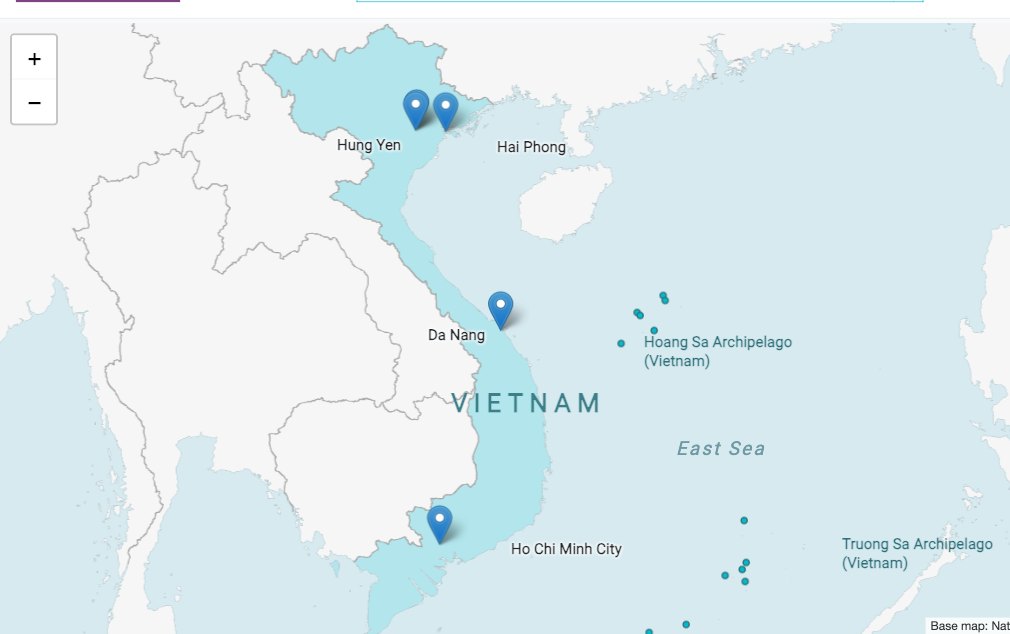
For the demo, bring: your current warehouses, the minimum stock levels in use and one recent purchase order.
Part two: the warehouse serves production
The warehouse does more than hand out materials. Every item that goes to the shop floor and comes back is recorded, so actual consumption always sits next to the bill of materials.
- 1Issue materials to the bill of materials - the manufacturing order works out each component, and the warehouse issues exactly that, no extra.
- 2Return leftovers - unused materials go back to the warehouse; any operation that uses more than planned shows at once.
- 3Separate defects - scrap is recorded right on the manufacturing order and moved to the scrap location, never mixed with good stock.
- 4Receive finished goods, trace their origin - finished goods are received by serial number; opening a serial number shows a tree down to each component lot, its receipt and its supplier.
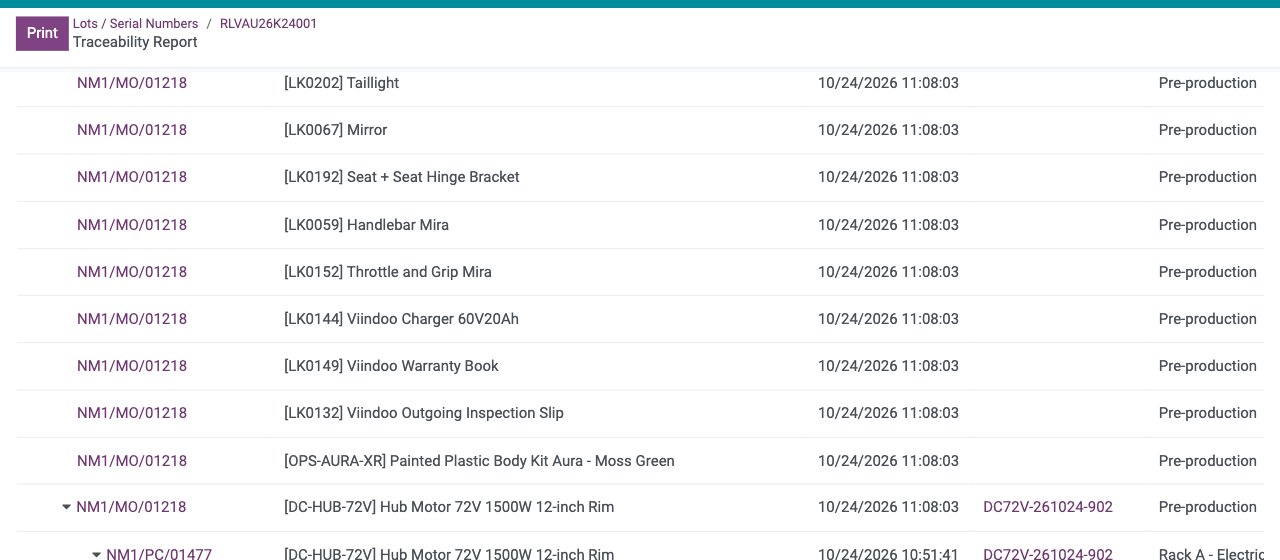
For the demo, bring: the bill of materials of one product and how the shop floor takes and returns materials today.
Part three: run the warehouse by the numbers
Every question a manager asks has a report that answers in figures, and every figure leads to a decision.
| Question | Report that answers | Decision |
|---|---|---|
| Which product groups hold the money? | Stock value by product group and by warehouse | Lower the maximum stock of the groups holding the most money |
| What has been sitting still too long? | Stock age in thirty-day bands, with quantity and value | Clear or stop buying goods older than ninety days |
| Which suppliers can be trusted? | Average purchase price, actual days to arrive and on-time delivery rate | Consolidate orders with reliable suppliers, correct the lead times |
| What is the true cost of goods? | Freight and import duty added to the cost of each item | Price products without falling short |
| How much money did the count miss by? | Count differences by location, valued in money | Schedule regular counts for the locations that drift |
| How do receipts and issues move with the seasons? | Monthly chart of receipts and issues | Adjust stock levels by season |
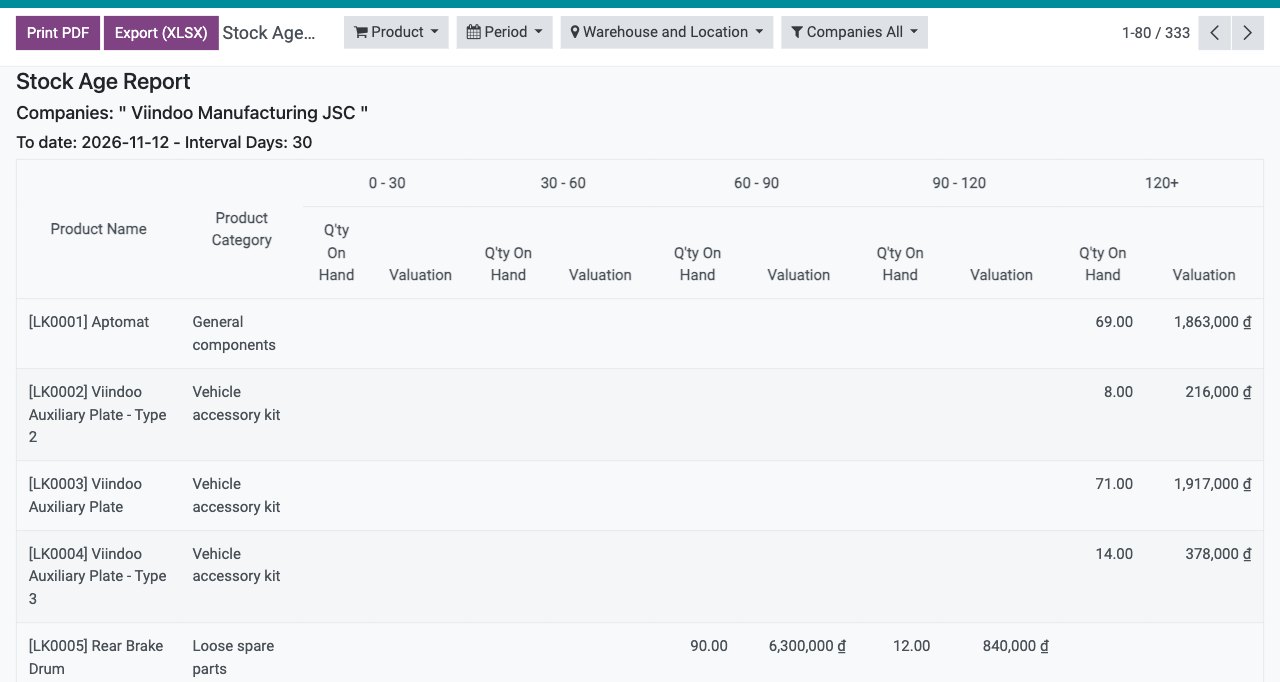
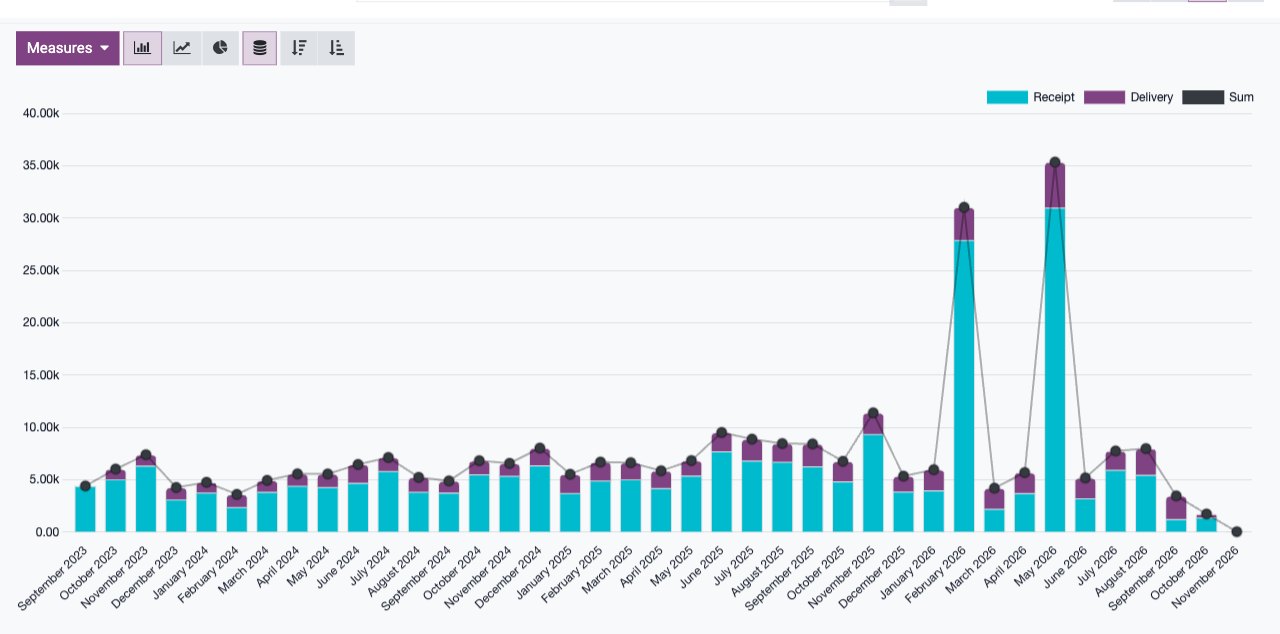
Purchases and material requests go through approvals; stock cards in the official Vietnamese format are built in, so accounting does not redo them.
Connecting devices in the warehouse
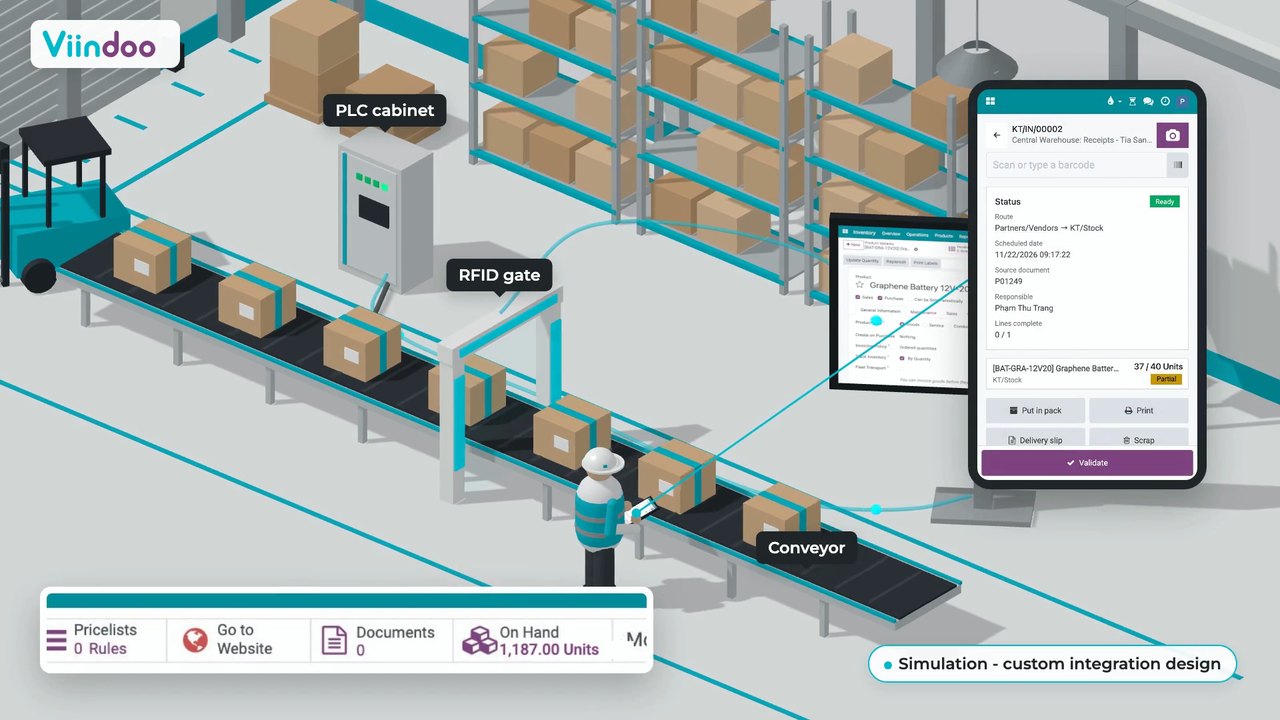
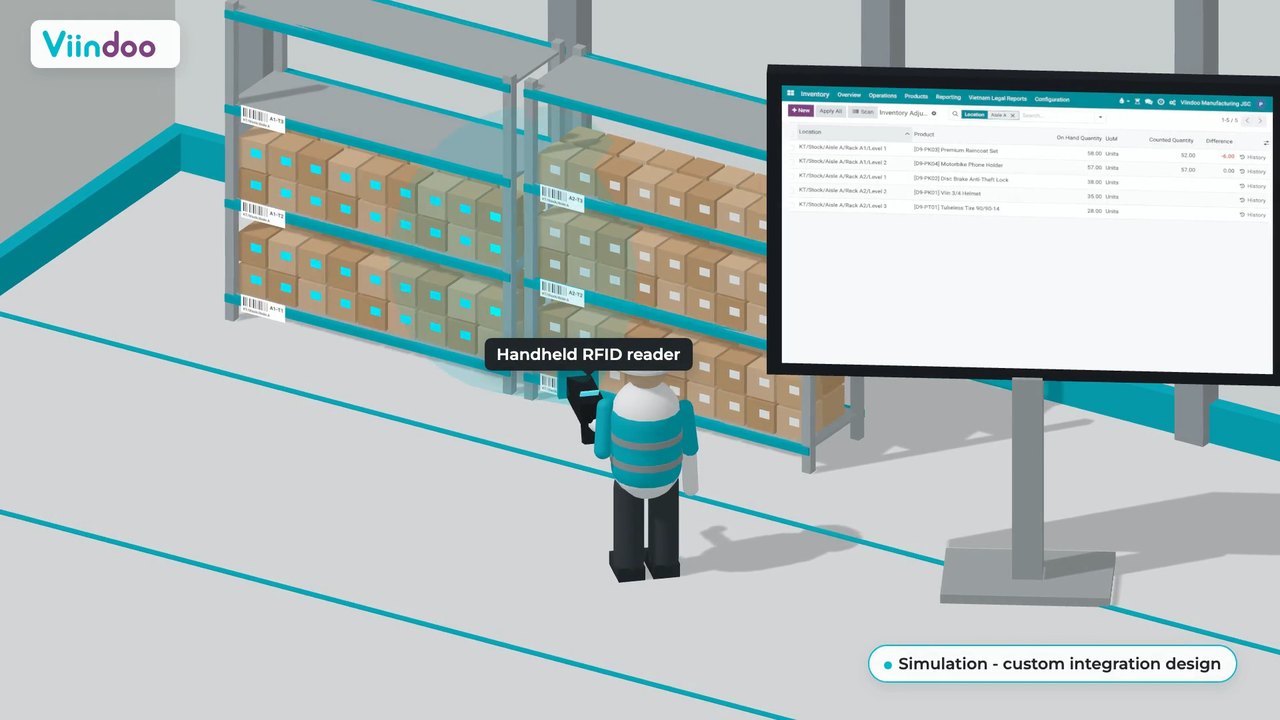
Barcode scanners, scales and measuring tools work out of the box: scan to receive, deliver, transfer, count and scrap; scales and measuring tools read straight into the quality check of incoming goods. RFID, conveyors and PLCs are connected to each company's own design.
What makes this different from standalone warehouse software
Standalone warehouse software counts goods well. The difference is whether those counts connect to purchasing, production and accounting and turn into money.
Standalone software
- Standalone warehouse software stops at quantities: it knows how much is left, not how much money it holds.
- Standalone purchasing software stops at the purchase order: it does not know whether goods passed inspection or where they were put.
- Accounting gets figures by hand, so cost of goods is only an estimate.
- Finding what has sat still and for how long means exporting spreadsheets from each place and stitching them by hand.
Only this far



Viindoo Inventory and Supply Chain Management
- One flow from the purchase request to cost of goods and stock age.
- Production takes, returns and receives finished goods on the same data as the warehouse.
- Stock value and cost of goods post to the books as goods move, with no retyping by accounting.
- A manager's question has a report that answers in money.
On time
Purchase Approvals
 Quality
Manufacturing
 Manufacturing
 Barcode
 Devices
Numbers
 Accounting
Dashboards
 Sales
To be fair about it: if you only need receipts, issues and balances for one small warehouse, a lean inventory app is enough. This difference only earns its price when the warehouse has to move together with purchasing, production and accounting.
Two things you get from Viindoo
You set the rules
Minimum and maximum stock, supplier lead times, put-away rules, how warehouses supply each other, which documents need approval and which goods must pass a quality check before entering stock are all yours to declare. The way your warehouse runs stays your way.
Built for Vietnamese business
Stock cards and inventory reports in the official Vietnamese formats; books kept on the Vietnamese chart of accounts. Stock value and cost of goods come from the stock documents themselves, so the warehouse and accounting look at one set of figures.
Price and trial
Try it before you decide. The price list is public.
A demo on your own warehouse
Bring your list of warehouses and a few items you hold too much of. We rebuild the flow of those items on Viindoo so you see which ones to order, which ones are sitting still and how much money they hold.
Tell us where it hurts most
Pick what is stuck today and we will shape the demo around exactly that.
Frequently asked questions
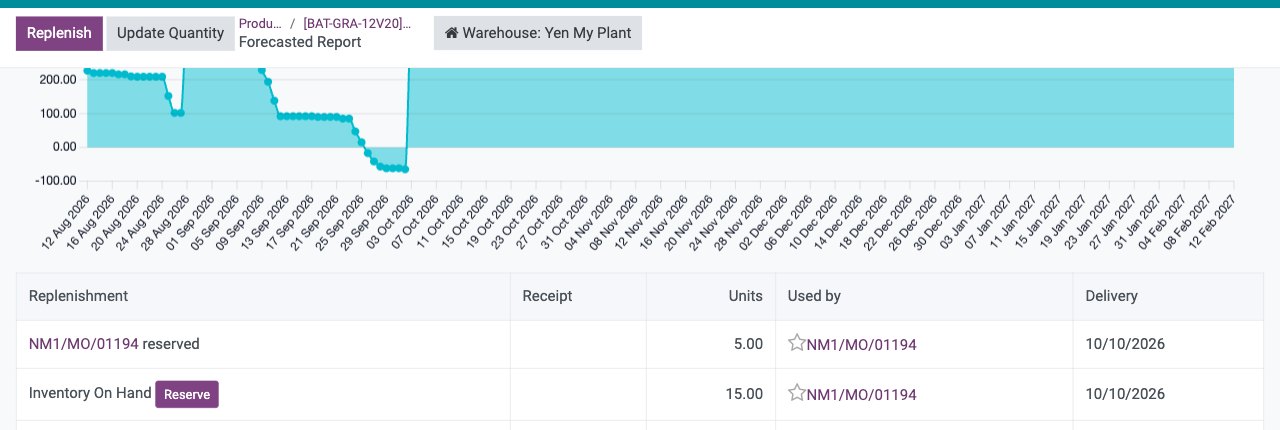
Viindoo does not forecast by statistics or by season. It orders in two ways: to order (confirming a sales order or a manufacturing order creates the purchase order) and by minimum - maximum stock rules. With the second, the system works out the quantity to order and the date to order by from the supplier lead time, and the stock forecast report shows when an item will reach its minimum based on the orders already in the system. Seasonal stock levels are set by the manager, using the monthly chart of receipts and issues.
Barcode scanners, scales and measuring tools work out of the box. RFID, conveyors and PLCs are not built in, because every company uses different devices and layouts, so they are connected to your own design: the device reads the figures and they go into the receipt or the count at the right location. The RFID and conveyor scenes in the video are simulations.
Each product category picks one method: first in first out, perpetual weighted average or standard price. Stock value posts to the books automatically as goods come in and go out. Freight, import duty and other purchase costs are allocated to the cost of each item. Goods in transit between two warehouses still carry value on the books. To be plain: Viindoo does not yet offer a periodic (end-of-period) average.
Each warehouse has its own locations by aisle, rack and level, all in one system. A branch warehouse below its minimum asks another warehouse for goods automatically; goods on the road sit in a transit location, so you still know where they are. For trade inside the group, a purchase order on one side creates the sales order on the other, with stock documents on both sides.
Each lot has its own expiry date. When goods go out, the lot nearest expiry is picked first; goods close to expiry carry an alert date so they can be dealt with in time. Opening a lot or a serial number shows where it came from, which manufacturing order it went through and who it was delivered to.
Not necessarily. Storekeepers can scan with a phone to receive, deliver, transfer, count and scrap, or use the barcode scanners the warehouse already has. Location barcodes on the racks tell you which item sits in which slot.
Start with the few items you hold the most of
You do not have to move the whole warehouse at once. Take a few items you hold too much of and rebuild their buying, receiving, put-away, issue and cost on Viindoo. Seeing where the money sits still tells you where to start.