Should a company build business software with AI, now that AI can write working code from a plain description? For a small tool the answer is often yes. For the system that records orders, stock and money, the answer depends on how much of that system you would have to rebuild yourself.
This article does not take sides. It explains why building has become attractive, which parts companies end up rebuilding without planning to, when building is the right decision, when it is reinventing the wheel, and how to combine the two.
Why more companies now build business software with AI
Two years ago, writing your own software meant hiring developers and waiting months. Today a person who understands the work can describe a screen to an AI tool and see it running the same day. That changes the calculation in three ways.
The first version costs very little
A form to enter quotations or a table to track deliveries can be ready in an afternoon. No team and no contract are needed to try the idea.
The tool matches the way you work
Standard software asks you to adapt to it. A tool you build has exactly the fields, steps and names your staff already use.
The person who knows the work is in control
The head of sales or the chief accountant can change the tool without waiting for a supplier or an IT queue.
These advantages are real, and for many small tools they are enough. The difficulty starts later, when the small tool slowly becomes the place where the company keeps its orders, its stock and its money.
How a small tool grows into a system nobody planned
Consider a trading company with forty staff (an illustrative example). The head of sales uses AI to build a quotation tool, and within a week the team is using it.
Month 1
Quotations are created faster. Everyone is pleased.
Month 3
Sales staff want to see stock before quoting, so the tool needs warehouse data.
Month 6
Accounting asks for invoices and customer debt from the same orders.
Month 12
The person who built the tool moves on. Nobody else knows how it works.
Nothing in this story is a mistake. Each step was reasonable. But after a year the company is running a management system that nobody designed, tested or documented as a system.
What you have to rebuild when you build business software with AI
Most of a management system is made of parts that look ordinary and take years to get right. When you build business software with AI, each of these parts becomes your own responsibility, both to build and to keep correct.
| Part | What it has to do | Why it is hard to keep right |
|---|---|---|
| Accounting and invoices | Keep the books according to Vietnamese accounting rules and issue e-invoices | Tax and accounting rules change, and every change must be built into the software on time |
| Inventory | Track stock by warehouse and location, and calculate the cost of goods | A small error in one stock move spreads to cost, profit and the stock count |
| Access rights | Decide who may see and change each kind of record | Rights must hold in every screen and report, including the ones added later |
| Approvals and history | Record who approved, who changed a figure and when | Without it, a wrong figure cannot be traced back to its cause |
| Links between departments | Carry one order through delivery, invoice and payment without retyping | Each new link multiplies the cases that have to be tested |
| Upkeep | Fix errors, back up data and keep the system secure | It needs a person who still understands the code years later |
None of these parts gives a company an advantage over its competitors. Customers do not choose you because your invoices follow the rules. They only notice when the invoices are wrong.
A case worth knowing. In July 2025, an AI coding agent deleted a company's live database while changes to the system were supposed to be frozen, against the instruction not to proceed without approval. The owner recovered the data. The case was reported by Fortune (link under Sources). It shows why a system that holds business records needs approval steps and backups from the first day.
When building it yourself is the right decision
Building is the better choice in three situations. In all three, the tool stays small or the need is truly yours alone.
The operation is unique to you
The way you price, schedule or serve customers is what sets you apart, and no standard software does it. Building protects that difference.
The tool sits beside the main system
A price calculator, a survey form or a special report reads figures from the main system and does not replace it. If the tool fails, the business keeps running.
You are testing an idea
You want to try a new way of working for a few weeks before deciding whether it deserves a permanent place. A quick tool is the cheapest test.
When building it yourself means reinventing the wheel
Building stops making sense when the need is one that thousands of other companies share and that others have already solved.
Every company needs the same thing
Quotations, purchase orders, stock moves, invoices and payroll work in broadly the same way everywhere. Writing them again adds cost and no advantage.
The rules are set by someone else
Tax and accounting rules change on the State's schedule, not yours. Someone has to follow each change and update the software before the deadline.
The data is the company's memory
Customer debt, stock and payroll must stay correct for many years. They cannot depend on one person who once wrote the code.
Build what makes you different. Take ready-made what every company needs.
What a platform with AI built in saves you from doing
A business management platform already contains the common parts: sales, purchasing, inventory, manufacturing, accounting and HR, all working on one set of data. On Viindoo, AI works on top of that base. The company's effort then goes into using AI for its own work instead of rebuilding the base.
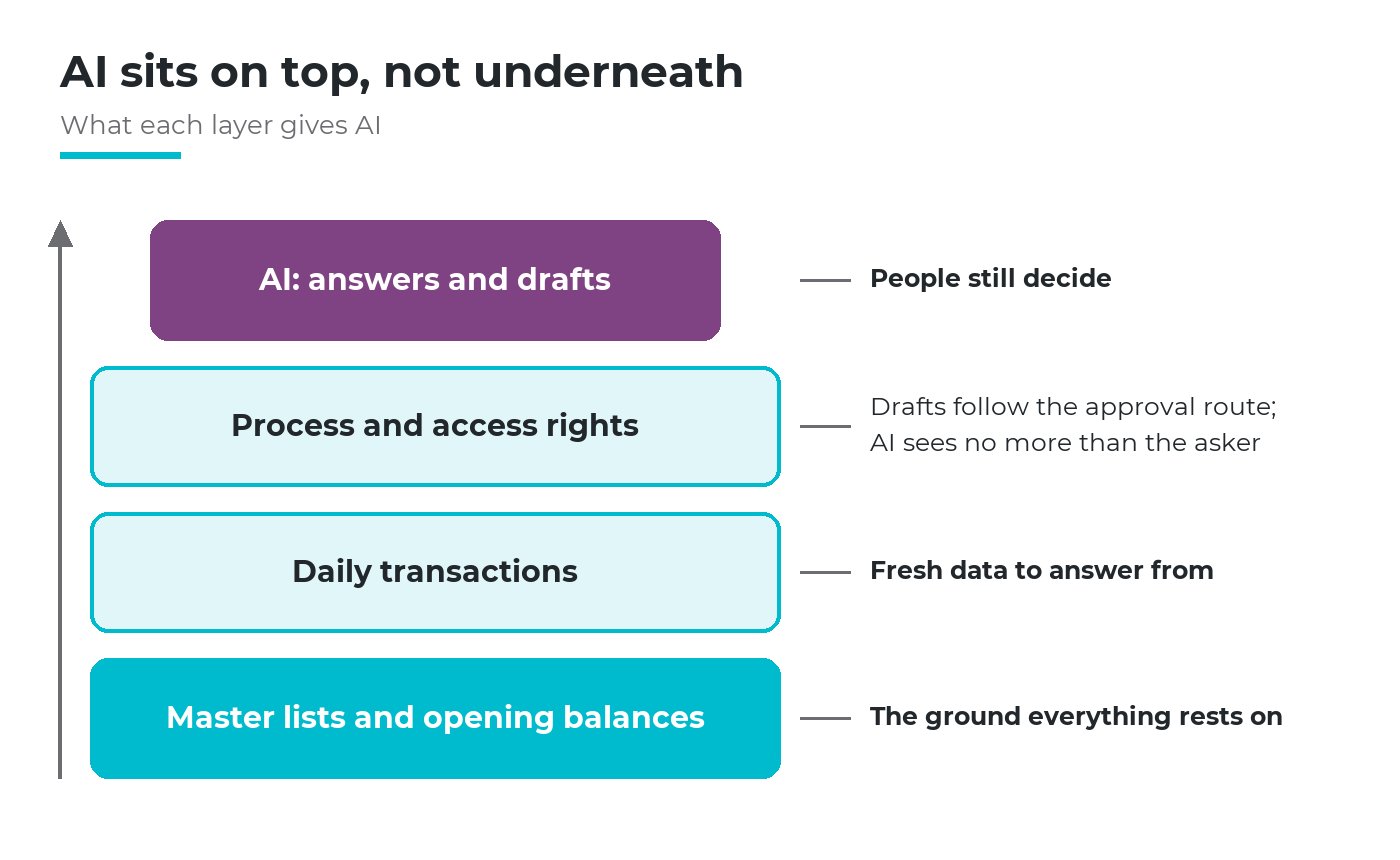
AI sits on the top layer. Without the layers beneath it, its answers are fluent but have nothing to rest on.
In practice, this is what staff can ask the AI on Viindoo, and what the company controls:
- Questions on real figures. For example: "Which invoices are overdue, and which customer should we call first?" or "Which orders are not fully delivered, and which items are short?" The AI answers from the company's own records.
- The asker's own access rights. The AI sees only what the person asking is allowed to see. Nothing extra has to be set up for the AI.
- AI asks before it acts. When asked to prepare a quotation or an email, the AI drafts it and stops at a confirmation card for a person to approve, edit or cancel.
- The company chooses the AI provider. It connects the provider it prefers with its own key and pays that provider directly.
- Every request leaves a record. Each AI request is logged with the date, the user, the model and the cost, and daily spending caps can be set.
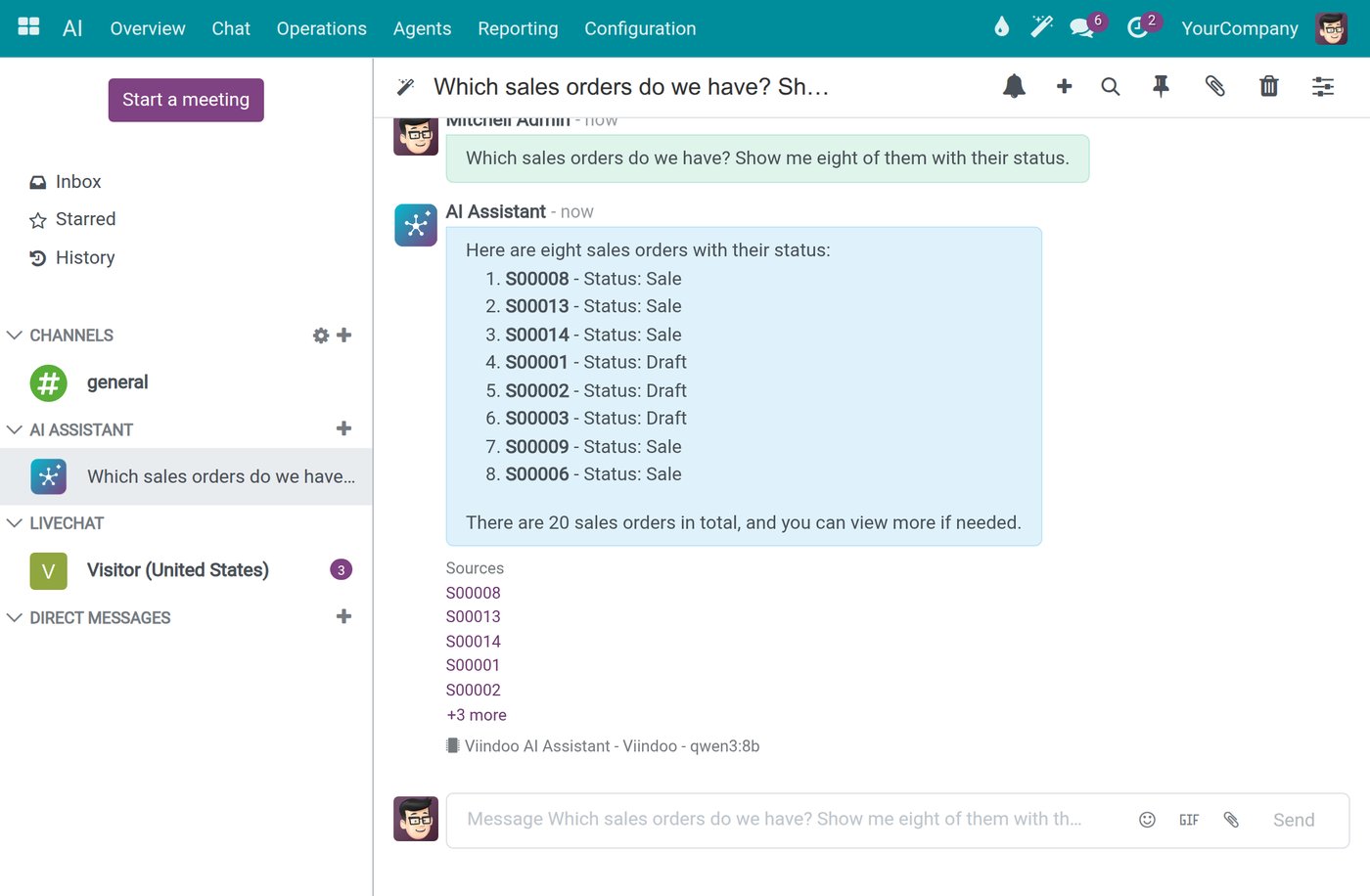
Example: asked for a list of sales orders, the AI answers with a Sources list; clicking an order number opens the record.
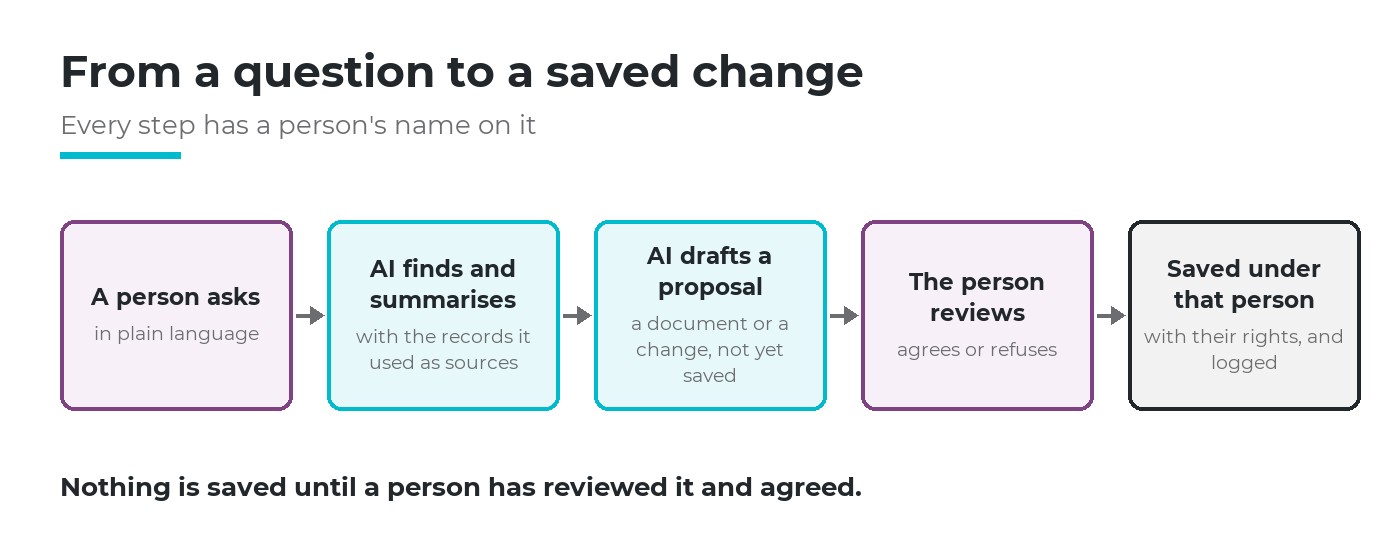
AI finds, summarises and drafts in the middle steps. A person starts the chain and closes it.
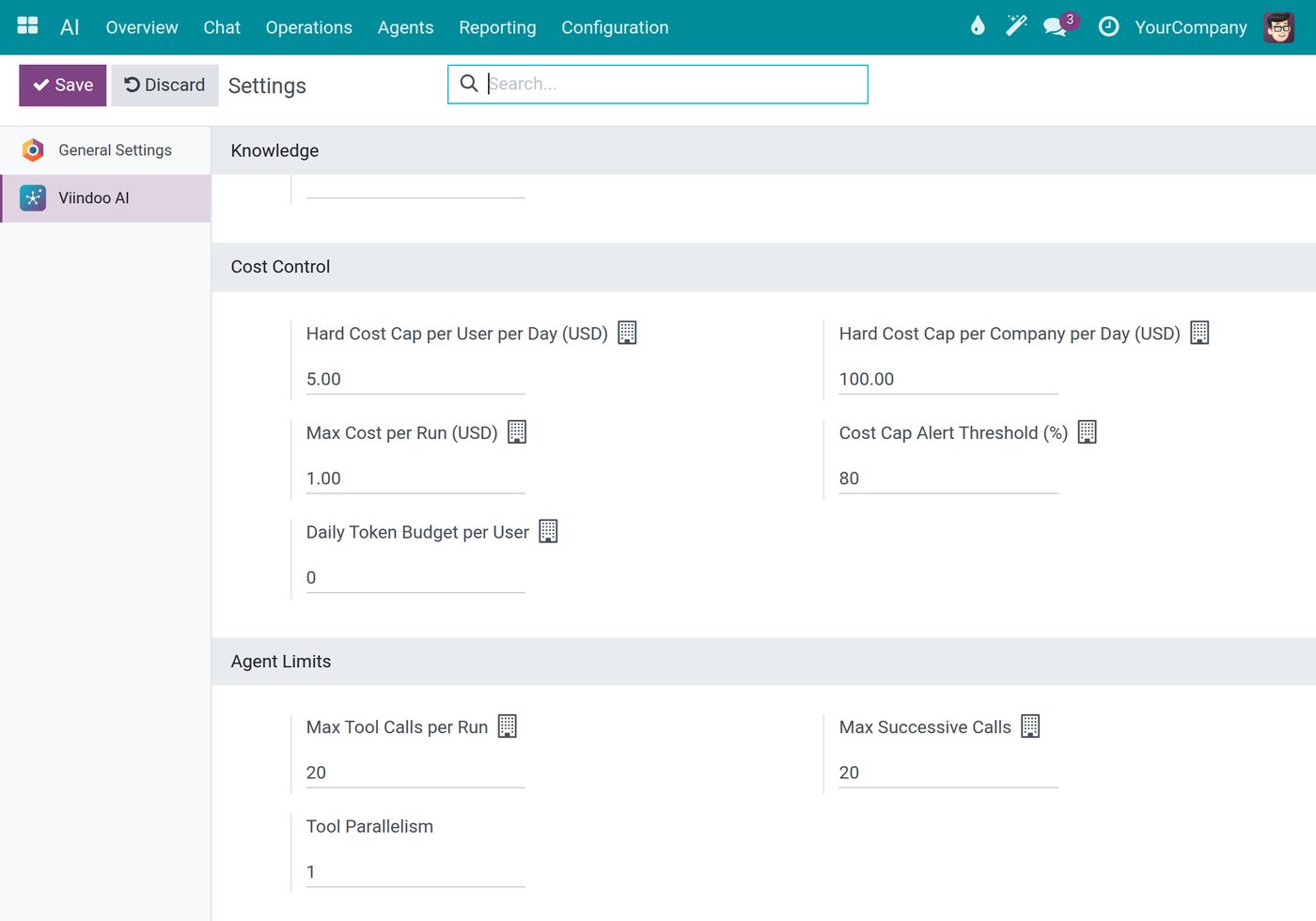
Example: the administrator sets daily AI spending caps per user and per company.
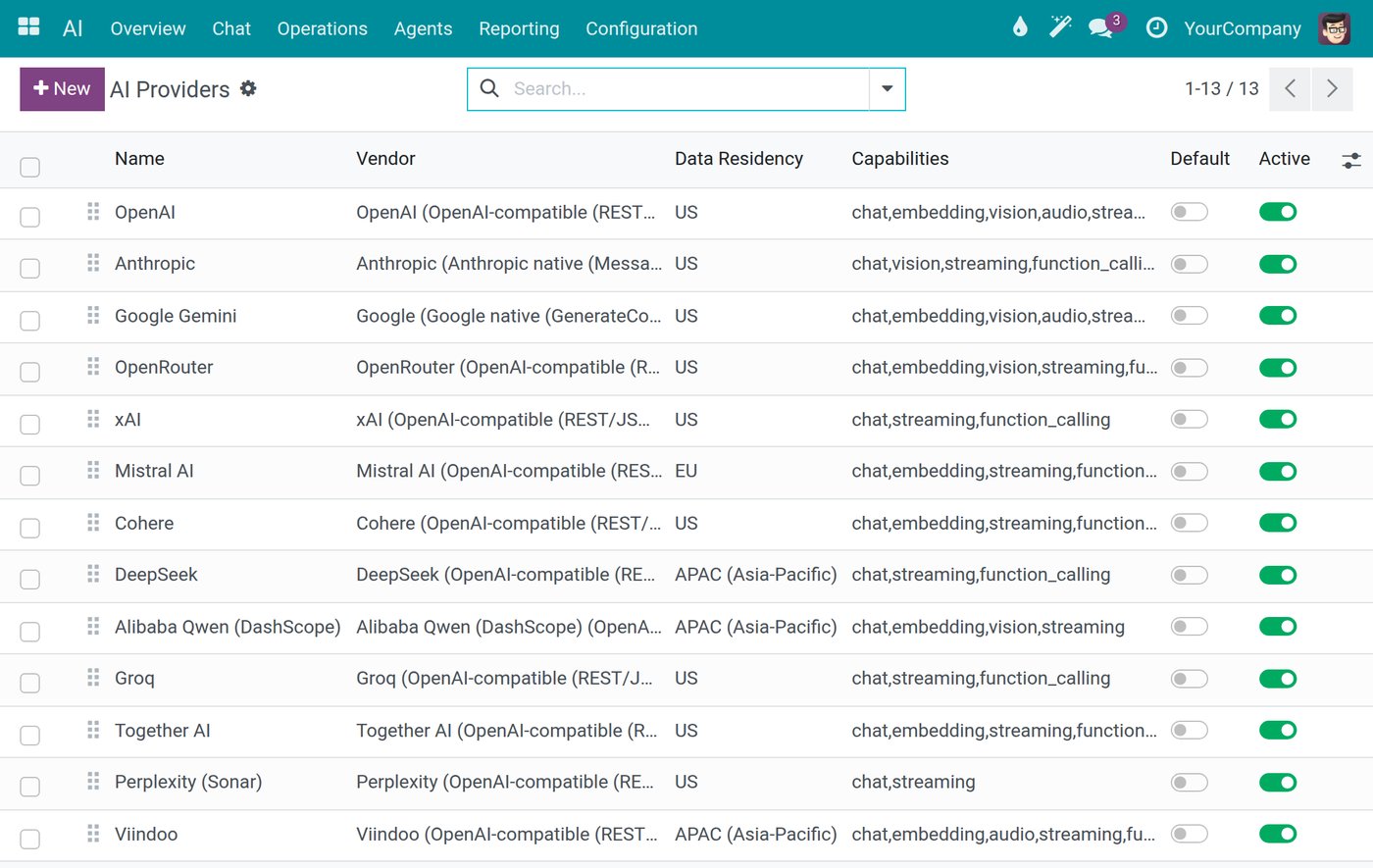
Example: the company chooses which AI provider to connect; each connection shows its data residency region.
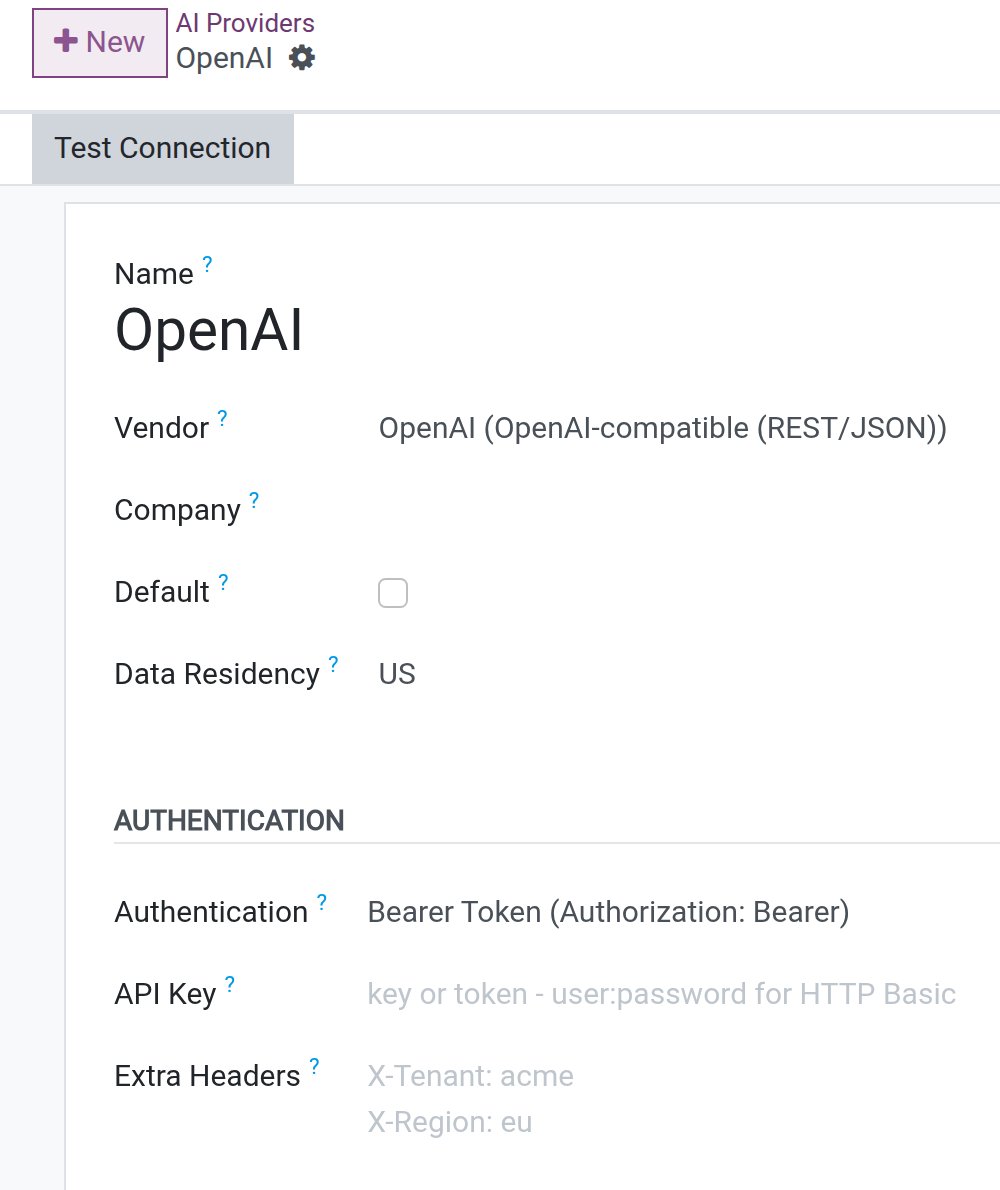
Example: an AI connection takes the company's own API key.
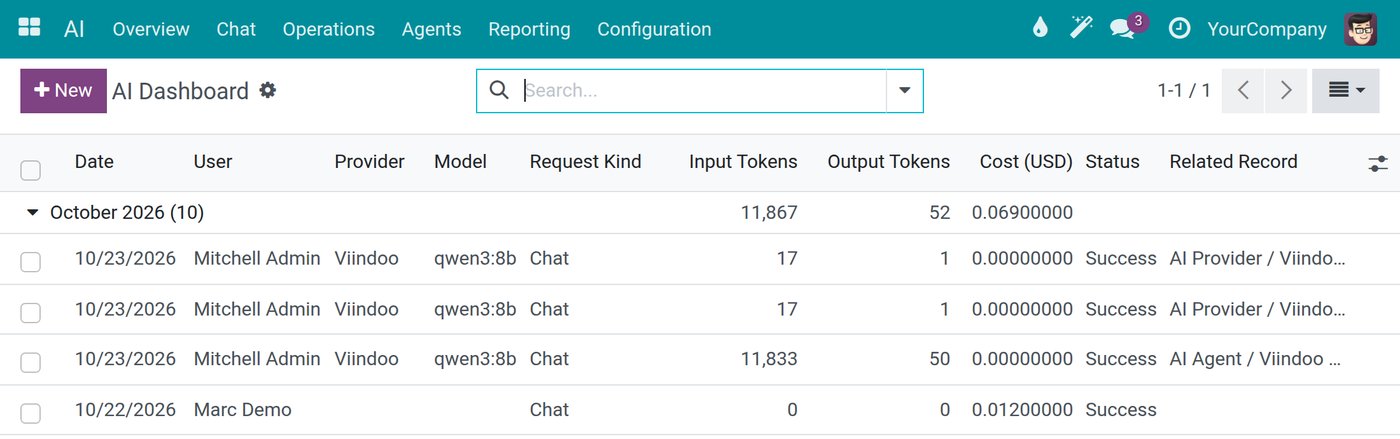
Example: each AI request is logged with date, user, model and cost.
A platform has limits too. The AI knows only the data in the system and the knowledge sources the company adds. It follows the access rights that have been set, so rights left too wide stay too wide. And a very specific operation may still need its own development on top of the platform.
How to combine the two: platform for the base, your own code for the difference
The question is not whether to build business software with AI at all, because the choice is rarely all or nothing. Most companies do best with three steps.
- Put the common work on the platform. Orders, stock, invoices and payroll go into the system that already handles them.
- List what is truly yours. Write down the two or three things you do differently from everyone else in your trade.
- Build only those, on top of the platform. The part you build reads the same data and follows the same access rights, so it does not become a separate island.
Five questions to ask before you build business software with AI
- Is this need unique to us? If every company in our trade has it, someone has already solved it.
- Will it hold money, stock or customer data? If yes, it needs access rights, history and backups from the start.
- Who updates it when tax or accounting rules change? Name the person, not the department.
- Who maintains it if its author leaves? If the answer is nobody, the tool has an expiry date.
- Does it read from the main system, or try to replace it? Reading is safe. Replacing means taking on everything in the table above.
When you compare the two options, building business software with AI or taking a platform, compare the cost over three years, including upkeep and the time of the people involved, not the cost of the first month.
Not sure which parts to build and which to take ready-made? Tell us where it hurts most. Book a consultation and we will go through your list with you, or see the costs first.
Frequently asked questions
For a small tool that someone reviews before use, it can be. The risk grows with the amount of data the tool holds and with how few people understand its code. A tool that holds money or customer data needs the same care as any other system.
Yes. This is usually the less costly order: take the common parts ready-made, then develop the part that is unique to you on top, so both share the same data and access rights.
No. For a very small or very unusual need, a tool you build can cost less. The comparison only becomes fair when it covers three years and includes upkeep.
Not necessarily. If the tool does something unique, keep it and let it read from the main system. If it has grown into a second system for orders or stock, plan to move that data to one place.