A digitalization value framework answers a question SMEs often ask: is ROI really the only way to judge an ERP, automation or AI project? Article 12, the last in the "From Data to Kaizen" series, lays it out in eight layers: see, control, decide, produce, scale, learn, improve and only then earn.
Is ROI the only measure of digitalization?
When a business invests in ERP, automation or AI, a very natural question is:
"How long will it take for this investment to pay back?"
That is the right question. But if financial return on investment (ROI) is the only measure, the business may overlook much of the value that digitalization creates long before it shows up as money:
- knowing where each order is,
- knowing which materials are short,
- knowing at which step defects appear,
- depending less on a few individuals,
- being able to trace history,
- reacting faster when something goes wrong,
- growing without breaking the way the business runs.
These values may not bring money right away. Yet they are the foundation that lets the business cut costs, raise productivity, reduce risk and run Kaizen better in the next step. So a more complete question would be:
"What management value is digitalization creating, and how does that value eventually turn into financial results?"
ROI still matters, but it is usually the last layer
ROI helps leaders answer: "For every unit of money we put in, how much comes back?" It is a key indicator when comparing investment options, deciding whether to expand and assessing financial performance. The ROI analysis before a digital transformation is still worth doing.
But in digitalization, ROI rarely appears on day one. A more common value chain looks like this:
See
Control
Measure
Improve
Raise productivity
Create financial value
If the business is still at the "see" stage, demanding a full ROI right away may be premature. The previous article showed how to measure ROI without a baseline; this one asks what else deserves to be measured.
1. The first value: visibility
Before digitalization, many SMEs run on Excel, chat groups, phone calls and personal experience. The information exists, but it is scattered. Once the business digitalizes, the first value is usually:
knowing what is really happening.
Deliveries
Which deliveries are running late.
Materials
Which manufacturing orders are missing components.
Operations
Which work orders are waiting.
Stock
Which products will run short against expected demand.
Quality
Which quality alerts are still open.
One screen
Charts from several apps pinned to one dashboard.
This is visibility value, the first layer of the digitalization value framework. Seeing clearly does not necessarily cut costs at once, but without it, it is very hard to run Kaizen in the right place.
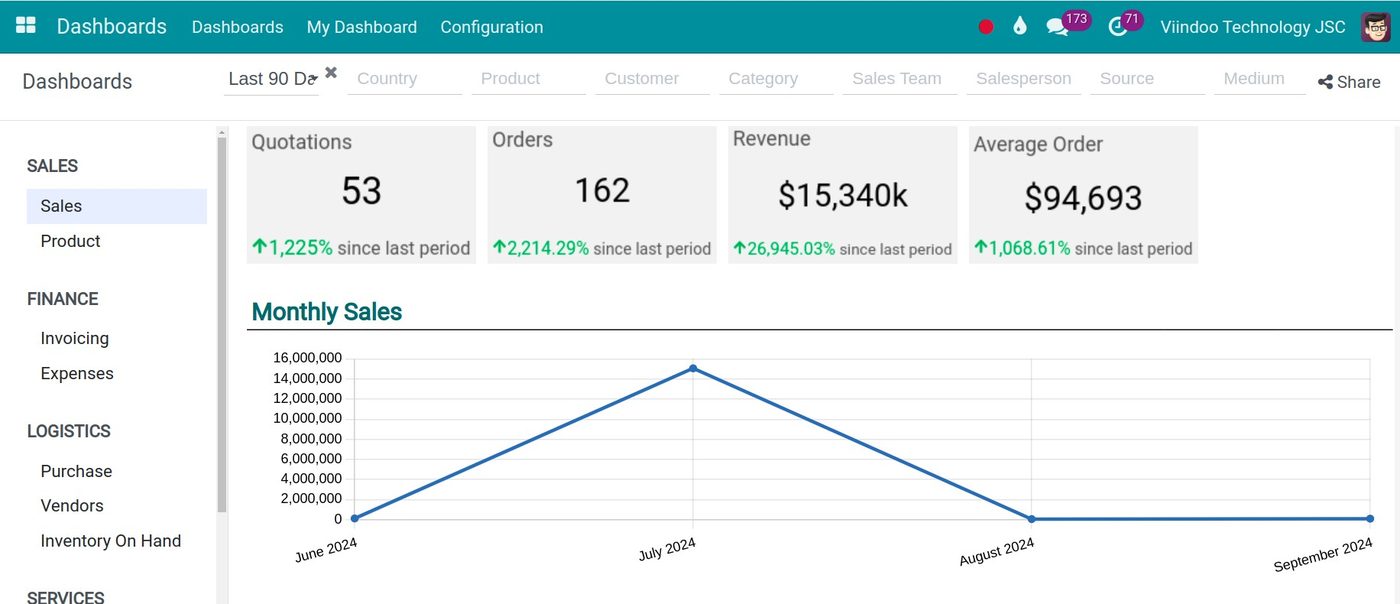
Viindoo has ready-made dashboards for sales, purchasing, invoicing, inventory and finance, and users can add charts from other apps' reports to their own dashboard.
2. The second value: control
Once the business can see, it can start controlling better. For example:
- goods are not delivered before the required quality checks are done,
- purchase orders above a set amount need a manager's approval,
- only people with access to a warehouse can process its stock operations,
- approvals are not skipped,
- overdue tasks and activities are flagged and easy to filter.
This is control value: fewer errors, lower risk, less leakage and more consistency. Much of this value is hard to turn into money right away. Only when a big mistake happens does the business realize how costly the lack of control was.
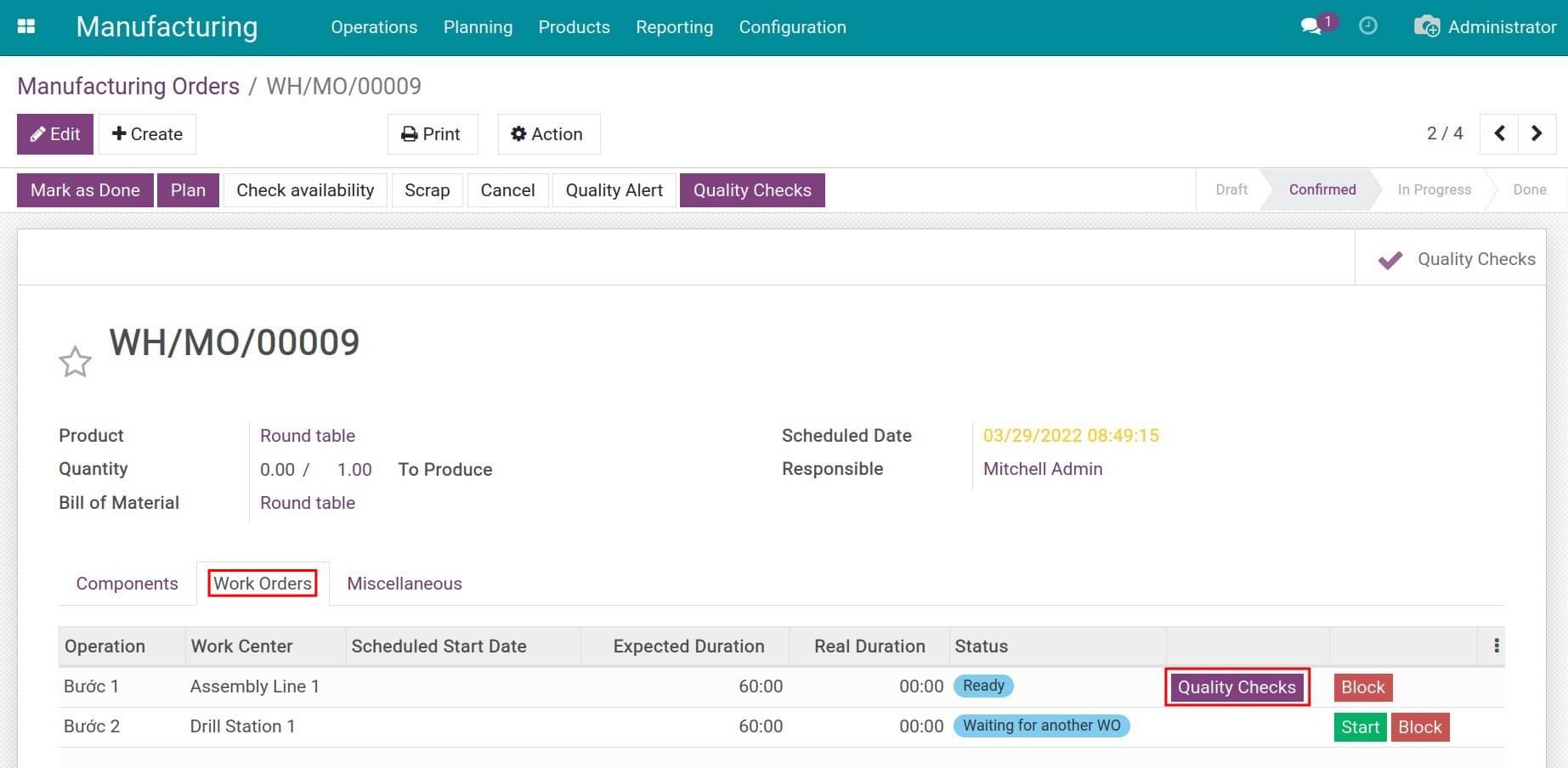
Quality checks sit right on the manufacturing order, so they are not skipped.
3. The third value: better decisions
When the data is good enough, leaders no longer have to ask "What do you think?" They can ask:
"What is the data telling us?"
Rush orders
Should we accept this rush order?
Materials
Do we need to buy more materials?
Capacity
Should we add overtime?
Improvement
Which operation should be improved first?
Margin
Which products have a low margin?
Priorities
Where should limited resources go?
This is decision value. A better decision rarely appears as its own line of revenue, but it helps the business avoid wrong calls, react early and allocate resources better.
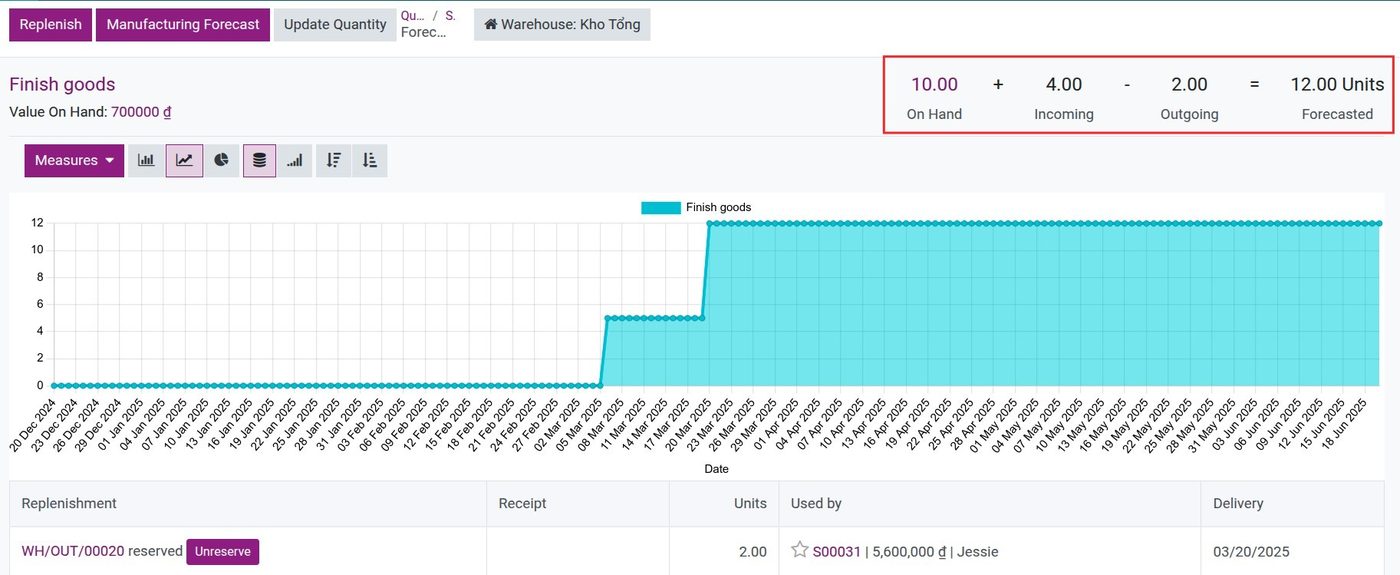
The forecasted report shows on-hand stock, incoming and outgoing quantities over time.
4. The fourth value: productivity
This is where value starts to become easier to measure. Digitalization and automation can reduce repeated data entry, report compilation, status questions and approval time, and increase the number of transactions handled.
Before
5 people handle 500 orders a month.
After digitalization
Still 5 people, now 800 orders.
Result
Capacity up 60%, no headcount cut.
(Illustrative example.) The business has not reduced headcount, but its processing capacity has grown by 60%. This is productivity value.
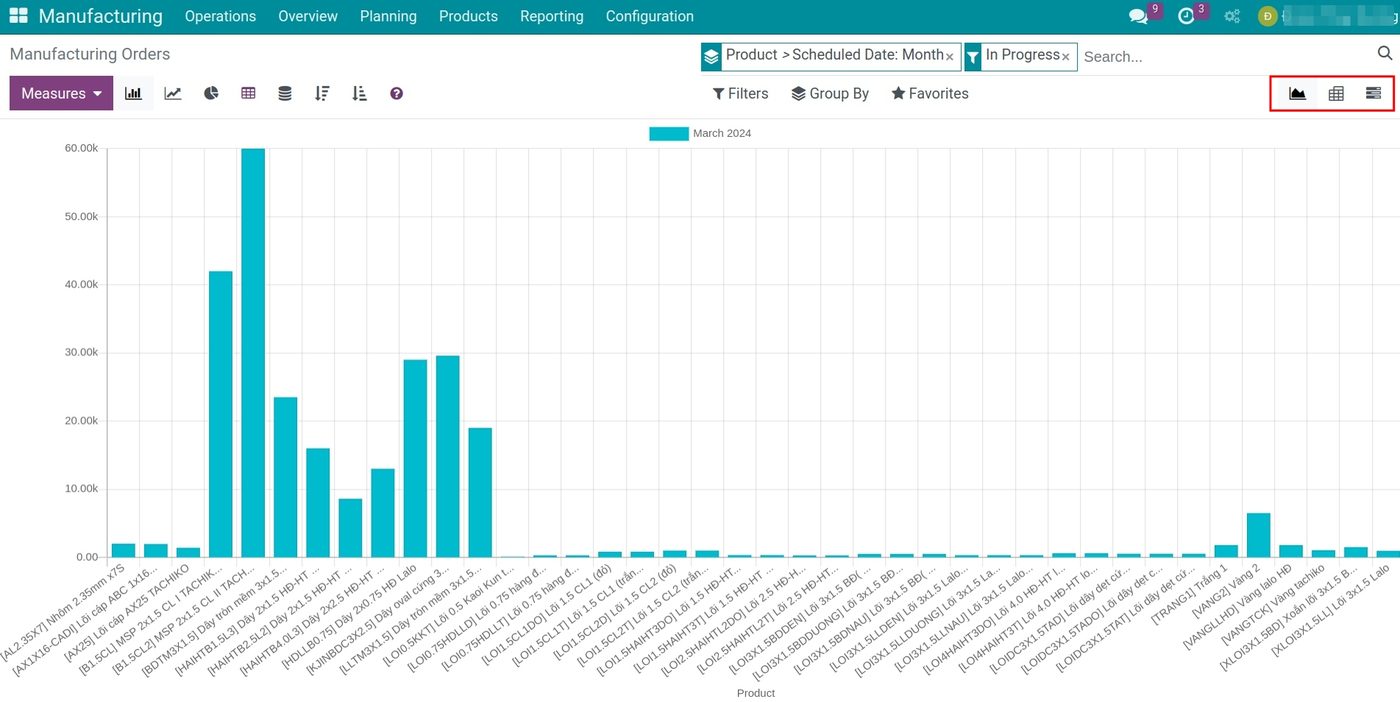
The manufacturing order analysis compares planned and produced quantities.
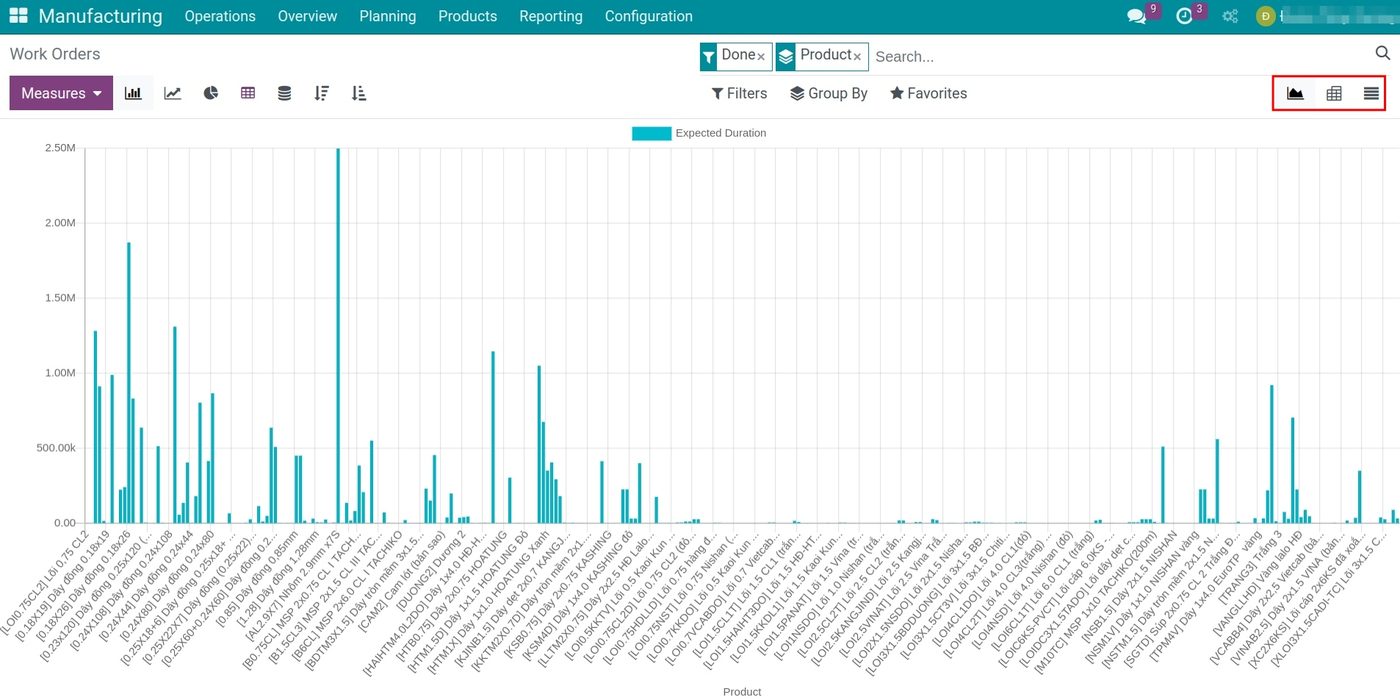
The work order analysis measures expected and actual durations, a direct way to track processing time.
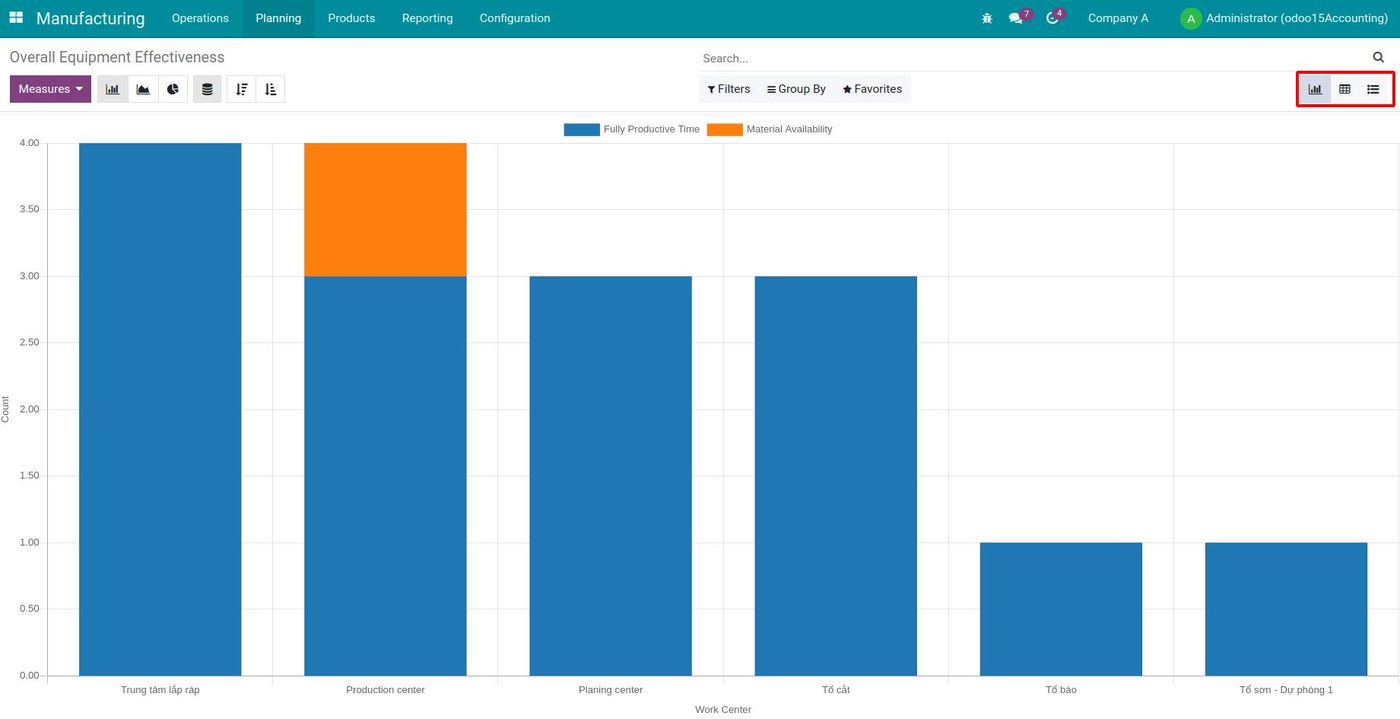
The OEE report splits work center time into productive time and losses (availability, performance, quality), showing where productivity can rise before any headcount changes.
5. The fifth value: scalability
This value is very often overlooked. An SME can run well with 50 orders a month, 20 employees and one warehouse. But when it grows to 500 orders, 100 employees and three warehouses, the old way of managing may no longer hold.
If the business already has
Master data, workflows, access rights, reports and integrated data.
It can grow without a matching rise in
Managers, files and manual checking steps.
This is scalability value. It is not "savings today". It is:
the ability to grow without management costs rising too fast.
6. The sixth value: less dependence on individuals
In many SMEs, operations depend heavily on the chief accountant, the workshop manager, a long-serving buyer or a key technician. If they leave, the data stays in their heads, the process is unclear and newcomers have to learn everything from scratch.
When ERP standardizes data, history, processes and documents, the business starts to own its own knowledge. This is knowledge value. It is hard to express as ROI right away, but it matters a great deal for sustainable growth.
7. The seventh value: continuous improvement
This layer ties directly to the whole series. Without data, Kaizen relies mostly on observation, experience and gut feeling. With data, the business can find bottlenecks, measure before and after, analyze root causes and know whether an improvement really works.
This is improvement value, and it is especially important:
Digitalization does not create a one-off saving. It creates the ability to keep finding new savings.
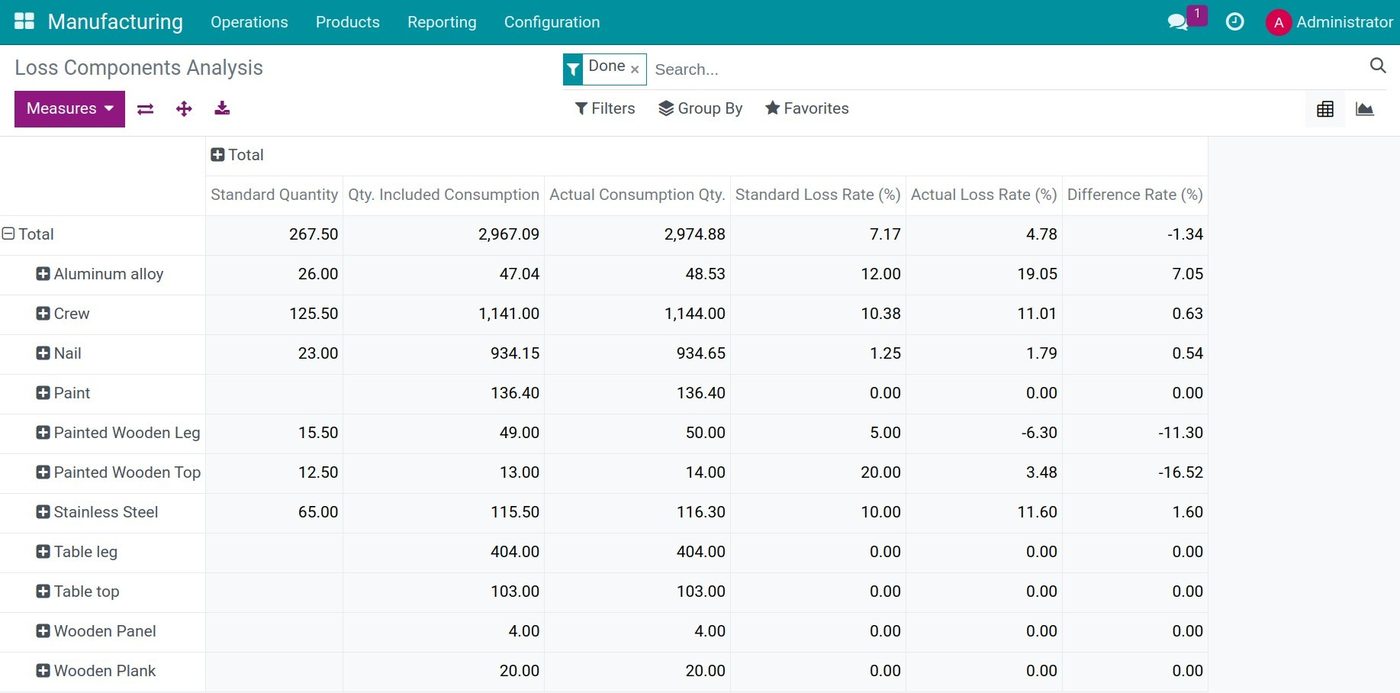
Loss Components Analysis compares standard and actual consumption of each component, pointing to where improvement is needed.
8. Only then comes financial value
The layers above can eventually turn into lower costs, less inventory, less overtime, less scrap, higher margins, more revenue and faster capital turnover. This is financial value, and this is where ROI mostly lives: the last layer of the digitalization value framework. But remember:
Financial value is usually the result of management capabilities built earlier.
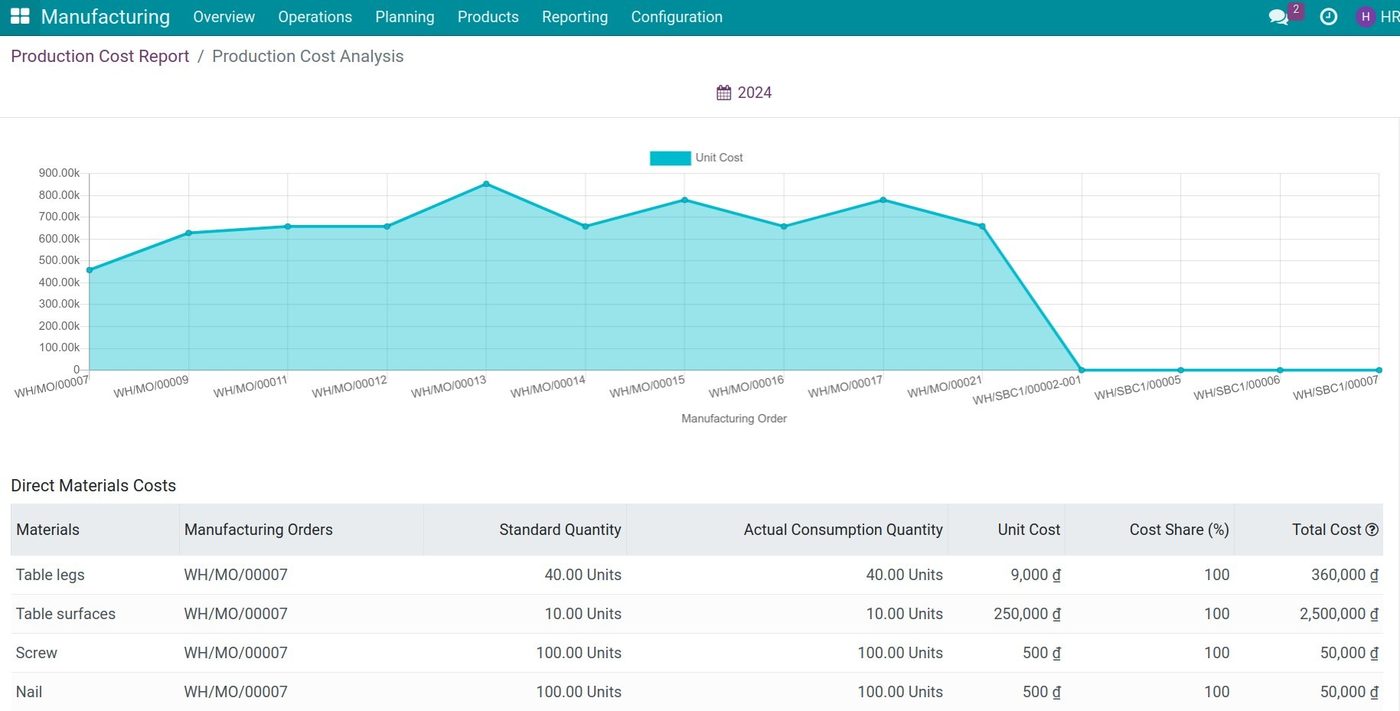
Production Cost Analysis shows the unit cost of each manufacturing order and direct material costs, with standard and actual consumed quantities.
A digitalization value framework broader than ROI
A digitalization project can be assessed across eight layers. The digitalization value framework below sums up the sections above:
1. Visibility
Know what is really happening.
2. Control
Fewer errors, risks and leaks.
3. Decision
Decide from data, not guesswork.
4. Productivity
Handle more with the same team.
5. Scalability
Grow without management costs exploding.
6. Knowledge
The business owns its own know-how.
7. Improvement
Keep finding new savings.
8. Financial
Costs, margins, revenue and ROI.
Not every project has to reach all eight layers at once. But the business should know:
which layer the project is creating value in.
9. Why SMEs underrate digitalization when they only look at short-term ROI
SMEs tend to ask "How much did we save this month?", while some value takes time to form. Two examples:
Standardizing the BoM
First month: no money in sight. Later: more accurate purchasing, fewer material shortages, better product costing, fewer wrong configurations.
Recording quality alerts
At first: extra steps. Later: repeated defects become visible, the team improves, rework goes down.
Looking only at the short term, the business easily concludes:
"The software makes more work."
Meanwhile, the value is quietly taking shape behind the scenes.
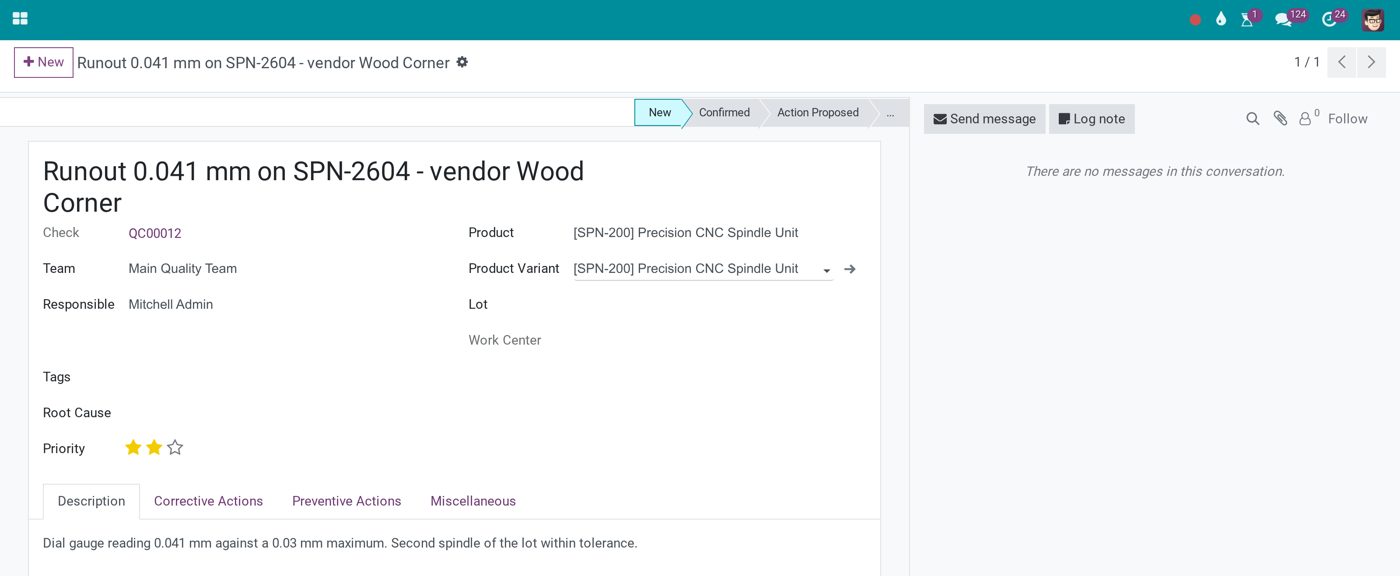
A quality alert records the defect, its root cause and corrective and preventive actions, and moves through stages until solved.
10. But "intangible value" is no excuse to dodge ROI
On the other side, an implementation partner should not say: "Just do it, the long-term benefits are huge." Every layer of the digitalization value framework should eventually be measured as far as possible:
| Value layer | What to measure |
|---|---|
| Visibility | Number of statuses that can be tracked, time to find information |
| Control | Number of errors, transactions breaking the rules |
| Productivity | Processing hours, transactions per person |
| Scalability | Growth of transactions versus growth of headcount |
| Knowledge | Time for a new hire to get up to speed, number of standardized processes |
| Financial | Costs, margins, working capital |
ROI is not the only thing that needs measuring. The other management values need indicators too.
11. Use a value scorecard instead of a single ROI number
A practical approach, in the spirit of the balanced scorecard, is a simple value scorecard that puts several key performance indicators (KPIs) side by side (illustrative figures):
| Value group | KPI | Before | After |
|---|---|---|---|
| Visibility | Time to find an order status | 20 min | 2 min |
| Control | Orders shipped without QC | 4% | 0.5% |
| Productivity | Report preparation hours per month | 80 h | 20 h |
| Quality | Rework rate | 10% | 6% |
| Inventory | Inventory days | 75 | 58 |
| Financial | Gross margin | 18% | 21% |
Only then convert into money what can be converted. This helps leaders see how value is being built across the digitalization value framework, instead of looking at one final ROI figure.
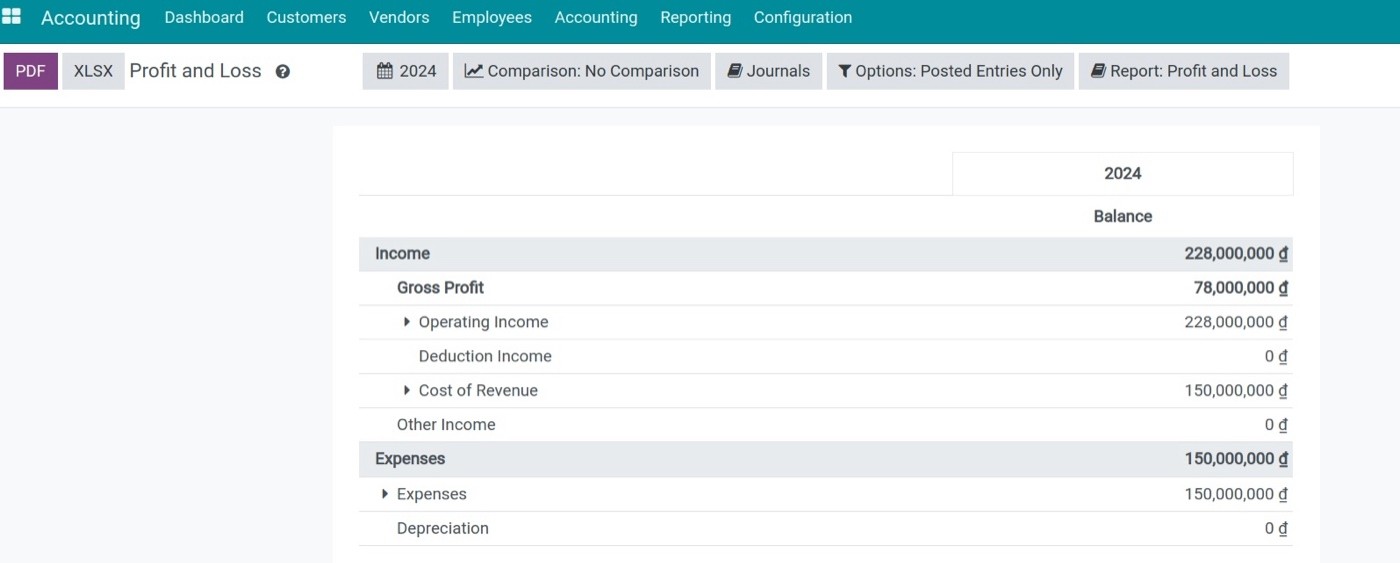
The Profit and Loss report tracks revenue, costs and profit; period comparison is available in the report filters.
12. Not every digitalization project needs the same measure
Warehouse project
Inventory accuracy, inventory days, picking time.
Manufacturing project
Lead time, OEE, rework, material variance.
CRM project
Conversion rate, sales cycle, follow-up rate.
Accounting project
Closing time, error rate, collection days.
Each project picks which layers of the digitalization value framework to measure first; using the same set of KPIs for every project is a mistake. See also how KPI-based implementation design ties each scope to its own indicators.
13. Viindoo helps the business move from capability to value
An integrated system like Viindoo does more than produce reports. It builds management capabilities:
Sales
See demand.
Inventory
See materials and stock.
Manufacturing
See progress.
Quality
See defects.
Accounting
See financial results; the Finance Dashboard shows revenue, profit, receivables, payables and cash.
Linked together
One flow of data from order to profit.
When these layers are linked, the business can move from:
Seeing the problem
Measuring the impact
Turning it into financial value
14. A key principle: measure value over time
The digitalization value framework works best when value is measured in three milestones:
0-3 months
System adoption, data quality, visibility.
3-6 months
Processing time, errors, lead time, inventory.
6-12 months
Margins, productivity, scalability, ROI.
Do not expect every value to appear at the same time.
15. When does ROI become the deciding measure?
ROI should carry the most weight when comparing two investment options, deciding to expand, deciding on automation or AI, and investing in equipment. But while the data foundation is being built, some things are close to:
essential management infrastructure,
just like accounting, internal control or a quality system. At that point ROI is still needed, but it should not be the only criterion. As the series argued, standardize before you automate: the automation decision is where ROI really earns its weight.
Conclusion: ROI is the destination, not the whole journey
ROI matters a lot. But digitalization creates value in many layers:
See
Control
Decide
Produce
Scale
Improve
Financial
If the business only looks at money right away, it may miss the management capabilities that are taking shape. Conversely, if a project only talks about "intangible value" without measuring it, it can easily lose its way. So the sensible approach, and the core of the digitalization value framework, is:
Measure both management capabilities and financial results.
That is also how Viindoo should be seen: not just software that cuts manual work, but a foundation for data, control and Kaizen, so the business can keep generating ROI in the future.
Frequently asked questions about the digitalization value framework
ROI matters, but it should not be the only one. Visibility, control, productivity and scalability also need to be measured.
Yes, through the indicators of each layer: time to find information for visibility, rule-breaking transactions for control, time for a new hire to get up to speed for knowledge.
Once the business has a baseline and enough data after a period of stable operation, usually from month 6 onwards.
No. A warehouse project looks at inventory accuracy and picking time, a manufacturing project at lead time and OEE, an accounting project at closing time.
Because sales, inventory, manufacturing, quality and accounting share one data flow in Viindoo, the same system shows operating indicators and their financial result.
Wrapping up the series: digitalization and Kaizen
Looking back across the series, from the first article on Kaizen and digitalization to whether Kaizen needs ERP, one idea stands out:
Digitalization is not the opposite of Kaizen.
Digitalization creates data
Data makes things visible and measurable
Kaizen removes waste, standardizes and improves
Then automate in the right places
And when this loop is kept going:
ERP is no longer just management software. It becomes the infrastructure for continuous improvement.
Related articles
- How Can SMEs Measure the ROI of Kaizen and Digitalization Without a Baseline?
- Kaizen and Digitalization: How They Connect in Business Improvement
- Should Automation Come Before or After Standardization?
- Why do businesses need to have ROI analysis before Digital Transformation?
- Cost and Efficiency Control in Software Implementation with Viindoo KPI-Based Design