Viindoo Sales and CRM - customers stay, the business grows
From the first enquiry to the quotation, delivery, payment, support and the next order, everything about a customer sits on one record owned by the business, not in each salesperson's phone.

The sales software sits inside the whole Viindoo system
Viindoo Sales and CRM does not stand alone. Customers share one data foundation with inventory, accounting, helpdesk, purchasing, the website and point of sale, so sales orders, deliveries, invoices, receivables and support requests all land on the same customer record, with no retyping.



Turn on what you need. Start with sales and expand later... see the whole Viindoo system
Follow one customer from the first enquiry to the repeat order
Filmed on a live system, made for every industry. The figures in the clip are illustrative demo data.

Follow one customer from the first enquiry to the repeat order
Filmed on a live system, made for every industry. The figures in the clip are illustrative demo data.

Where customers are being lost
Customers follow the salesperson
- A salesperson quits and customers leave with them, because the phone numbers and the conversation history live on that person's phone.
- Customers ask over Zalo, the website and the phone, each channel held by a different person, and some questions drop without anyone noticing.
Sold, but the cash is not in
- Month-end sales look good but the cash is not in, because customers with overdue debt keep being sold to.
- You know how much was sold, not which customers and which orders actually make a profit.
Customers leave and nobody knows
- At which step customers walk away, and why, nobody can answer with figures.
- Customers calling support have to explain everything again, because support cannot see what they bought.
Customers are an asset of the business
And that asset grows with every sale. That takes holding both ends: each customer served without a break, and a sales organisation that grows while still being run by the numbers.
One customer, one record, from the first enquiry
The customer's contacts, enquiries, quotations, deliveries, invoices, receivables, support, warranty and loyalty points. Whoever serves the customer reads from the same place.
An organisation that expands without breaking
Teams by region, new leads shared fairly, marketing that knows which channel brings customers, managers who see targets and margin, support that keeps its time promises.
One customer's journey, on one record
Discover, ask, quote, receive, pay, get support, buy again. Each step reuses the data of the one before, and the customer record grows with every step.
- 1The record - the whole customer company: director, accountant, goods receiver, technical contact, with separate delivery and invoice addresses. When the buyer on their side leaves, the relationship stays.
- 2Ask - messages to the company's Zalo account, website forms and live chat all become leads in one place; a familiar phone number or email is recognised as an existing customer automatically.
- 3Quote - the quotation shows stock on hand; emails and quotations to a foreign customer come out in the language set on that customer's record, straight to the person in charge of buying.
- 4Receive and pay - goods go to the delivery address, the invoice goes to the customer's accountant; paid, unpaid and overdue invoices show right on the record.
- 5Support, warranty and the next order - a support request opens with what the customer bought; warranty is tracked by the product sold; points earned on one order can be used on the next.
For the demo, bring: your list of regular customers and one recent order that went from quotation to payment.
The sales organisation, four sides
Keeping customers while the business grows takes an organisation that runs on rules and numbers, not on reminders.
- 1Organisation - sales teams arranged by region, each with its own manager; salespeople see only their own opportunities and orders; new leads are shared out by each person's capacity.
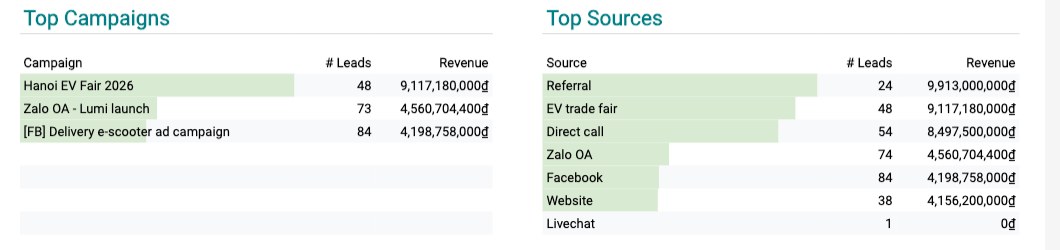
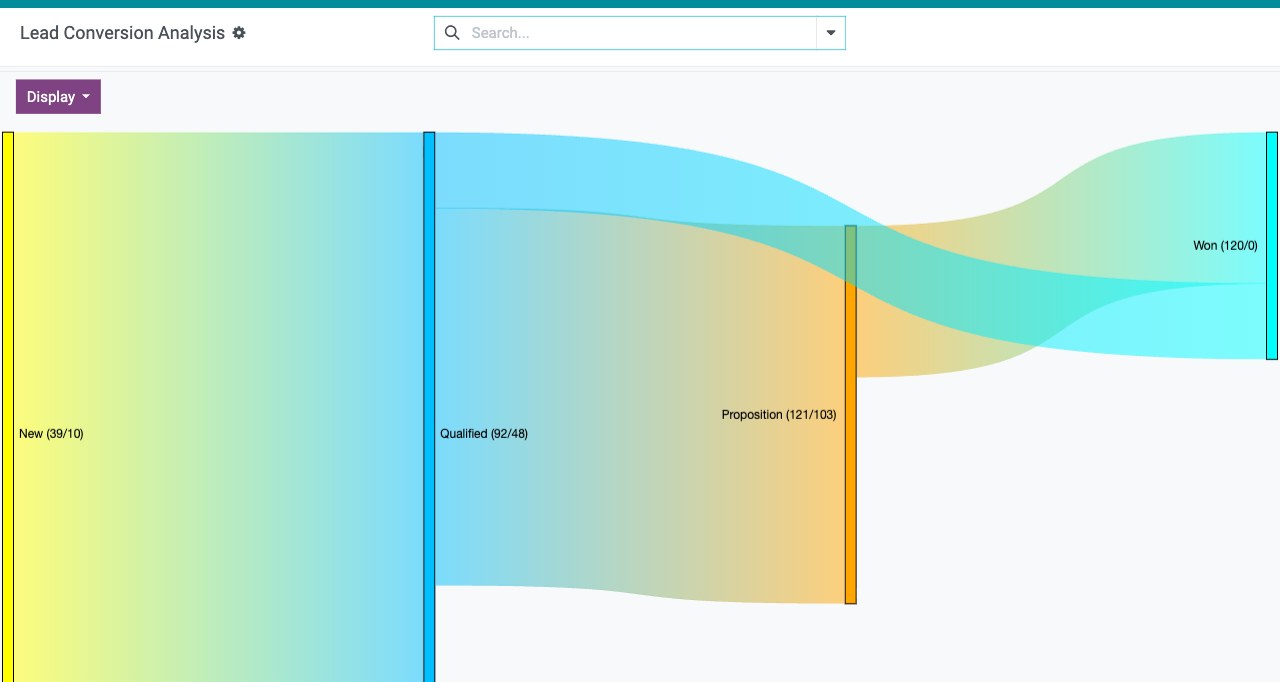
- 2Marketing - which source and which campaign customers came from and how many were won; conversion analysis shows the exact stage where customers leave, and the reasons deals were lost.
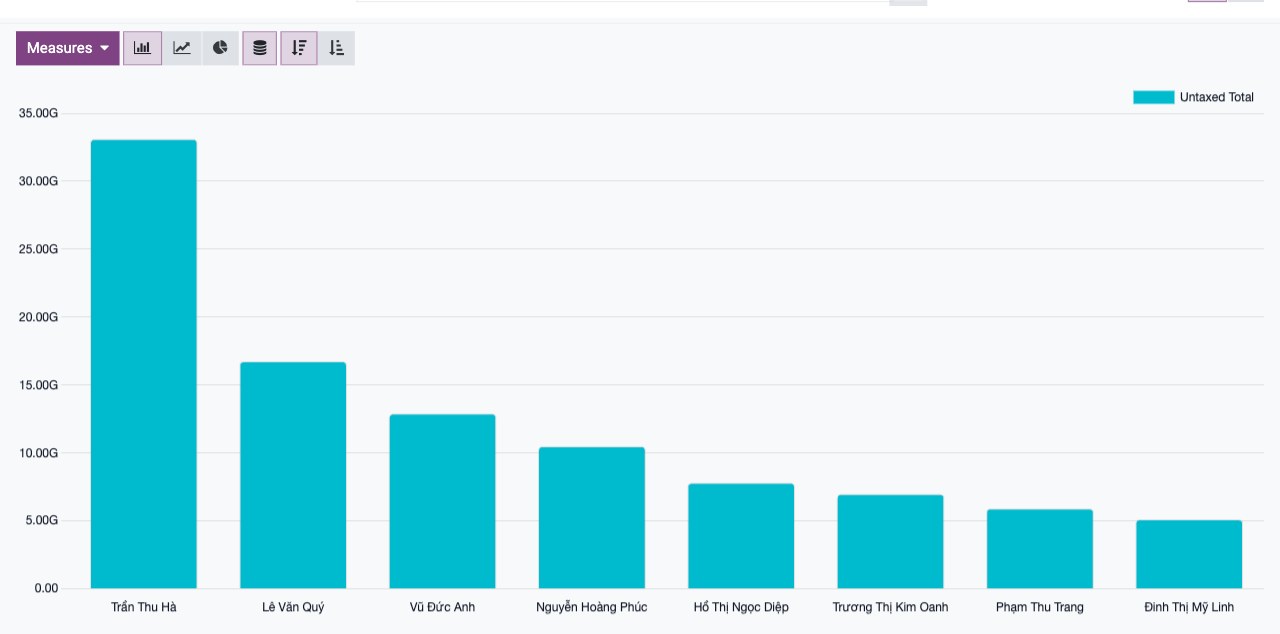
- 3Management - targets per person and per team; sales, margin, paid and unpaid by salesperson and by customer; a quotation for a customer over the credit limit shows a warning, and quotations that need approval wait for someone authorised.
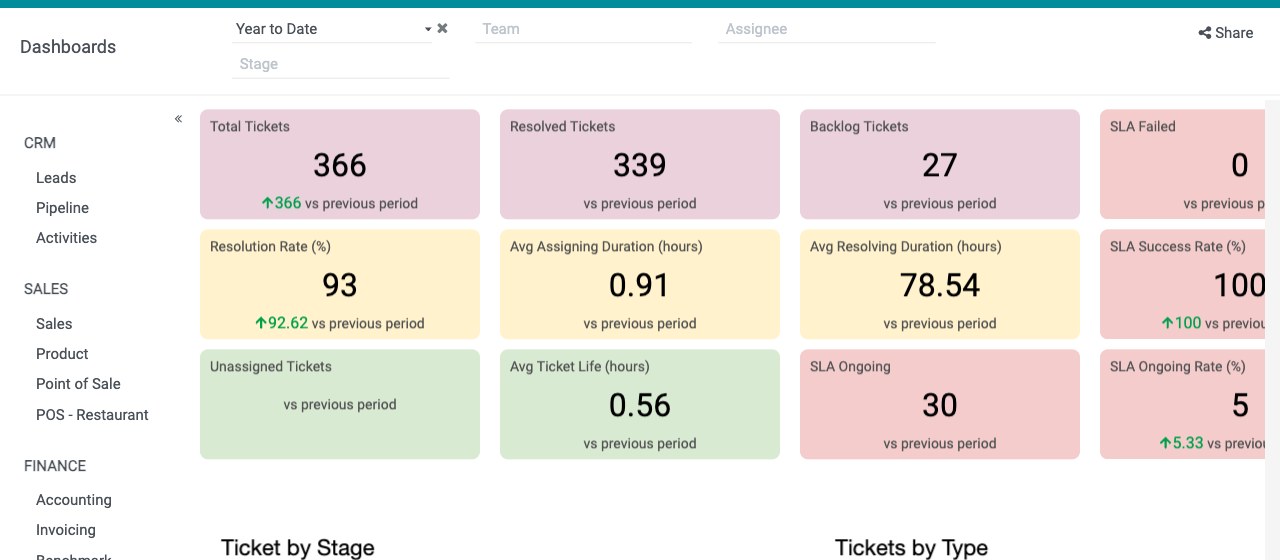
- 4Support - support requests carry a resolution time commitment and customers rate them when closed; warranty claims sorted by product, so the people who make a product that keeps failing find out at once.
For the demo, bring: your current sales team structure and how new leads are handed to salespeople today.
What makes this different from a standalone CRM or sales app
Standalone software does its own part well. The difference is whether the customer's story carries on after the deal is closed.
Standalone software
- A standalone CRM stops at the closed deal: it does not know whether the goods went out or the customer paid.
- A standalone sales app stops at revenue: without inventory and accounting there is no real margin.
- Support and warranty live somewhere else, so customers who call in start over.
- Totals mean exporting spreadsheets from each place and stitching them by hand.
Only this far



Viindoo Sales and CRM
- One set of data from the first enquiry to support and warranty.
- The sales order carries on into delivery, invoice and receivable without retyping.
- Margin by order and by customer, and cash collected, sit in the same report as sales.
- Customers never have to start over at any step.
Customers stay
 Zalo
 Live chat
CRM
Service
 Inventory
 Accounting
 Helpdesk
Growth
 Targets
 Email marketing
 Warranty
To be fair about it: if you only need to keep contacts and track opportunities, a lean CRM is enough. This difference only earns its price when selling has to move together with inventory, accounting and after-sales care.
Two things you get from Viindoo
You set the rules
Sales stages, lead assignment rules, each person's capacity, credit limits, which quotations need approval and support time commitments are all yours to declare, not something the software imposes. The way your company sells stays your way.
Built for Vietnamese business
Books kept on the Vietnamese chart of accounts, with e-invoice and business Zalo connections. Revenue, receivables and cash collected come out of those same documents, so sales and accounting look at one set of figures.
Price and trial
Try it before you decide. The price list is public.
A demo on one of your own customers
Bring a short list of loyal customers and one recent order. We rebuild that customer's journey on Viindoo so you see enquiry, quotation, delivery, receivables and support on the same record.
Tell us where it hurts most
Pick what is stuck today and we will shape the demo around exactly that.
Frequently asked questions
What went through the system stays with the business: the customer record and contacts, the conversation history, opportunities, quotations, orders, invoices, receivables and support requests. Whoever takes over the customer can read all of it instead of starting from zero. While they work, salespeople can be limited to seeing only their own opportunities and orders. To be plain: the software cannot keep what a salesperson exchanges over personal Zalo or writes down elsewhere. It keeps what goes through the company's channels, so the more conversations go through them, the more the asset belongs to the business.
Yes, for the company's own channels: the company's official Zalo account, the contact form on the website and the website live chat all create leads in the CRM. When a new lead has a phone number or email matching an existing customer, the system attaches it to that record automatically. A salesperson's personal Zalo cannot be pulled in.
It warns rather than blocks. Once a customer is over the credit limit, a new quotation shows a warning on screen with the total the customer owes. Whether to sell is the call of the person responsible. For a tighter grip, route quotations through an approval request so they are sent only after someone authorised approves. Payment reminders also run automatically at several levels, and salespeople can see the receivables of their own customers.
Yes. The sales analysis report adds margin, the amount paid and the amount unpaid, by customer, by salesperson and by product. Margin on an order is the sale price minus the product cost, so the margin is right only when the cost is right. To be clear: sales targets measure sales; Viindoo does not yet have targets or commissions based on margin or on cash collected.
Each team has its rules for taking leads and each person has a capacity, counted as the average number of leads over thirty days. The system shares new leads by each person's remaining capacity, so whoever has more room gets more. Manual assignment still works. New leads no longer wait for someone to hand them out, and nobody hoards them all.
Yes. The customer record has a language field; emails to the customer and the printed quotation, sales order and invoice come out in that language, while your staff keep working in Vietnamese. The condition is that the language is enabled on the system and the email templates have a translation.
Start with one customer who buys from you now
You do not have to move the whole sales team at once. Take one customer who is buying now and rebuild their record, orders, receivables and support on Viindoo. Wherever things are dropping tells you where to start.