Stock Asset
| Lines of Code | 1393 |
| Technical name | to_stock_asset |
| License | OPL-1 |
| Website | https://viindoo.com/apps/modules/19.0/to_stock_asset |
| Read description for | v 12.0 v 13.0 v 14.0 v 15.0 v 16.0 v 17.0 v 18.0 |
| Required Apps | Invoicing (account) Purchase (purchase) Discuss (mail) Inventory (stock) |
| Included Dependencies | Assets Management Viindoo Base Accounting Foundation Viin Warehouse Viin Warehouse Accounting |
| Extensions | Integrate Asset - Equipment Management and the warehouse |

From the warehouse shelf to the asset register, and back
An Asset Allocation operation that turns serialised stock into assets - one asset per serial, at the stock value - plus a Stock In wizard that returns an asset to inventory.
Stock Asset (technical name to_stock_asset) is an Odoo 19.0 app for Odoo Community and Odoo Enterprise and Viindoo Cloud, built for warehouse, fixed-asset accountant, purchasing, auditor.
At a Glance
The facts of Stock Asset, version 0.1.4, in one place. Published by Viindoo.
How It Works
Transfer serialised units to the asset location; confirm the assets it created.
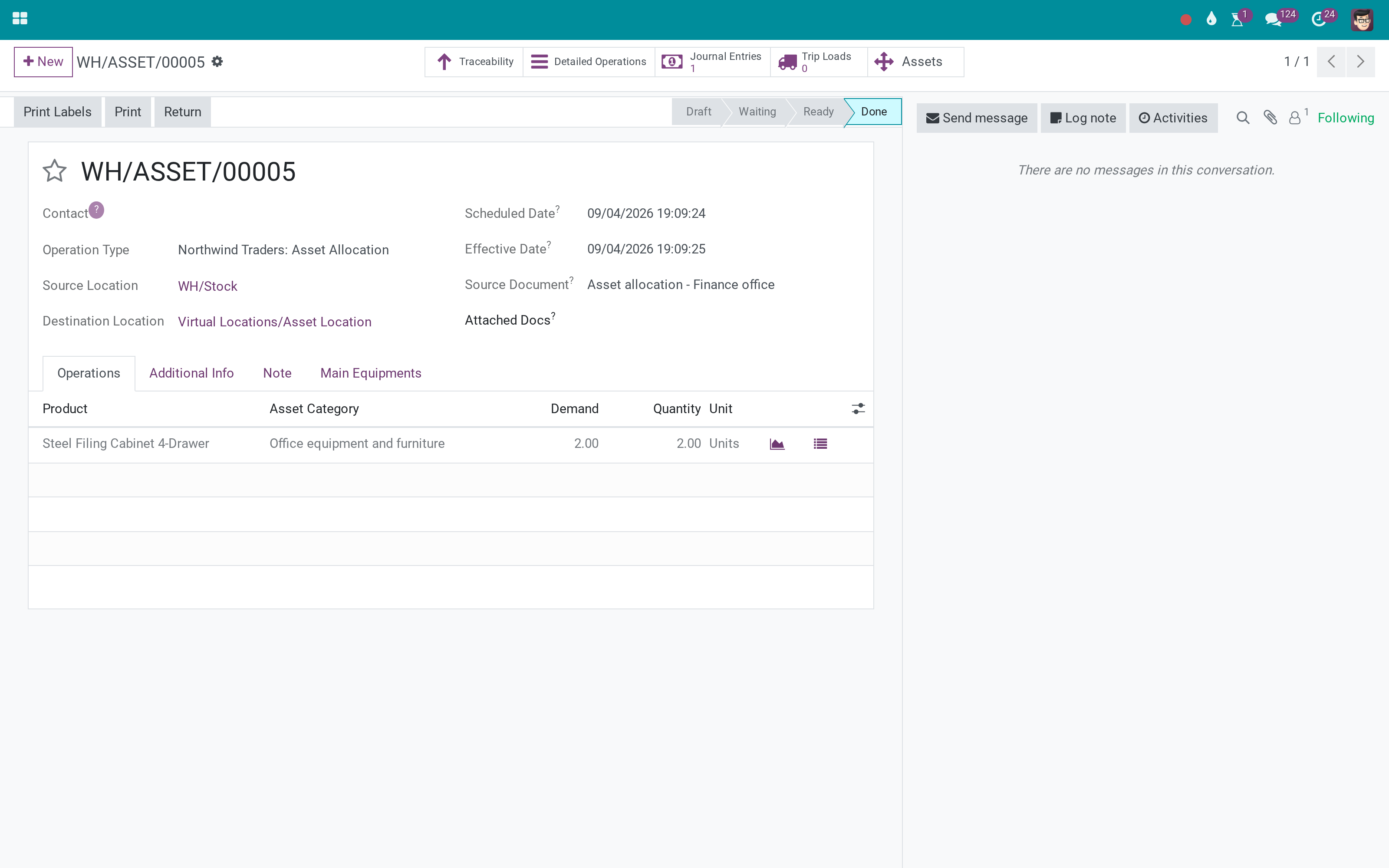
The allocation
Two filing cabinets from stock to the asset location, with an Assets button.
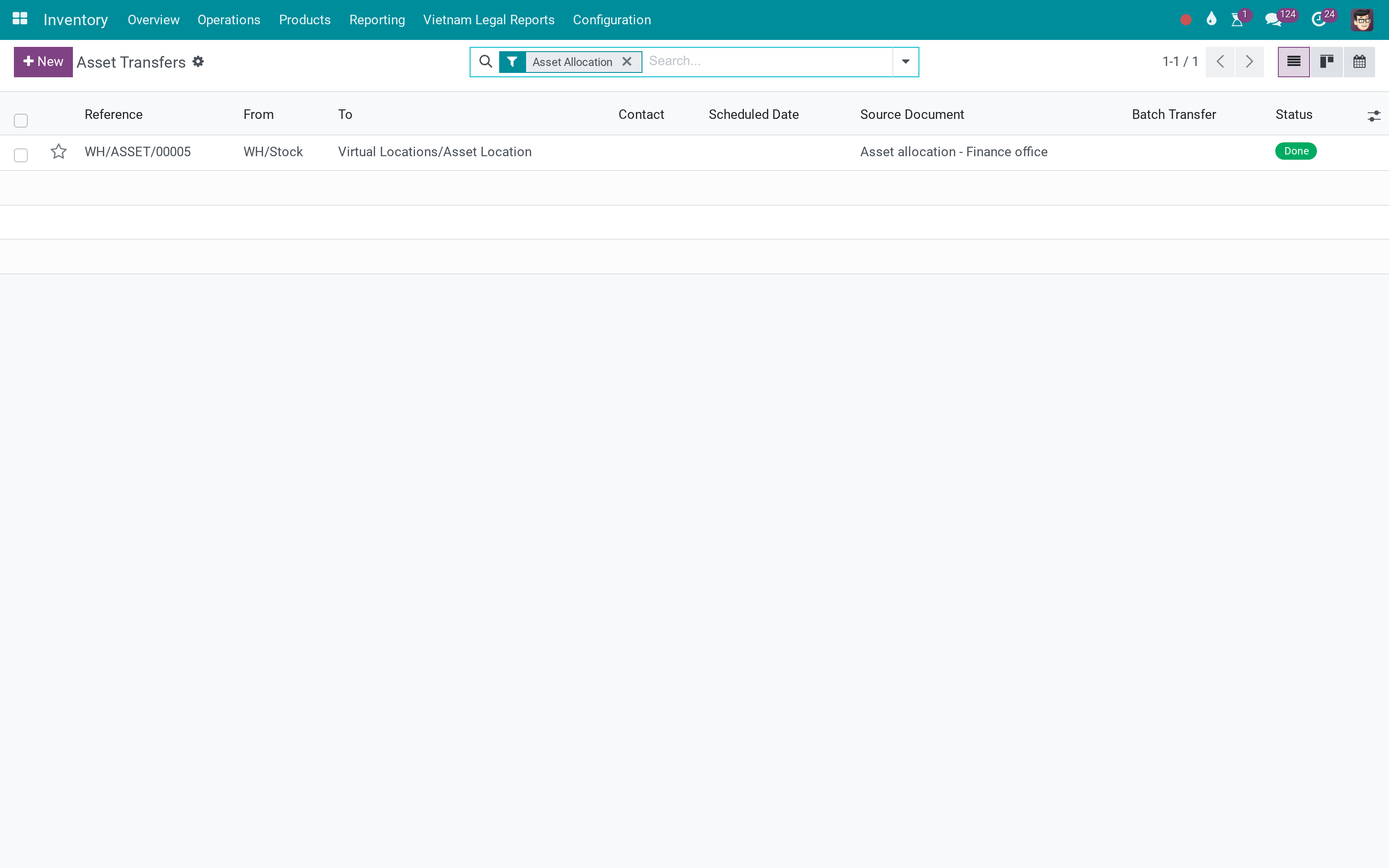
The transfers
All allocations in one list.
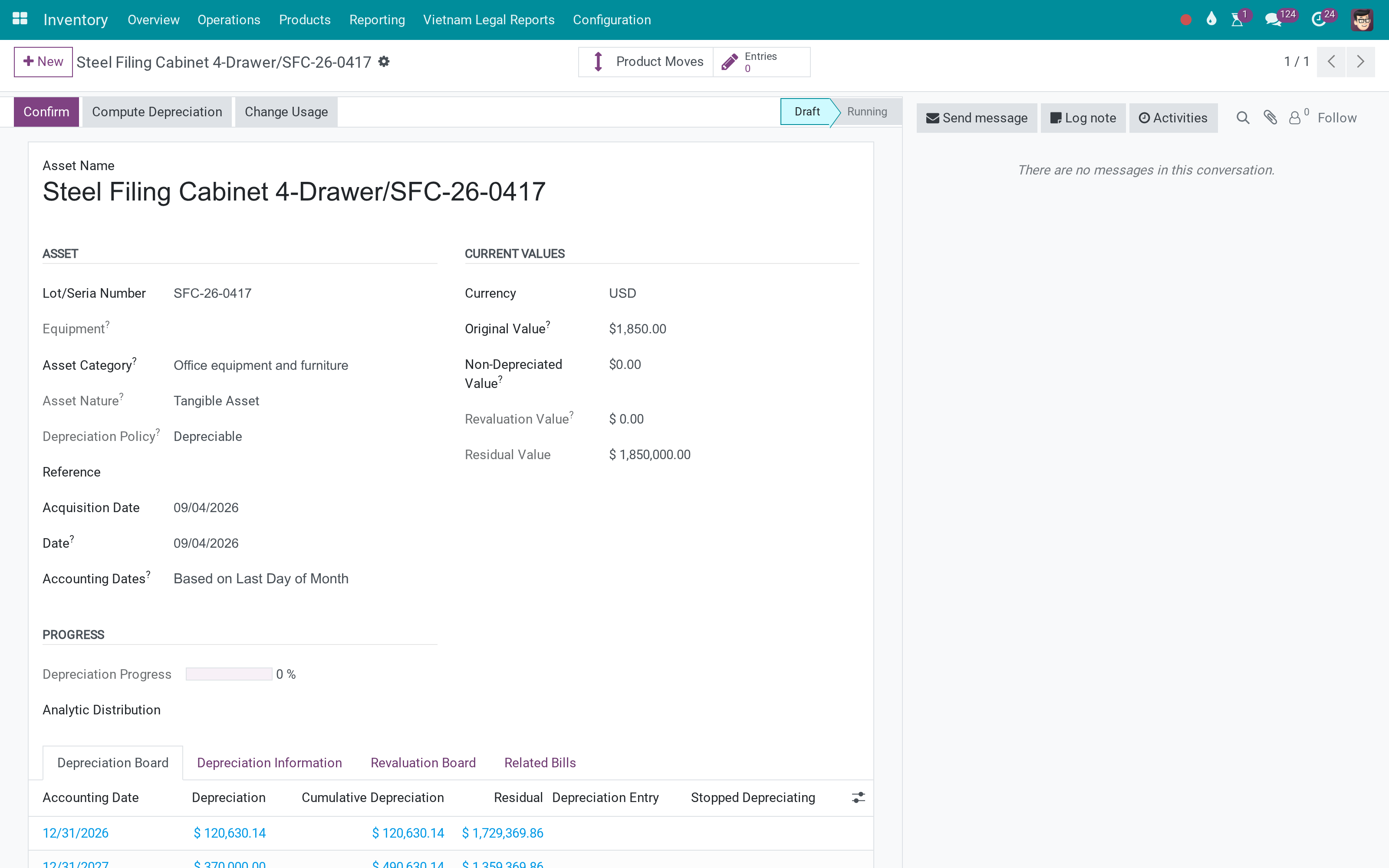
The asset
Named by product and serial, valued at stock cost, with a Stock In button.
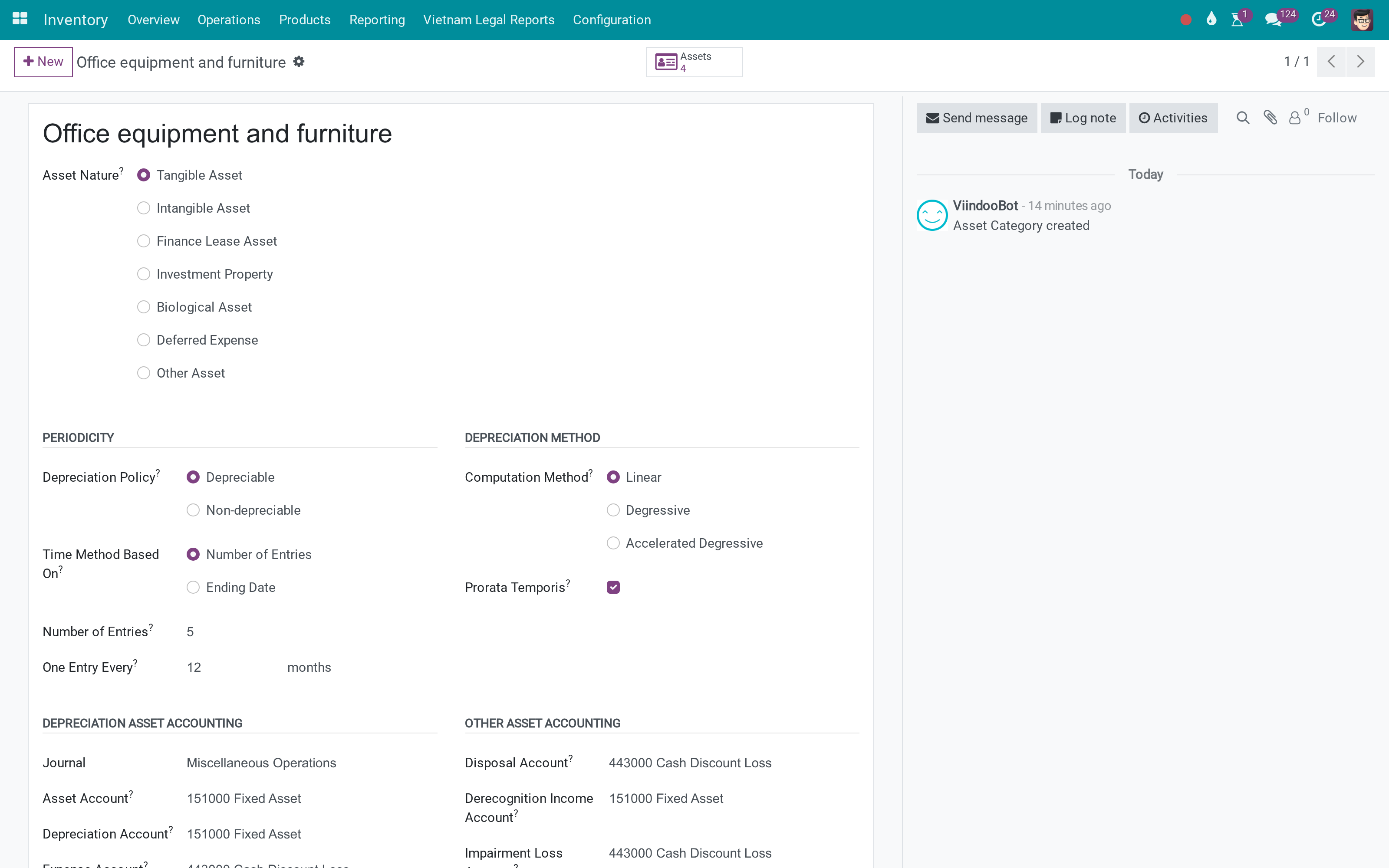
The category
The stock input account for the way back.
What You Get
Asset Allocation operation type and location usage
One asset per serial number, at the stock value and product asset category
Journal entry from stock to the asset account
Stock In wizard on the asset, back to a chosen location
Move lines linked to the assets they created; Assets button on the transfer
Stock input account on the asset category
More Screens
Everything below was taken on a database seeded with real business data, on this series - not a mock-up and not a screenshot from an older version.
Asset category
What This App Does Not Do
Read this before you buy. Everything below is something the app deliberately leaves to another app or to you.
Lots or untracked products are refused.
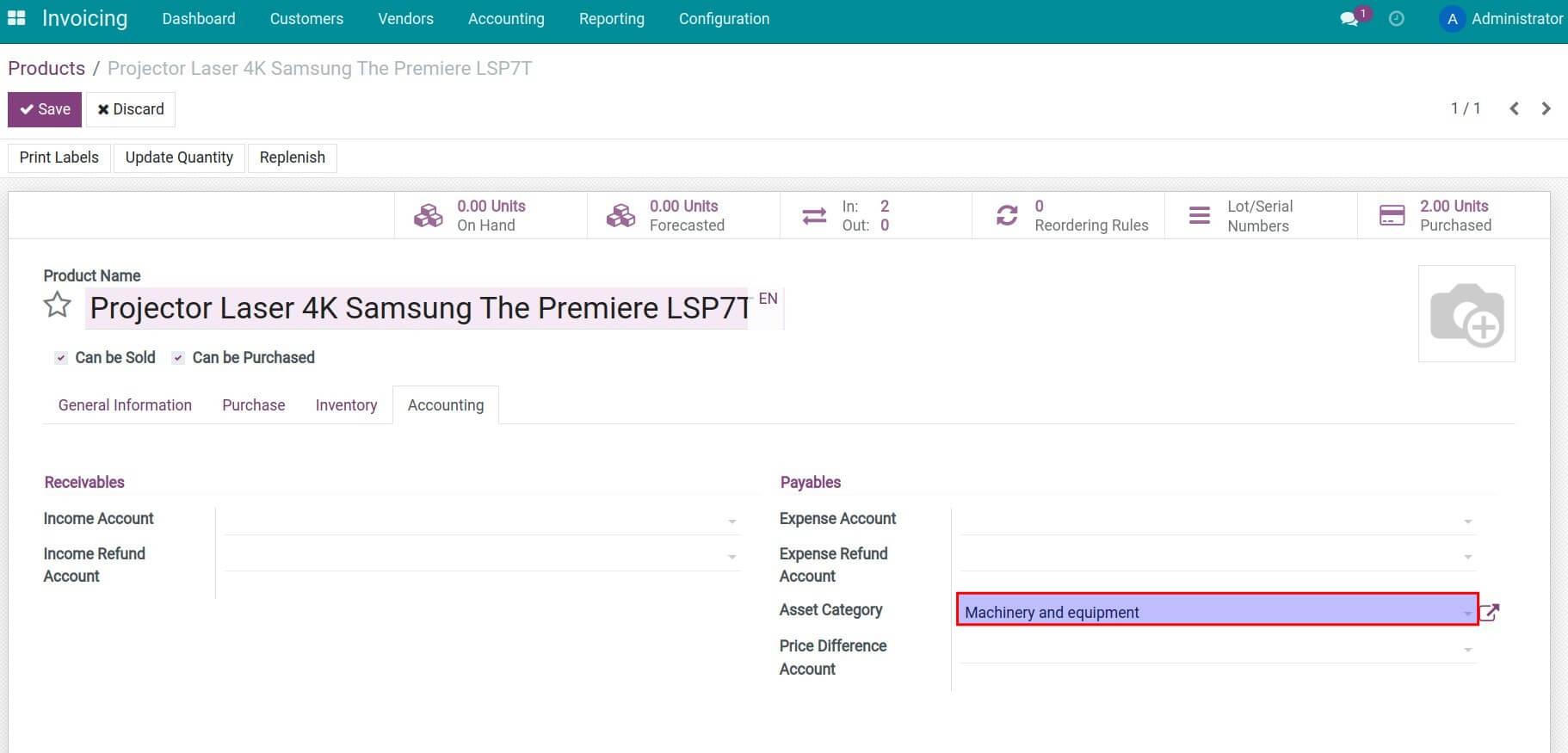
Set it on the product first.
Confirm it to start depreciation.
Add more asset locations if you need them.
Works Well With
Apps from the same stack, built to fit this one:
Who Should Use Stock Asset?
Warehouse
Issues equipment to use with a normal transfer.
Fixed-asset accountant
Gets the asset created and valued.
Purchasing
Buys equipment as stock without deciding upfront.
Auditor
Follows the serial from receipt to asset.
Frequently Asked Questions
What does Stock Asset do?
An Asset Allocation operation that turns serialised stock into assets - one asset per serial, at the stock value - plus a Stock In wizard that returns an asset to inventory.
What does Stock Asset not do?
Serial tracking is required. Lots or untracked products are refused. The product needs an asset category. Set it on the product first. The asset is created in draft. Confirm it to start depreciation. One location type per warehouse is created. Add more asset locations if you need them.
Who is Stock Asset for?
Warehouse: Issues equipment to use with a normal transfer. Fixed-asset accountant: Gets the asset created and valued. Purchasing: Buys equipment as stock without deciding upfront. Auditor: Follows the serial from receipt to asset.
Which Odoo version and editions does it support?
Odoo 19.0 - Odoo Community, Odoo Enterprise, Viindoo Cloud. Upgrades to a newer Odoo series are a separate purchase for that series.
What does it depend on?
It installs on top of: to_account_asset, stock_landed_costs, viin_stock_account, to_base. Odoo installs them with it.
How do I set it up?
Transfer serialised units to the asset location; confirm the assets it created.
What works well with it?
Assets Management (to_account_asset): The register. Equipment from stock (to_stock_equipment): Maintenance equipment from the same serial.
Can I try it before buying?
Yes - the Live Preview button at the top of this page opens the module's own screen on a working database.
How do I get support?
Write to apps.support@viindoo.com with your Odoo version and the technical name to_stock_asset; pre-sales questions go to sales@viindoo.com.
See Stock Asset in Action
or use the Live Preview button at the top of this page
Need help with Stock Asset?
For questions, implementation support or a custom feature, contact Viindoo.
Pre-Sales & Partnership
sales@viindoo.comUpgrades to a newer Odoo series are a separate purchase for that series.
All Viindoo apps: apps.odoo.com/apps/modules/browse?author=Viindoo
Technical Requirement
Changes log
0.1.4 - Latest on the 18.0 line
- Short-circuit hot create/write/_post paths.
- Add Circular 99 asset classification.
- More short-circuit to avoid redundant execution.
- Add menu picking asset transfers.
- Error compute.
Installation
- Navigate to Apps.
- Search with keyword to_stock_asset.
- Press Install.
Instruction
Step 1: Create an asset category.
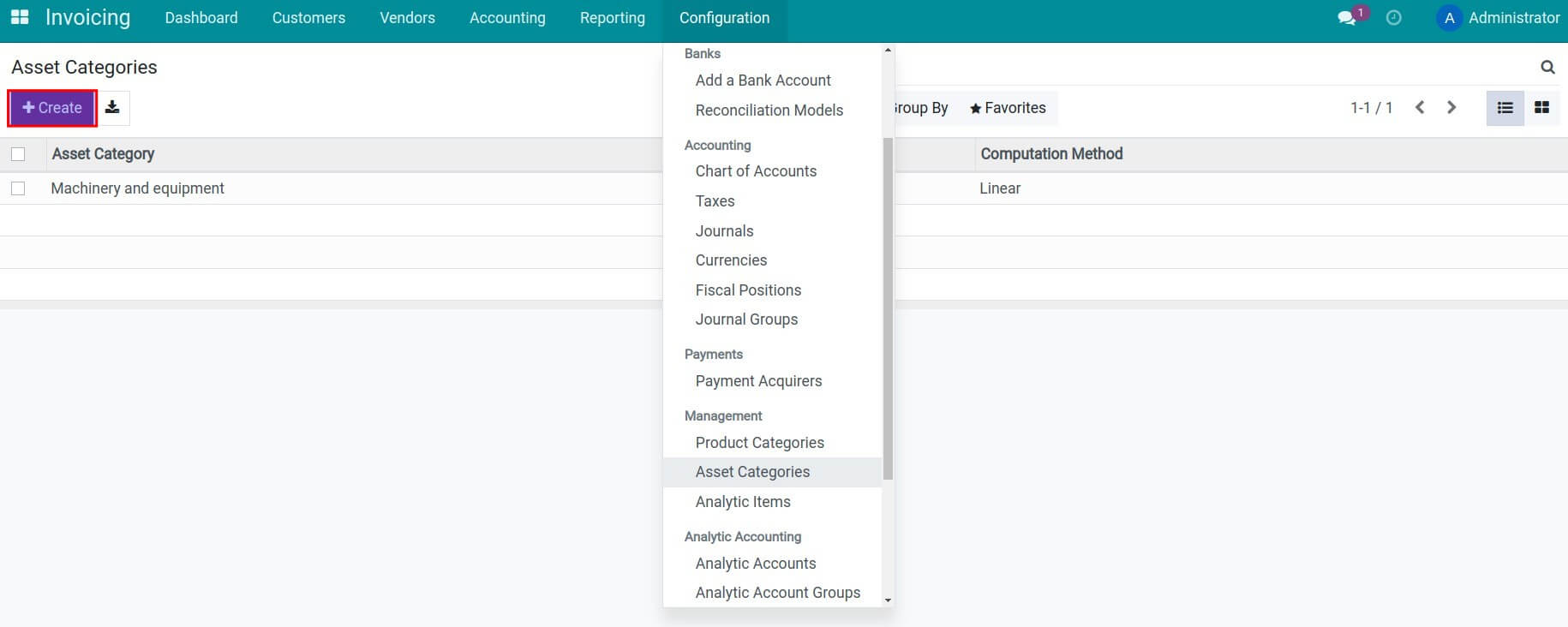
Note: To create a new asset category, you need to activate the Analytic Accounting feature by navigating to Invoicing > Configuration > Settings, and searching for the Analytic Accounting keyword.
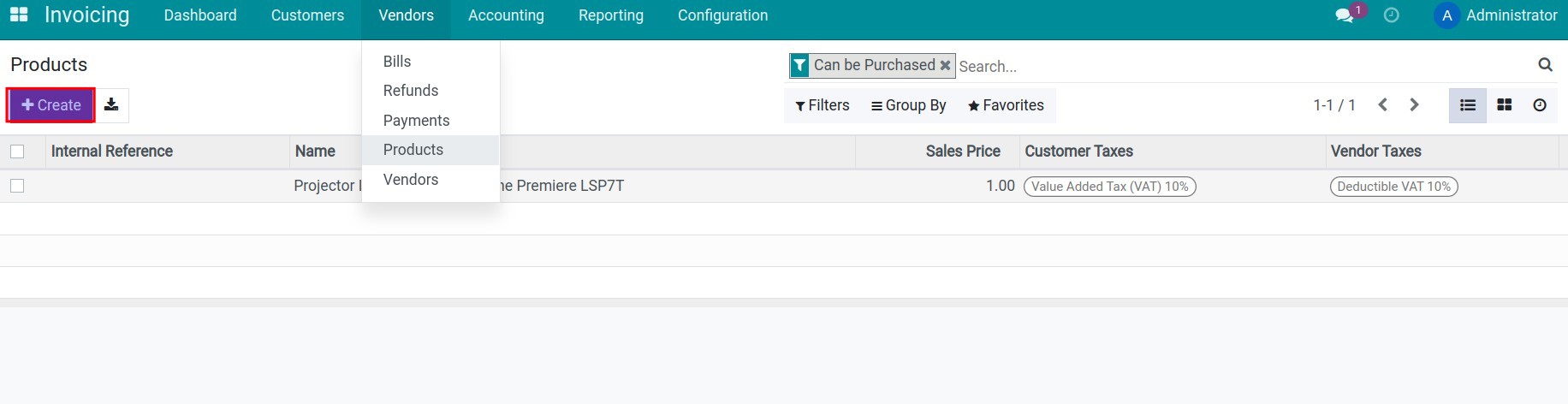
Step 2: Create a product.
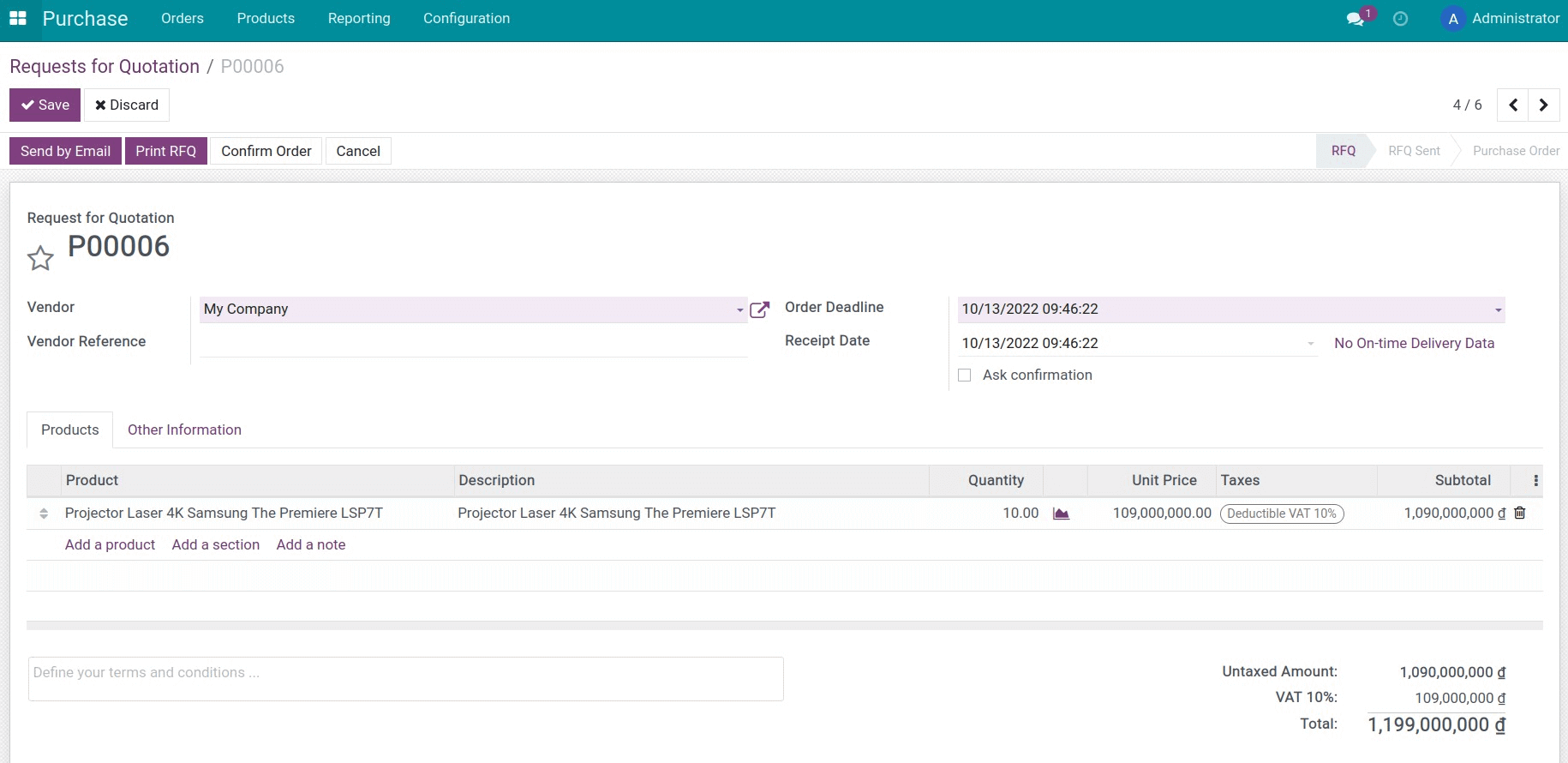
Step 3: Create a request for quotation and confirm the purchase order.
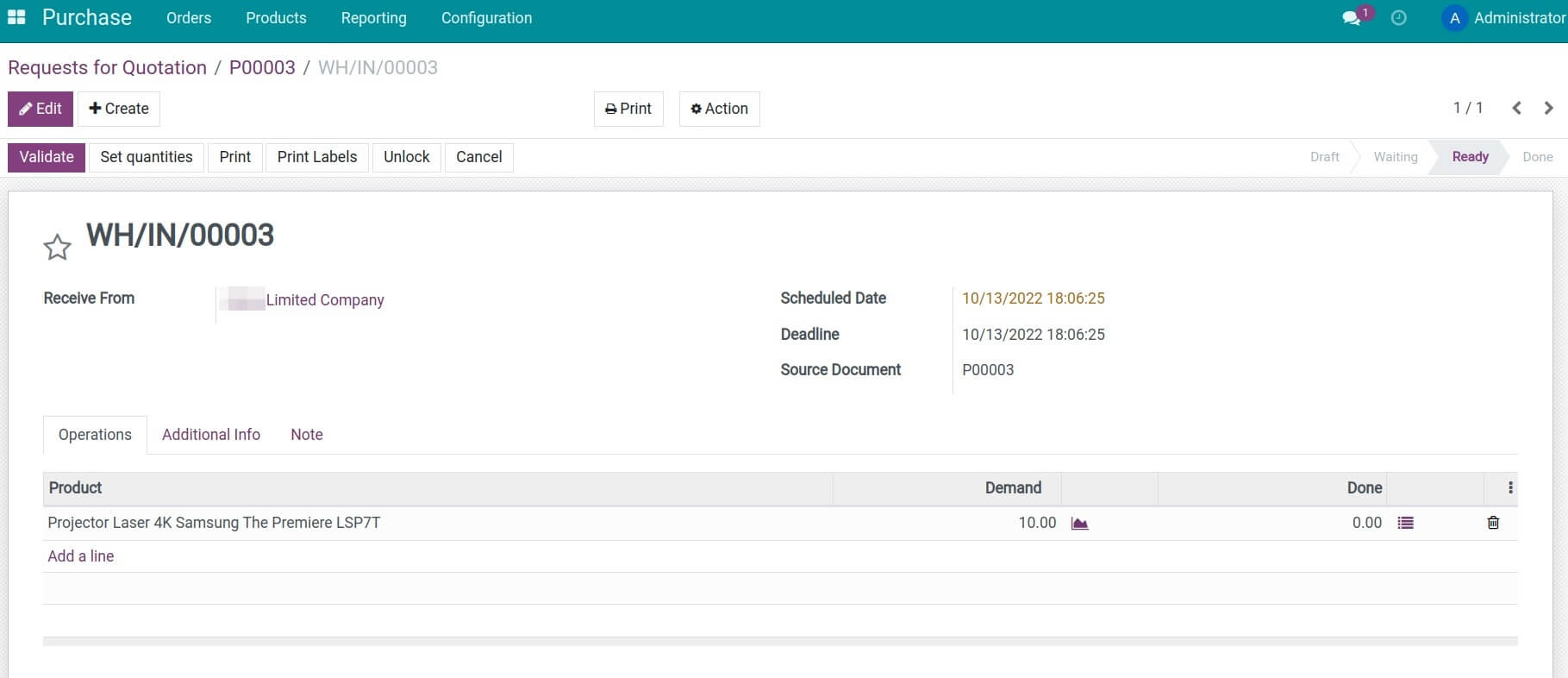
Step 4: Receive products into the warehouse.
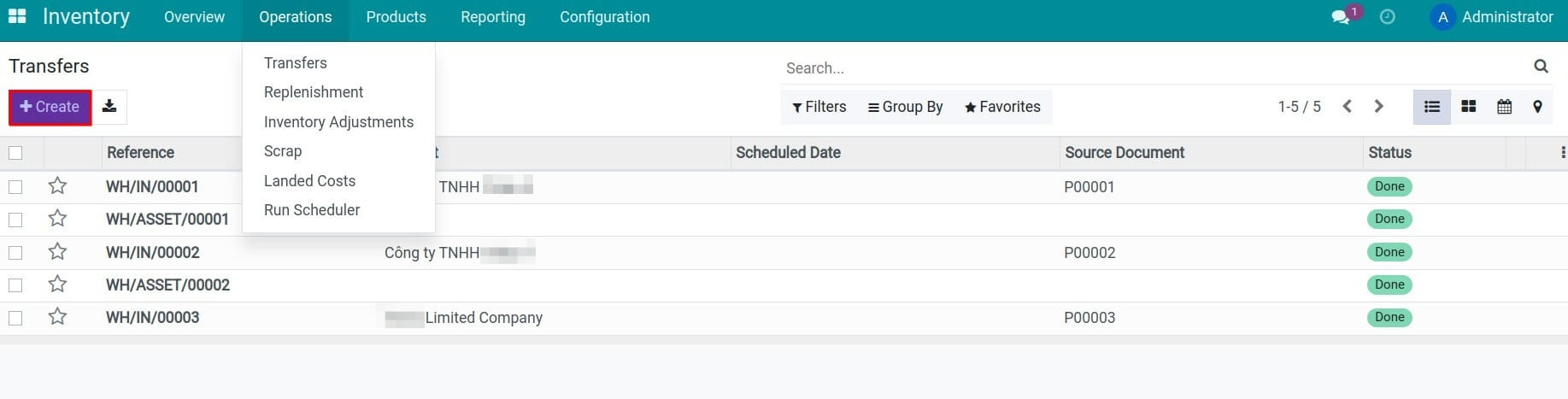
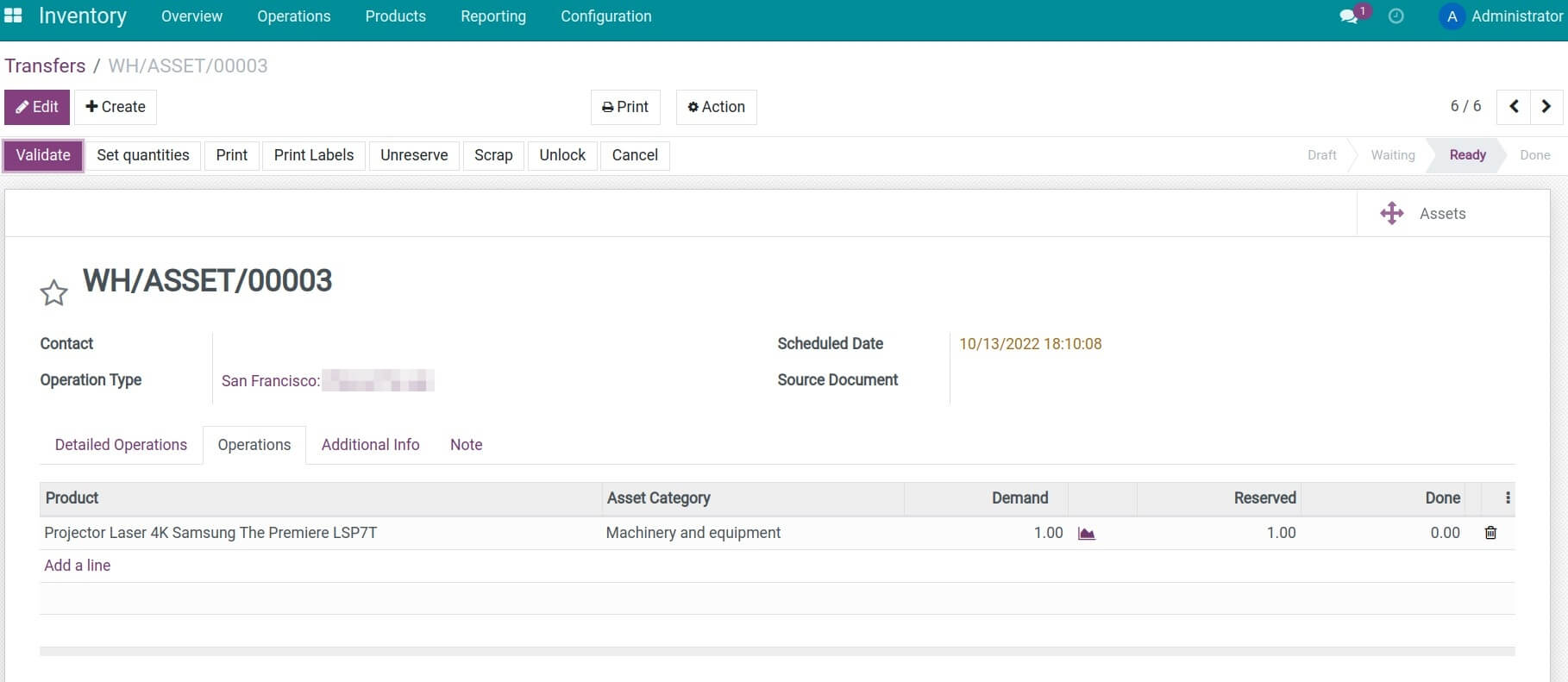
Step 5: Asset allocation and automatic depreciation.
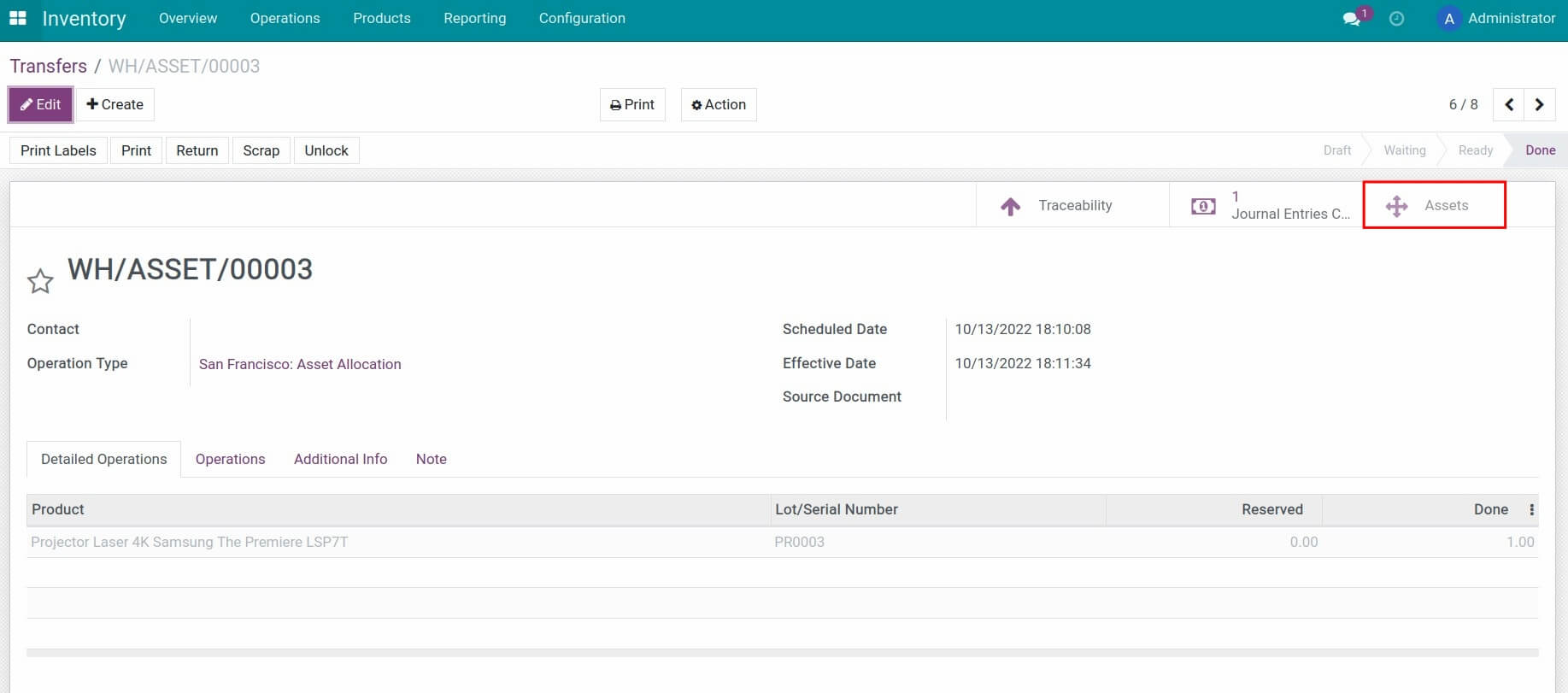
Step 6: Review traceability on asset information.
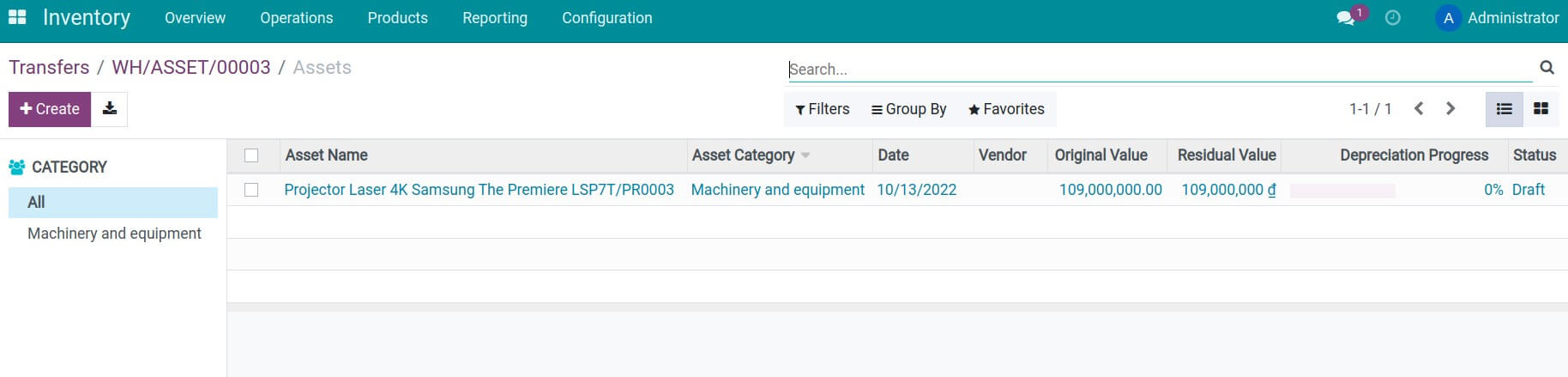
For more information, refer to the Create an asset from a storable product article.
This software and associated files (the "Software") may only be used (executed, modified, executed after modifications) if you have purchased a valid license from the authors, typically via Odoo Apps, or if you have received a written agreement from the authors of the Software (see the COPYRIGHT file).
You may develop Odoo modules that use the Software as a library (typically by depending on it, importing it and using its resources), but without copying any source code or material from the Software. You may distribute those modules under the license of your choice, provided that this license is compatible with the terms of the Odoo Proprietary License (For example: LGPL, MIT, or proprietary licenses similar to this one).
It is forbidden to publish, distribute, sublicense, or sell copies of the Software or modified copies of the Software.
The above copyright notice and this permission notice must be included in all copies or substantial portions of the Software.
THE SOFTWARE IS PROVIDED "AS IS", WITHOUT WARRANTY OF ANY KIND, EXPRESS OR IMPLIED, INCLUDING BUT NOT LIMITED TO THE WARRANTIES OF MERCHANTABILITY, FITNESS FOR A PARTICULAR PURPOSE AND NONINFRINGEMENT. IN NO EVENT SHALL THE AUTHORS OR COPYRIGHT HOLDERS BE LIABLE FOR ANY CLAIM, DAMAGES OR OTHER LIABILITY, WHETHER IN AN ACTION OF CONTRACT, TORT OR OTHERWISE, ARISING FROM, OUT OF OR IN CONNECTION WITH THE SOFTWARE OR THE USE OR OTHER DEALINGS IN THE SOFTWARE.